gogoodguru.com pn postcards5 1024x7311

Postcards From The Future

Postcards From The Future

Because good things DO come to those who wait.

In a world of NOW, FAST & FREE... it can be hard to develop a sustainable mindset when it comes to health and fitness.  

What would the  FUTURE VERSION of YOU  look like after committing 12-months to thinking and doing things differently when it come to  your health and fitness. 

We use an exercise called Postcards From The Future to help showcase what can happen when you decide to look ahead and envision a more CAPABLE, CONFIDENT, FREE version of YOU with the right kind of support.

Our Nutrition & Lifestyle Coaching follows the same Precision Nutrition Methodology that has helped over 100,000 people lose fat, get stronger, and improve their health… no matter what challenges they’re dealing with. 

CLICK IMAGES TO ENLARGE

Our Nutrition & Lifestyle Coaching follows the Precision Nutrition Methodology.  It's both research-driven and personal. This means we use the latest scientific findings to help coach people through the unique challenges in their own lives; whether physical or emotional ones.

It’s part physiology. Part psychology. Part science. Part art.

During the program, clients  are asked to envision where they’ll be in the future. What their new bodies will look like. What they’ll feel like. What they’ll be able to do.

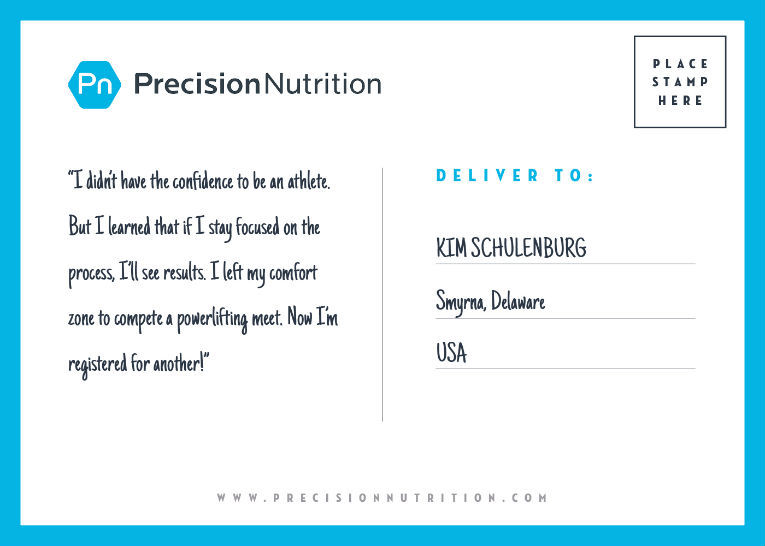
But we take it one step further. We ask them to write ‘Destination Postcards’: Personal notes from their future selves to their current selves to inspire, motivate, and encourage.

Kinda like:

“Hey Terry, wanted to check in since we spoke last year. You won’t believe it but the family and I ran an obstacle course race together. Plus, get this, we just ran a 5K. I know...Right?!? Crazy. Can you imagine?!?”

Then, at the end of the program, clients are asked to make it real.  They share photos and stories of what they are now able to accomplish after coaching and proper support.

The submissions are always incredible...we thought we'd share some.

(Be sure to check out both the front and back, which describes the accomplishment, by CLICKING ON EACH POSTCARD.)

Click image to see back of postcard

Click image to see back of postcard

Click image to see back of postcard

Most people who sign up our Nutrition & Lifestyle Coaching Precision Nutrition Coaching are after a strong, healthy, nice-looking body that makes them proud and keeps them feeling good for decades.

After 12 months — and, believe me, a lot of hard work — that’s what most achieve.

However, despite all the amazing before and after photos, despite the fantastic weight loss, despite the gains in strength, there’s one thing that really makes them light up.

They’ve become capable, confident, and free.

That’s worth thinking about.

And it typically leads to fantastic physical changes: Our clients lose weight, gain strength, go off meds, shed scary medical diagnoses, and more.

Click image to see back of postcard

Click image to see back of postcard

Click image to see back of postcard

(via)

For most clients, these changes are only the tip of the iceberg. Because their improved bodies have now become vehicles for accomplishing inspiring things.

Indeed, they’ve become ready, willing, and able to tackle challenges they were previously afraid of, even incapable of.

Click image to see back of postcard

Click image to see back of postcard

These clients started out obese, or overweight, or injured, or bogged down, or unconfident, or feeling incapable, or imprisoned by all of the above.

Now, they’re climbing mountains, cycling on top of the world, and vaulting railings that stopped them before. Most importantly, they’re full of hope and looking forward to the adventurous, active years still ahead of them.

Click image to see back of postcard

(via)

Click image to see back of postcard

Want some help becoming your healthiest, fittest, strongest version of you?

Most people know that regular movement, eating well, sleep, and stress management are important for looking and feeling better. Yet they need help applying that knowledge in the context of their busy, sometimes stressful lives.

That’s why we work closely with our Nutrition & Lifestyle Coaching clients to help them lose fat, get stronger, and improve their health… no matter what challenges they’re dealing with.

We hope you found this information helpful.  Help us spread the GOOD word. Comment, Share and Follow Us @gogoodguru.

Don't miss any of our latest posts and news. JOIN OUR MAILING LIST


Struggling to keep up with all the new information coming out? Interested in learning how to navigate the latest trends and fads in nutrition?

CLICK HERE for our 
FREE "Nutrition Made Simple Guide"

You'll learn...

  • How to make sense of the latest research.
  • Ways to eat better without resorting to fads.
  • How to understand controversial topics like grains, detoxes, GMOs.
  • Strategies to eat the right amount of calories at the right times.
  • How to prepare healthy meals when you need them.
  • And much more…


Looking for more ways to up your wellness game?
CHECK OUT our Online Coaching

Join Our Newsletter! 
Stay up with all the
GO GOOD News

Get great wellness content, FREE recipe ideas & workouts, access to special events, Flash Mob Workout notices and much more.
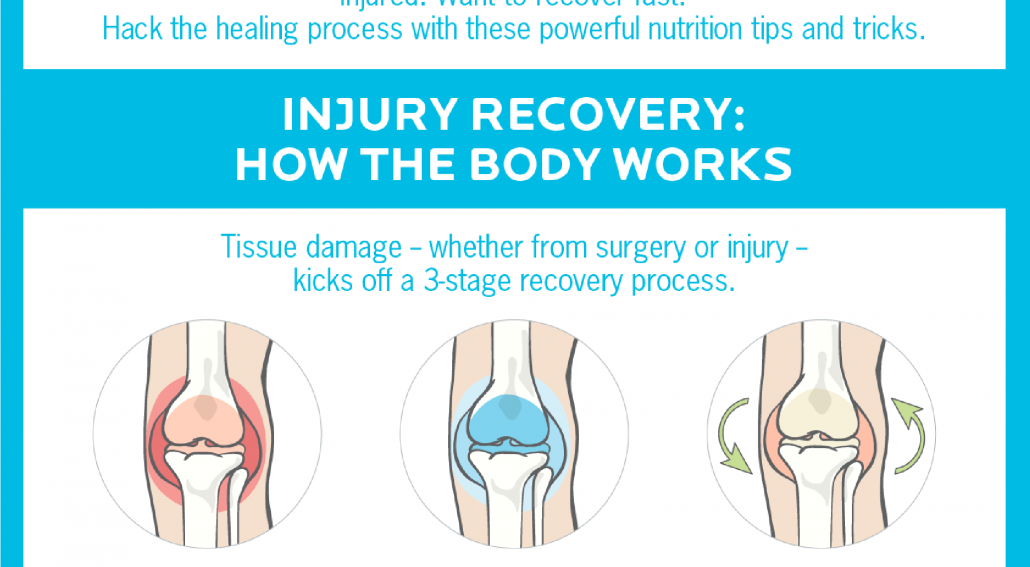
gogoodguru.com injury recovery injury recovery infographic header

Injury Recovery:Nutrition To Speed Up Healing – Infographic

Injury Recovery: Nutrition To Speed Up Healing - Infographic

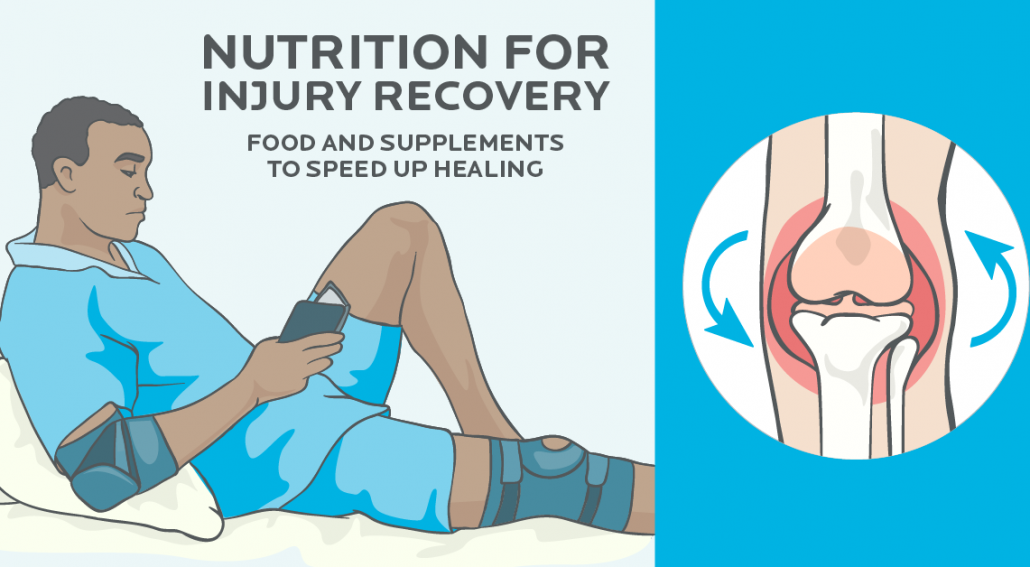
The right food and supplements to speed injury recovery


Injured? Want to recover fast? Hack the healing process with these powerful tips on nutrition for injury recovery. Put the right eating and supplement strategies to work for you.


Injuries happen. The question is: after they happen, how can you help the body heal?

For most athletes and fitness professionals, the idea that nutrition can play a powerful role in injury recovery makes perfect sense. Yet when injury strikes, very few know exactly how to use nutrition to improve healing.

In this infographic we’ll show you some best practices for using nutrition to dramatically speed up the injury recovery process.

CLICK HERE to check out the corresponding 5-part series, to learn how the body repairs itself after an injury.


CLICK HERE to check out the corresponding 5-part series, to learn how the body repairs itself after an injury.

Click here for a fully printable version of this infographic. Share with a recently injured client or colleague, or keep handy for your own reference.

Want to know more about the science behind nutrition and injury recovery? Discover our multi-part series on the topic here.


What's Next?

Most people know that regular movement, eating well, sleep, and stress management are important for looking and feeling better. Yet they need help applying that knowledge in the context of their busy, sometimes stressful lives.

That’s why we work closely with our Nutrition & Lifestyle Coaching clients to help them lose fat, get stronger, and improve their health… no matter what challenges they’re dealing with.

Learn more @ https://www.gogoodguru.com/nutrition-coaching

We hope you found this information helpful.  Help us spread the GOOD word. Comment, Share and Follow Us @gogoodguru.

Don't miss any of our latest posts and news. JOIN OUR MAILING LIST


Want some help becoming your healthiest, fittest, strongest version of you?

Most people know that regular movement, eating well, sleep, and stress management are important for looking and feeling better. Yet they need help applying that knowledge in the context of their busy, sometimes stressful lives.

That’s why we work closely with our Nutrition & Lifestyle Coaching clients to help them lose fat, get stronger, and improve their health… no matter what challenges they’re dealing with.


Struggling to keep up with all the new information coming out? Interested in learning how to navigate the latest trends and fads in nutrition?

CLICK HERE for our 
FREE "Nutrition Made Simple Guide"

You'll learn...

  • How to make sense of the latest research.
  • Ways to eat better without resorting to fads.
  • How to understand controversial topics like grains, detoxes, GMOs.
  • Strategies to eat the right amount of calories at the right times.
  • How to prepare healthy meals when you need them.
  • And much more…


Looking for more ways to up your wellness game?
CHECK OUT our Online Coaching

Join Our Newsletter! 
Stay up with all the
GO GOOD News

Get great wellness content, FREE recipe ideas & workouts, access to special events, Flash Mob Workout notices and much more.
30 Tips To Improve How You Eat

30+ Tips To Improve How You Eat

30+ Tips To Improve How You Eat
GOOD | Nutrition Made Simple


(Download full article here)

Change How You Think About Food
Whether you want to lose, gain or maintain your weight, a healthy environment is key. It also makes maintenance MUCH EASIER.

Change your environment and you will be more likely to make other needed changes.

The list below will help you design your environmental clean up. As you review this list, make short-term goals, which are applicable for yourself.


Buying Your Food - You'll eat what's there, so make sure it's healthy. It's SIMPLE...but crucial and often overlooked.

  • Try to plan menus on a weekly basis. These menus should be simple, but enjoyable and realistic.
  • Always shop from a list.
  • Prepare a weekly list.
  • Never shop while hungry.
  • Prepare your menu and list on a regular schedule.
  • Have a scheduled shopping day.
  • Buy for specific meals and only in the amount needed to minimize leftovers.
  • Shop from the perimeter of the grocery store.
  • Avoid calorie-dense snack items, such as chips and cookies, which you know are your weaknesses.
  • Buy fruits, vegetable sticks and low-sodium canned soups to eat as low-cal snacks with minimal preparation.
  • Buy foods that help you stick to your plan.
  • Fight the craving. You should avoid grocery aisles that display your problem foods, junk foods such as the candy aisle or cookie aisle. Food chemists make certain food irresistible to your five senses so that you can’t eat just one.

Preparing Your Food

  • Prepare low-calorie, high-quality meals.
  • Use an exhaust fan to lower appetite stimulation. Use the lids for all your pots.
  • Don't nibble while preparing. If you are truly hungry, have a very low calorie snack such as raw carrots or eat some left over vegetables from the night before.
  • Prepare only the amount of meat and starch that you will need for the meal, but prepare extra vegetables.
  • Substitute low calorie items, for high calorie items.
  • Prepare lunches while the evening meal is being prepared, minimizing contact with food

Serving Your Food

  • Put on the table only the food needed for that meal and serve yourself last. Don't leave serving dishes on the table.
  • Serve yourself an "appropriately" small or medium serving. Don't go back for seconds, unless it's more from the vegetable group.
  • Use a small dinner plate so food appears more abundant.
  • Six small meals are more preferable than two or three large meals. This strategy was shown to help participants lose weight in a recent study. But this does not mean you should graze all day or eat when not hungry.

Eating Your Food

  • Chew slowly. This should be a pleasurable experience. Don't attack your food.
  • Put the utensil down between bites.
  • Don't feel like you have to clean your plate. Stop eating when you are comfortably full. Eating more than our bodies needs is wasted.
  • Concentrate on the food being eaten. Enjoy your meal.
  • Eat in one place; don't carry meals or snacks to all parts of the house.
  • Avoid eating cues as much as possible at times not designated for eating.
  • Don't eat haphazardly; plan ahead! If you fail to plan, you will plan to fail.
  • Brush your teeth immediately after a meal, or use some other cue that states that you are through. A glass of hot tea or gourmet coffee is a great cue to let you know that the meal has been completed. Remember, the more often a cue is rehearsed, the stronger the response becomes.

Cleaning Up

  • Clear the table immediately.
  • Dispose of leftovers or scrape plates immediately. Don't leave around food to "pick at."
  • If it's inconvenient to clear the table immediately, then leave it; go to another room for your conversation or cup of coffee.
  • If leftovers are to be saved, do so immediately. This may be a good opportunity to prepare your lunch for the next day.
  • Find an alternate activity to capture your interest after eating time. Preferably "move." A walk would be great.

We hope you found this information helpful.  Help us spread the GOOD word. Comment, Share and Follow Us @gogoodguru.

Don't miss any of our latest posts and news. JOIN OUR MAILING LIST


Struggling to keep up with all the new information coming out? Interested in learning how to navigate the latest trends and fads in nutrition?

CLICK HERE for our 
FREE "Nutrition Made Simple Guide"

You'll learn...

  • How to make sense of the latest research.
  • Ways to eat better without resorting to fads.
  • How to understand controversial topics like grains, detoxes, GMOs.
  • Strategies to eat the right amount of calories at the right times.
  • How to prepare healthy meals when you need them.
  • And much more…


Looking for more ways to up your wellness game?
CHECK OUT our Online Coaching

Join Our Newsletter! 
Stay up with all the
GO GOOD News

Get great wellness content, FREE recipe ideas & workouts, access to special events, Flash Mob Workout notices and much more.
gogoodguru.com nutrition for injury

Injury Recovery:Nutrition To Speed Up Healing – Part 5

Injury Recovery: Nutrition To Speed Up Healing - Part 5

The right food and supplements to speed injury recovery


“Let food be thy medicine and medicine be thy food”
~ Hippocrates


Welcome to Part 4.  Be sure to o check out Part 1Part  2 , Part 3  & Part 4 if you missed it.

The right food and supplements can speed injury recovery. This is important — but often ignored.

Most trainers, coaches, nutritionists, therapists understand that nutrition can play a role in injury recovery. However few of them really know how to use food and supplements in this way.

Aside from recommending more water, topical homeopathic creams and gels, and glucosamine/chondroitin combinations, there’s really not much else on the menu when a client or athlete goes down with an acute injury.

That's why we're working with Precision Nutrition to  share this 5-part information series presented by John Berardi, Ph.D.  He is the Founder and creator of Precision Nutrition; the same curriculum used in our Nutrition Coaching.


In this 5-part series, you'll learn how the body repairs itself after an injury.

Then we’ll share the food and supplement protocols used to get injured clients back in the game more quickly and completely.

  • Click the play button below to get started with Part 5.  The video runs about 9 minutes.
  • NO TIME TO WATCH THE VIDEO? Scroll down for an overview of the information presented in the video.  
  • Want to see our visual guide? Check out the infographic here
  • (Click here for part 1part 2part 3 & part 4). 
play

Video filmed at the Fit Pro Convention in Loughborough, England. 


Wrap-up and practical implementation

In parts 1-4 of this video series, we reviewed the research on nutrition for injury recovery. We also made some practical recommendations for you and your clients.

However, taken altogether, the strategies might seem overwhelming. I can totally identify with this feeling.

I’ve sat in on hundreds of lectures. When speakers present long lists of nutrition and supplement suggestions, I usually leave baffled.

Which of the 20 or 30 supplements should I take? Which of these strategies is the most important? Do I have to take all the suggestions? Or just a few? And how do I choose?

I’d hate to have you leave this series with the same questions and anxiety. So let’s wrap this up with a few examples of just how easy the implementation can be.

To do so, I’d like to finish where we started — with Georges St. Pierre.

As discussed in
part 1, GSP came to me for advice prior to a surgery in 2007. Since a surgery is essentially an injury process, the advice I gave him fits perfectly here.

GSP’s Plan – For 1 week before surgery

  • Follow training-based nutrition plan leading up to surgery
  • No supplements for the week before surgery (especially fish oil, as this can interfere with anti-clotting medications)
  • Let doctor know about prior fish oil use


GSP’s Plan – For 4 weeks post-surgery

  • Continue with training-based nutrition plan but remove 1 daily Super Shake
  • Quest multi-vitamin: 1 capsule, 2x per day
  • Biotest curcumin: 2 capsules, 2x per day
  • Biotest Flameout: 3 capsules, 2x per day
  • EAS Muscle Armor: 1 scoop, 2x per day


As you can see, we kept it very simple for Georges, making only small changes to his already well thought-out nutrition plan. And adding just 4 supplements into his regimen helped to manage the inflammation process while stimulating anabolism and tissue repair.

For a detailed explanation of why we chose these particular supplements, please see the video above.

Here’s another example. Last year, while training for the 60 m sprint race at the Indoor Canadian Masters National Championships, I injured my hamstring. This is the plan I used for 4 weeks after the injury.

JB’s Plan – For 4 weeks after hamstring injury

Copper is a mineral that assists in the formation of red blood cells and works with vitamin C to form elastin and to strengthen connective tissue. 2-4 mg/day is recommended during the first few weeks of injury repair.

  • Ice, heat, elevation, 2-4x per day
  • Stretching and light activation, 1x per day
  • ART, 2x per week
  • Doctor’s Best curcumin: 500 mg, 2x per day
  • Labrada Sorenzyme: 4 capsules, 2x per day
  • Fast Joint Care+: 1 capsule, 2x per day
  • Optimum Nutrition vitamin: 1 tab, 2x per day
  • Omega-3 fish oil: 1 tsp, 4x per day


Like Georges, my eating plan was already very good, so I didn’t really change much there. I just added a few supplements to support recovery. Again, see the video above for more.

In the end, the program worked extremely well and enabled me to compete at the National Championships, placing 3rd in my age category without any hamstring concerns.


Summary of recommendations

​In summary, injury recovery is characterized by an organized response to the acute trauma.

First, inflammation removes damaged tissues. Cells then proliferate to replace the damaged tissue. And finally, new cells replace the intermediary cells to strengthen the repair process and lead to injury resolution.

During each step of the repair process, you can use targeted nutritional strategies to support and enhance this repair process.

Ensure that injured athletes eat enough calories and protein, by using some simple strategies:

Frequency

Eat every 3-4 hours.

Protein

Each meal/snack should contain complete protein including lean meats, lean dairy, eggs, or protein supplements (if whole food is unavailable).

Vegetables & Fruit

Each meal/snack should contain 1-2 servings veggies and/or fruit (1/2 – 1 1/2 cups or 1-2 pieces) with a greater focus on veggies.

Starches

Additional carbohydrates should come from whole grain, minimally processed sources like whole oats, yams/sweet potatoes, beans and legumes, whole grain rice, quinoa, etc. The athlete should eat fewer starches when not training (such as during injury recovery), and more when training (unless they want to lose fat).

FAts

Eat at least 2-3 of these healthy fats each day: avocadoes, olive oil, mixed nuts, fatty fish (such as salmon), flax seeds, and flax oil. Add 3-9 g of fish oil to the diet.

Supplements

Although these steps above should lead to adequate micronutrition during normal conditions, during injury repair, the following vitamin and mineral supplements are useful:

  • Vitamin A - 10,000 IU/day for 2-4 weeks post-injury
  • Vitamin C - 1000-2000 mg/day for 2-4 weeks post-injury
  • Copper - 2-4 mg/day for 2-4 weeks post-injury
  • Zinc - 15-30 mg/day for 2-4 weeks post-injury

Beyond these supplements, you can also manage inflammation by:


​Balancing your fats

Increase your intake of olive oil, mixed nuts, avocados, flax oil, ground flax and other seeds, etc. Get some of each fat source each day. By eating these foods, you’ll likely balance out the saturated fats naturally present in your protein sources, leading to a healthy profile without breaking out the calculator.


Balancing your 6:3 ratio

Add 3-9 g of fish oil each day while reducing omega-6 fats like vegetable oils such as corn oil, sunflower oil, safflower oil, cottonseed oil, and soybean oil, etc. This strategy should take care of your omega 6:3 ratio.


Including anti-inflammatory foods

​These foods include curry powder/turmeric, garlic, pineapple, cocoa, tea, blueberries, and red wine (in small amounts).


Supplementing amino acids

Finally, even in well-nourished individuals, supplementing with the following amino acids can stimulate collagen deposition and injury healing.

  • Arginine – ​7 g, 2x per day
  • ​HMB - 1.5 g, 2x per day
  • Glutamine - 7 g, 2x per day


Wrap-up and What's Next?

That’s it for PART 5 of our series: Injury Recovery: Nutrition To Speed Up Healing.

At this point, you might be asking: “What’s next?”

Most people know that regular movement, eating well, sleep, and stress management are important for looking and feeling better. Yet they need help applying that knowledge in the context of their busy, sometimes stressful lives.

That’s why we work closely with our Nutrition & Lifestyle Coaching clients to help them lose fat, get stronger, and improve their health… no matter what challenges they’re dealing with.

Learn more @ https://www.gogoodguru.com/nutrition-coaching

We hope you found this information helpful.  Help us spread the GOOD word. Comment, Share and Follow Us @gogoodguru.

Don't miss any of our latest posts and news. JOIN OUR MAILING LIST


Want some help becoming your healthiest, fittest, strongest version of you?

Most people know that regular movement, eating well, sleep, and stress management are important for looking and feeling better. Yet they need help applying that knowledge in the context of their busy, sometimes stressful lives.

That’s why we work closely with our Nutrition & Lifestyle Coaching clients to help them lose fat, get stronger, and improve their health… no matter what challenges they’re dealing with.


Struggling to keep up with all the new information coming out? Interested in learning how to navigate the latest trends and fads in nutrition?

CLICK HERE for our 
FREE "Nutrition Made Simple Guide"

You'll learn...

  • How to make sense of the latest research.
  • Ways to eat better without resorting to fads.
  • How to understand controversial topics like grains, detoxes, GMOs.
  • Strategies to eat the right amount of calories at the right times.
  • How to prepare healthy meals when you need them.
  • And much more…


Looking for more ways to up your wellness game?
CHECK OUT our Online Coaching

Join Our Newsletter! 
Stay up with all the
GO GOOD News

Get great wellness content, FREE recipe ideas & workouts, access to special events, Flash Mob Workout notices and much more.
gogoodguru.com nutrition for injury

Injury Recovery:Nutrition To Speed Up Healing – Part 4

Injury Recovery: Nutrition To Speed Up Healing - Part 4

The right food and supplements to speed injury recovery


“Let food be thy medicine and medicine be thy food”
~ Hippocrates


Welcome to Part 4.  Be sure to o check out Part 1Part  2 & Part 3 if you missed it.

The right food and supplements can speed injury recovery. This is important — but often ignored.

Most trainers, coaches, nutritionists, therapists understand that nutrition can play a role in injury recovery. However few of them really know how to use food and supplements in this way.

Aside from recommending more water, topical homeopathic creams and gels, and glucosamine/chondroitin combinations, there’s really not much else on the menu when a client or athlete goes down with an acute injury.

That's why we're working with Precision Nutrition to  share this 5-part information series presented by John Berardi, Ph.D.  He is the Founder and creator of Precision Nutrition; the same curriculum used in our Nutrition Coaching.


In this 5-part series, you'll learn how the body repairs itself after an injury.

Then we’ll share the food and supplement protocols used to get injured clients back in the game more quickly and completely.

  • Click the play button below to get started with Part 4. The video runs about 7 minutes.
  • NO TIME TO WATCH THE VIDEO? Scroll down for an overview of the information presented in the video.  
  • Want to see our visual guide? Check out the infographic here
  • (Click here for part 1part 2part 3 & part 5). 
play

Video filmed at the Fit Pro Convention in Loughborough, England. 


Micronutrient needs during recovery

Vitamins and minerals are nutrients required in small amounts for metabolic reactions in the body. They can act as:

  • catalysts that bind to enzymes to facilitate enzyme action in the body;
  • coenzymes that work with other enzymes; or
  • substrates that are directly metabolized themselves.


Vitamins A, B, C, and D as well as calcium, copper, iron, magnesium, manganese, and zinc are all important for injury recovery. (Interestingly, vitamin E may slow healing so avoid vitamin E supplements during injury.)

However, the role that each vitamin and mineral plays is not well understood.

Until further research confirms these roles, we don’t know whether we should simply prevent a vitamin/mineral deficiency or add supplemental vitamins/minerals for extra healing.

Rather than discussing each vitamin and mineral that may affect injury recovery, let’s discuss only those that may require additional supplementation.

Vitamin A

Vitamin A enhances and supports early inflammation during injury, reverses post-injury immune suppression, and assists in collagen formation via collagenase modulation. Studies have shown that collagen cross-linkage is stronger with vitamin A supplementation and repair is quicker.

Typically 25,000 IU daily is recommended for short periods of time surrounding serious trauma and surgery. However, we do worry about toxicity. Supplementing with 10,000 IU daily for the first 1-2 weeks post-injury is probably safer.


Vitamin C

​Vitamin C enhances neutrophil and lymphocyte activity during phase 1 of acute injury. It also plays an important role in collagen synthesis, as it helps form bonds between strands of collagen fiber. With vitamin C deficiencies, collagen fibers are formed abnormally and fibrous tissue is weak with poor adhesion.

Vitamin C is also a powerful antioxidant and immune system modulator, and research suggests that vitamin C can help people recovering from surgery, injury, and ulcers. Supplement with 1g- 2 g/day during periods of injury repair.

Copper

Copper is a mineral that assists in the formation of red blood cells and works with vitamin C to form elastin and to strengthen connective tissue. 2-4 mg/day is recommended during the first few weeks of injury repair.


Zinc


Zinc is required for over 300 enzymes in the body and plays roles in DNA synthesis, cell division, and protein synthesis — all necessary for tissue regeneration and repair.

Zinc deficiency has been associated with poor wound healing and, as zinc deficiency is one of the most common micronutrient deficiencies, we recommend supplementing 15-30 mg per day, especially during the initial stages of healing. (Note: Make sure to balance copper and zinc if you supplement, as an excess of one can create deficiencies of the other.)

Note: Calcium and iron deficiencies are, like zinc deficiencies, quite common. Because they’re important for bone health, athletes who are deficient in calcium and iron are more likely to suffer stress fractures.

Thus, while these two minerals may not play direct roles in injury healing, they play a large role in prevention. Get enough calcium and iron, preferably from whole foods rather than supplements.

Here’s a brief list of the vitamin and mineral supplements that help with acute injury recovery:

  • Vitamin A – 10,000 IU/day for 2-4 weeks post-injury
  • Vitamin C – 1000-2000 mg/day for 2-4 weeks post-injury
  • Copper – 2-4 mg/day for 2-4 weeks post-injury
  • Zinc – 15-30 mg/day for 2-4 weeks post-injury


Additional nutrients that may affect injury recovery

Supplemental amino acids powerfully affect injury healing. When the body is under stress, arginine and glutamine become conditionally essential amino acids. These two amino acids and others speed up healing.


Arginine

​​This amino acid works several ways. First, it may stimulate insulin release and IGF action. These powerful anabolic hormones can stimulate protein synthesis and collagen deposition.

Via increased nitric oxide production, arginine may increase blood flow to the injured area and activate macrophages for tissue clean-up. These macrophages also produce and activate growth factors, cytokines, bioactive lipids, and proteolytic enzymes necessary for healing.

Finally, arginine may promote the conversion of ornithine to proline.

Studies using arginine in rodents and humans have demonstrated that high dose arginine supplementation can increase collagen accumulation, reduce lean body mass loss, reduce nitrogen excretion, and accelerate wound healing. Human doses have been in the range of 15-30 g per day; higher doses having the largest effect.

ornithine
As supplemental arginine has shown benefit in wound healing and ornithine is the main metabolite of arginine, researchers have speculated that ornithine might also show similar benefits.

The mechanisms of action for ornithine in wound healing somewhat overlap those of arginine. Ornithine can be converted to the amino acid proline, which is essential in collagen deposition. Ornithine supplementation can improve protein metabolism in burn/trauma patients.

Studies using ornithine in trauma/injury situations have shown that ornithine can shorten healing time, increase healing strength, and increase nitrogen retention. Human doses in these studies have been in the 20-30 g/day range (10 g 2-3x per day) with larger doses having the greatest effect.

Glutamine

This amino acid is essential for the metabolism of rapidly turning-over cells such as lymphocytes and enterocytes.

During starvation, trauma, and sepsis, glutamine needs dramatically increase and indeed, in trauma situations, glutamine supplementation can reduce morbidity, mortality, and length of hospital stay. As a result it’s been speculated that glutamine may help speed up wound healing yet glutamine alone has not been shown to do so.

However, in one study, the combined administration of 14 g arginine, 3g HMB, and 14 g glutamine in two divided doses (two doses of 7 g arginine, 1.5 g HMB, and 7 g glutamine per day) for 14 days significantly increased collagen synthesis in adults.

HMB

HMB, a metabolite of the amino acid leucine, has been shown in numerous studies to inhibit muscle protein breakdown as well as increase net protein balance, leading to potential increases in muscle mass.

In addition, research has shown that HMB increases collagen deposition in rodents and improves nitrogen balance in critically injured adult patients.

One study showed that the combined administration of 14 g arginine, 3 g HMB, and 14 g glutamine in two divided doses (two doses of 7 g arginine, 1.5 g HMB, 7 g glutamine per day) for 14 days significantly increased collagen synthesis in adults.

Interestingly, local application of amino acids and other nutrients (directly to injured sites vs. orally) has been shown to offer unique benefits.

In one study, cylindrical sponges implanted near wound areas in rodents were regularly infused with amino acids, salts, glucose, B-vitamins, and vitamin C. The group receiving the treatment healed better than the placebo group, even though they used a lower dosage than the oral treatments.

A note on amino acids

Before loading up on amino acids, note that many of the studies discussed in this section were done on either older people or hospitalized patients. Malnourishment is common to both.

Research has shown, for example, that nearly 50% of hospitalized patients in urban areas have signs of malnutrition. One study showed that 42% of patients receiving hip replacements were malnourished. And between 40-85% of nursing home residents are malnourished.

Not only are these people deficient in micronutrients, they’re also often not eating enough protein, healthy fat, or overall calories. Thus, amino acid supplements probably eliminate relative deficiencies; adding more amino acids to an already-healthy and protein-rich diet may not be as helpful.

Of course, this point doesn’t necessarily disqualify amino acid supplementation as part of injury management. Indeed, many athletes may be poorly nourished as well, under-eating both total calories and protein. Micronutrient deficiencies have also been found in athletes.

As a result, in such cases, the first priority is to increase calorie and protein intake during recovery. In addition, nutrition coaches should encourage athletes to eat a diverse nutrient-dense diet in order to meet micronutrient needs (rather than relying on supplementation).

Yet even in well-nourished individuals, supplementing with amino acids can stimulate collagen deposition and injury healing. The combination of arginine (7 g 2x per day), HMB (1.5 g 2x per day), and glutamine (7 g 2x per day) will likely preserve lean body mass during injury recovery, while accelerating collagen synthesis and injury repair.

Glucosamine, Chondroitin, and Hyaluronic Acid

Glucosamine, Chondroitin, and Hyaluronic Acid
Three compounds — glucosamine, chondroitin, and hyaluronic acid — are showing promise for managing long-term pain and inflammation and reducing joint degeneration.

Yet much of the supportive research on glucosamine, chondroitin, and hyaluronic acid has been in the area of treating osteoarthritis. Not all researchers agree that these three compounds can be used in athletic injury treatment.

Meta-analyses in the Journal of the American Medical Association have concluded that while research suggests these agents probably offer benefit, mixed data and publication bias can lead us to overestimate the effects. (And, of course, “more research is needed…”)

These compounds probably don’t help much for acute injuries, as they take time to work — it usually takes a month or more to see marked improvement. There’s little evidence to support the claim that these compounds help with wound healing.

Therefore, it’s likely best to use these compounds in long-term degenerative conditions rather than acute injury repair.

A Note On Creatine
Some believe that creatine supplementation may cause cramping or increased risk of injury. However, the research is fairly clear: Creatine doesn’t seem to contribute to sports/exercise injury.

However, that there are a few anecdotal reports from elite athletes suggesting that in some speed/power situations, hamstring strains may occur with creatine supplementation. This is by no means common. Yet it has been reported often enough to be mentioned here.


Summary of recommendations

​In summary, injury recovery is characterized by an organized response to the acute trauma.

First, inflammation removes damaged tissues. Cells then proliferate to replace the damaged tissue. And finally, new cells replace the intermediary cells to strengthen the repair process and lead to injury resolution.

During each step of the repair process, you can use targeted nutritional strategies to support and enhance this repair process.

Ensure that injured athletes eat enough calories and protein, by using some simple strategies:

Frequency

Eat every 3-4 hours.

Protein

Each meal/snack should contain complete protein including lean meats, lean dairy, eggs, or protein supplements (if whole food is unavailable).

Vegetables & Fruit

Each meal/snack should contain 1-2 servings veggies and/or fruit (1/2 – 1 1/2 cups or 1-2 pieces) with a greater focus on veggies.

Starches

Additional carbohydrates should come from whole grain, minimally processed sources like whole oats, yams/sweet potatoes, beans and legumes, whole grain rice, quinoa, etc. The athlete should eat fewer starches when not training (such as during injury recovery), and more when training (unless they want to lose fat).

FAts

Eat at least 2-3 of these healthy fats each day: avocadoes, olive oil, mixed nuts, fatty fish (such as salmon), flax seeds, and flax oil. Add 3-9 g of fish oil to the diet.

Supplements

Although these steps above should lead to adequate micronutrition during normal conditions, during injury repair, the following vitamin and mineral supplements are useful:

  • Vitamin A - 10,000 IU/day for 2-4 weeks post-injury
  • Vitamin C - 1000-2000 mg/day for 2-4 weeks post-injury
  • Copper - 2-4 mg/day for 2-4 weeks post-injury
  • Zinc - 15-30 mg/day for 2-4 weeks post-injury

Beyond these supplements, you can also manage inflammation by:


​Balancing your fats

Increase your intake of olive oil, mixed nuts, avocados, flax oil, ground flax and other seeds, etc. Get some of each fat source each day. By eating these foods, you’ll likely balance out the saturated fats naturally present in your protein sources, leading to a healthy profile without breaking out the calculator.


Balancing your 6:3 ratio

Add 3-9 g of fish oil each day while reducing omega-6 fats like vegetable oils such as corn oil, sunflower oil, safflower oil, cottonseed oil, and soybean oil, etc. This strategy should take care of your omega 6:3 ratio.


Including anti-inflammatory foods

​These foods include curry powder/turmeric, garlic, pineapple, cocoa, tea, blueberries, and red wine (in small amounts).


Supplementing amino acids

Finally, even in well-nourished individuals, supplementing with the following amino acids can stimulate collagen deposition and injury healing.

  • Arginine – ​7 g, 2x per day
  • ​HMB - 1.5 g, 2x per day
  • Glutamine - 7 g, 2x per day


Wrap-up and today's takeaways

That’s it for PART 4 of our series: Injury Recovery: Nutrition To Speed Up Healing.

For now, here are some key points.

  • In addition to managing inflammation and eating enough calories, supplementing with micronutrients and amino acids may dramatically speed up the injury recovery process.
  • ​Certain vitamins and minerals (A, C, copper, zinc) can help with recovery, especially when supplemented beyond normal recommended doses. So can supplementing with arginine, HMB, and glutamine.
  • While the strategies outlined in this video series may seem complicated at times, in part 5 of the video series, we’ll break things down very simply and offer two very specific protocols for injury recovery. These are easy to implement and extremely effective.

We hope you found this information helpful.  Help us spread the GOOD word. Comment, Share and Follow Us @gogoodguru.

Don't miss any of our latest posts and news. JOIN OUR MAILING LIST


Want some help becoming your healthiest, fittest, strongest version of you?

Most people know that regular movement, eating well, sleep, and stress management are important for looking and feeling better. Yet they need help applying that knowledge in the context of their busy, sometimes stressful lives.

That’s why we work closely with our Nutrition & Lifestyle Coaching clients to help them lose fat, get stronger, and improve their health… no matter what challenges they’re dealing with.


Struggling to keep up with all the new information coming out? Interested in learning how to navigate the latest trends and fads in nutrition?

CLICK HERE for our 
FREE "Nutrition Made Simple Guide"

You'll learn...

  • How to make sense of the latest research.
  • Ways to eat better without resorting to fads.
  • How to understand controversial topics like grains, detoxes, GMOs.
  • Strategies to eat the right amount of calories at the right times.
  • How to prepare healthy meals when you need them.
  • And much more…


Looking for more ways to up your wellness game?
CHECK OUT our Online Coaching

Join Our Newsletter! 
Stay up with all the
GO GOOD News

Get great wellness content, FREE recipe ideas & workouts, access to special events, Flash Mob Workout notices and much more.
gogoodguru.com nutrition for injury

Injury Recovery:Nutrition To Speed Up Healing – Part 3

Injury Recovery: Nutrition To Speed Up Healing - Part 3

The right food and supplements to speed injury recovery


“Let food be thy medicine and medicine be thy food”
~ Hippocrates


Welcome to Part 3.  Be sure to o check out Part 1Part  2 if you missed it.

The right food and supplements can speed injury recovery. This is important — but often ignored.

Most trainers, coaches, nutritionists, therapists understand that nutrition can play a role in injury recovery. However few of them really know how to use food and supplements in this way.

Aside from recommending more water, topical homeopathic creams and gels, and glucosamine/chondroitin combinations, there’s really not much else on the menu when a client or athlete goes down with an acute injury.

That's why we're working with Precision Nutrition to  share this 5-part information series presented by John Berardi, Ph.D.  He is the Founder and creator of Precision Nutrition; the same curriculum used in our Nutrition Coaching.


In this 5-part series, you'll learn how the body repairs itself after an injury.

Then we’ll share the food and supplement protocols used to get injured clients back in the game more quickly and completely.

  • Click the play button below to get started with Part 3. The video runs about 8 minutes.
  • NO TIME TO WATCH THE VIDEO? Scroll down for an overview of the information presented in the video.  
  • Want to see our visual guide? Check out the infographic here
  • Click the play button below to get started with Part 1.  The video runs about 8 minutes.
  • (Click here for part 1part 2part 4 & part 5). 
play

Video filmed at the Fit Pro Convention in Loughborough, England. 


Calorie needs during recovery

In the previous video, we looked mostly at managing Stage 1 of injury recovery. Today, we’ll look at two important factors that affect Stage 2 and 3 injury recovery: adequate calorie and micronutrient intake.

Activity costs energy. Thus, we need more energy when training for sports, or following an exercise program.

Yet some athletes, especially female athletes, intentionally (to lose body weight) or unintentionally (due to improper nutrition education) under-eat.

This can lead to more repetitive stress injuries such as stress fractures or ligamentous injury. Thus, too few calories when healthy can lead to injury; too few calories during recovery can prevent an athlete from getting healthy.

Energy needs increase during acute injury repair. In fact, basal metabolic rate (BMR) may increase by 15 to 50% based on the severity of the trauma. For example, sports injury and minor surgery may increase BMR by 15-20% ,while major surgery and burn injury may lead to a 50% increase in BMR.

Of course, comparatively speaking, an athlete or exerciser will have to eat less during injury recovery than during training and competition. Yet if they return to baseline intake, they may be under-eating.

Thus, nutrition coaches must balance the increased energy and nutrient needs of injured and recovering clients with the reality of less activity.


One example of calorie needs

Let’s take the example of a young male athlete. He’s 14 years old, 5’6″ and 140 lb.

  • Basal Metabolic Rate – 1611 kcal/day (mean of 3 predictive equations)
  • Energy needs when sedentary – 1933 kcal/day (activity factor of 1.2)
  • Energy needs with daily training/competition – 2739 kcal/day (activity factor of 1.7)
  • Energy needs during recovery – 2319 kcal/day (activity factor of 1.2 and a 20% increase in metabolism due to injury)


As you can see, during injury repair, energy intake should decrease (2319 kcal) relative to training and competition (2739 kcal). However, returning to sedentary baseline (1933 kcal) will lead to underfeeding.

This is important both clinically and practically.

Less physical activity means lower appetite. If an athlete is eating based on hunger cues, s/he may under-eat during recovery. S/he might lose lean mass, heal poorly, and progress slowly.

Thus while injured athletes should eat less during periods of injury, remember: They’re still athletes, and should eat as such. This includes things like eating every few hours, getting enough protein, balancing macronutrients, and getting enough important micronutrients.


Macronutrient needs during recovery


Protein

Injury repair requires more protein. Injured athletes should aim for 1.5-2.0 g/kg, up from the usual 0.8 g/kg. Many already do this.

To ensure a quick recovery, make sure to get this higher protein intake consistently. At minimum, injured athletes should be taking in 1 g of protein per pound of body weight.


fat

We covered dietary fat in a previous video — you’ll recall that we recommended balancing dietary fat by getting about 1/3 of total fat intake from each of the three types of fat. Most importantly, aim for more omega-3s and cut down omega-6s, to get an omega-6 to -3 ratio that’s at least 1:1 and preferably closer to 3:1.

Carbohydrate

While athletes need glucose for athletic injury healing, no specific carbohydrate recommendations have been established for injury periods. However, you should probably include enough dietary carbohydrate to ensure adequate micronutrient intake and stable insulin concentrations (which, as an anabolic hormone, may affect wound healing). In some athletes accustomed to a higher intake of carbs, not getting enough will be an additional — and unwanted — stressor.


Macronutrient needs summary

​Here’s how to implement these recommendations in treating injuries nutritionally:


Meal frequency

Eat every 3-4 hours.


Protein

Each meal/snack should contain complete protein including lean meats, lean dairy, eggs, or protein supplements (if whole food is unavailable).

Vegetables and fruit

Each meal/snack should contain 1-2 servings of veggies and/or fruit (1/2 – 1 1/2 cups or 1-2 pieces) with a greater focus on veggies.

Starches

Get additional carbohydrates from whole grain, minimally processed, high-fiber sources like whole oats, yams/sweet potatoes, beans and legumes, whole grain rice, quinoa, etc. Eat fewer starches when not training (such as during injury recovery), but don’t cut them too low, especially if an athlete is not already well adapted to using fat for fuel.


Fats


Eat each of the following good fats each day — avocados, olive oil, mixed nuts, fatty fish (such as salmon), flax seeds, and flax oil. Add 3-9 grams of fish oil daily, taken in divided doses if necessary.


Wrap-up and today's takeaways

That’s it for PART 3 of our series: Injury Recovery: Nutrition To Speed Up Healing.

For now, here are some key points.

  • Athletes and exercisers need to eat enough — when training and when recovering.
  • When you’re injured and recovering, you should eat less than you did when you were training hard… but more than you would if you were completely sedentary.
  • ​Eat at least 1 g of protein per pound of body weight; balance dietary fats (and get more omega-3s than -6s); get some (but not a lot of) starchy, high-fiber carbohydrates; and eat a lot of vegetables (with occasional fruit). We’ll discuss micronutrient needs in part 4 of the video series.

We hope you found this information helpful.  Help us spread the GOOD word. Comment, Share and Follow Us @gogoodguru.

Don't miss any of our latest posts and news. JOIN OUR MAILING LIST


Want some help becoming your healthiest, fittest, strongest version of you?

Most people know that regular movement, eating well, sleep, and stress management are important for looking and feeling better. Yet they need help applying that knowledge in the context of their busy, sometimes stressful lives.

That’s why we work closely with our Nutrition & Lifestyle Coaching clients to help them lose fat, get stronger, and improve their health… no matter what challenges they’re dealing with.


Struggling to keep up with all the new information coming out? Interested in learning how to navigate the latest trends and fads in nutrition?

CLICK HERE for our 
FREE "Nutrition Made Simple Guide"

You'll learn...

  • How to make sense of the latest research.
  • Ways to eat better without resorting to fads.
  • How to understand controversial topics like grains, detoxes, GMOs.
  • Strategies to eat the right amount of calories at the right times.
  • How to prepare healthy meals when you need them.
  • And much more…


Looking for more ways to up your wellness game?
CHECK OUT our Online Coaching

Join Our Newsletter! 
Stay up with all the
GO GOOD News

Get great wellness content, FREE recipe ideas & workouts, access to special events, Flash Mob Workout notices and much more.