neuroscience exercise neurosciencneews1

Is Vision More Sensitive During Exercise?

Psychologists design an experiment to investigate whether human vision is more sensitive during physical activity.

It’s universally accepted that the benefits of exercise go well beyond fitness, from reducing the risk of disease to improving sleep and enhancing mood. Physical activity gives cognitive function a boost as well as fortifying memory and safeguarding thinking skills.

But can it enhance your vision? It appears so.

Intrigued by recent findings that neuron firing rates in the regions of mouse and fly brains associated with visual processing increase during physical activity, UC Santa Barbara psychologists Barry Giesbrecht and Tom Bullock wanted to know if the same might be true for the human brain.

To find out, they designed an experiment using behavioral measures and neuroimaging techniques to explore the ways in which brief bouts of physical exercise impact human performance and underlying neural activity. The researchers found that low-intensity exercise boosted activation in the visual cortex, the part of the cerebral cortex that plays an important role in processing visual information. Their results appear in the Journal of Cognitive Neuroscience.

“We show that the increased activation — what we call arousal — changes how information is represented, and it’s much more selective,” said co-author Giesbrecht, a professor in UCSB’s Department of Psychological and Brain Sciences. “That’s important to understand because how that information then gets used could potentially be different.

“There’s an interesting cross-species link that shows these effects of arousal might have similar consequences for how visual information is processed,” he continued. “That implies the evolution of something that might provide a competitive advantage in some way.”

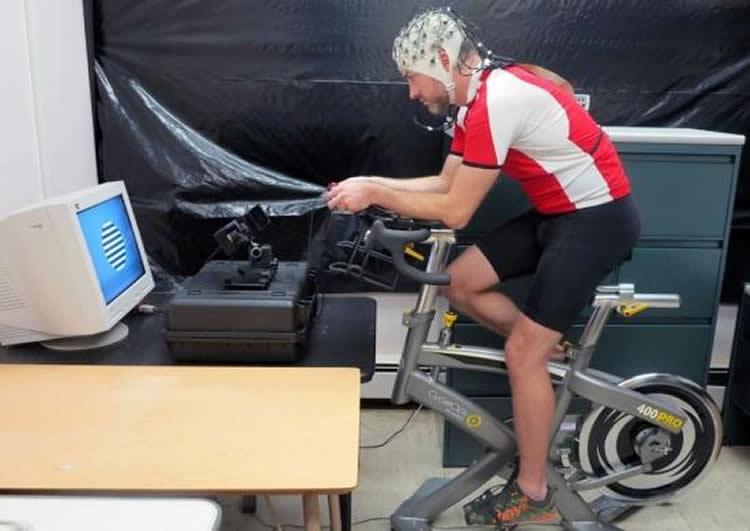
To investigate how exercise affects different aspects of cognitive function, the investigators enlisted 18 volunteers. Each of them wore a wireless heart rate monitor and an EEG (electroencephalogram) cap containing 64 scalp electrodes. While on a stationary bicycle, participants performed a simple orientation discrimination task using high-contrast stimuli composed of alternating black and white bars presented at one of nine spatial orientations. The tasks were performed while at rest and during bouts of both low- and high-intensity exercise.

The scientists then fed the recorded brain data into a computational model that allowed them to estimate the responses of the neurons in the visual cortex activated by the visual stimuli. They analyzed the responses while participants were at rest and then during low- and high-intensity exercise.

This approach allowed them to reconstruct what large populations of neurons in the visual cortex were doing in relation to each of the different stimulus orientations. The researchers were able to generate a “tuning curve,” which estimates how well the neurons are representing the different stimulus orientations.

Image shows a man on an exercise bike.
Participants rode stationary bikes while wearing a wireless heart rate monitor and an EEG cap. NeuroscienceNews.com image is credited to UCSB.
“We found that the peak response is enhanced during low-intensity exercise relative to rest and high-intensity exercise,” said lead author Bullock, a postdoctoral researcher in UCSB’s Attention Lab. “We also found that the curve narrows in, which suggests a reduction in bandwidth. Together, the increased gain and reduced bandwidth suggest that these neurons are becoming more sensitive to the stimuli presented during the low-intensity exercise condition relative to the other conditions.”

Giesbrecht noted that they don’t know the mechanism by which this is occurring. “There are some hints that it may be driven by specific neurotransmitters that increase global cortical excitability and that can account for the change in the gain and the increase in the peak response of these tuning profiles,” he said.

From a broader perspective, this work underscores the importance of exercise. “In fact, the benefits of brief bouts of exercise might provide a better and more tractable way to influence information processing — versus, say, brain training games or meditation — and in a way that’s not tied to a particular task,” Giesbrecht concluded.

Source: http://neurosciencenews.com

3C8CC2AE00000578 4162296 image a 49 14854732650661

Lunar Temple To Be Out Of This Word

The European Space Agency Has Revealed Plans For A Lunar Temple


It could be a temple like no other – and with a view that really is out of this world.The European Space Agency has revealed plans for a lunar temple to be built alongside mankind’s first outpost on the moon.The 50m high dome, close to a planned moon base near to the moon’s south pole, would give the first settlers ‘a place of contemplation’. Artist Jorge Mañes Rubio, part of ESA’s future-oriented Advanced Concepts Team (ACT), designed the temple to be built alongside ESA’s planned moon base.

I’ve been having all sorts of discussions with my ACT colleagues, including speculating on the likely needs of future lunar settlers,’ said Jorge.’What kind of social interactions will they share, what cultural activities and rituals will they have, and what sort of art and artifacts will they be producing?’Humans have been creating art for at least 30, 000 years, so I have no doubt this will continue in space and on the Moon.

 The temple would be built on the sunlit rim of Shackleton Crater, which is bathed much of the time in sunlight while overlooking a 4.2 km-deep interior mired in perpetual shadow.The lunar poles have previously been identified as promising locations for future settlement because craters kept shaded by the lowness of the Sun in the local sky are thought to serve as ‘cold traps’ to preserve water ice, potentially a vital source of water, air or rocket fuel.

The 50 m-high domed structure would be built using 3D printing of lunar soil.’The result might resemble ‘abode’ architecture, an ancient method of building that is still made use to this day,’ adds Jorge.’This was a big source of inspiration for me, along with 18th century Utopian architects such as Étienne-Louis de Boullée and Claude Nicolas Ledoux, who designed massive structures too large to be feasibly built on Earth – but practical in the Moon’s one-sixth gravity.’The ‘Moon Temple’ is intended as a symbol of unity for humankind, reflecting the pull that our natural satellite has always had on the human imagination, ESA says.’Lunar settlement represents a perfect chance for a fresh start, a place where there are no social conventions, no nations and no religion, somewhere where these concepts will need to be rethought from scratch. 

‘Humans have brought flags to the Moon, but they’ve been bleached white by sunlight since then – almost as if the Moon is protecting itself from such terrestrial concepts.So this Temple is intended as a mythic and universal structure that can hopefully bring people together in this new environment in novel ways.’ Jorge selected Shackleton over nearby Malapert Crater because Earth is perpetually visible from Malapert, while from Shackleton it will only be seen for two weeks at a time, inspiring more independent thinking.One opening in the dome will look Earthwards, while another at the top will peer out into deep space. 


SOURCE…www.dailymail.co.uk/sciencetech

107847435 hospital news xlarge trans NvBQzQNjv4BqsZuZ9lpn6XKc 7HMfxsEISGdC2hBQ8nEdyCkvpWWQAs1

Deadly Cancers Diagnosed Earlier With Breath Test Could Save Lives


A simple breath test could save lives by diagnosing deadly cancers early.

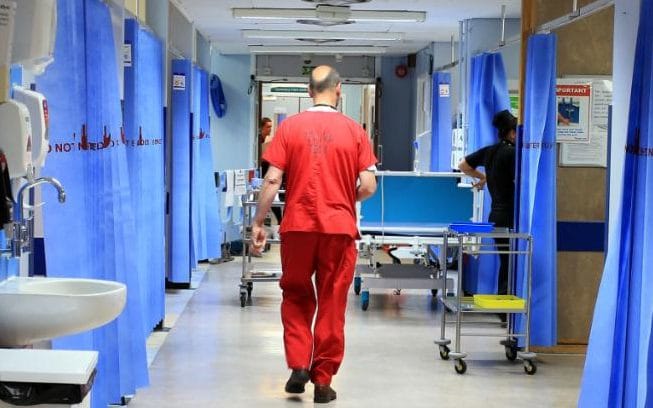
British research shows the breathalyzer is 85 per cent accurate at identifying stomach and esophageal cancers, which between them affect 16,000 men and women a year. Both types of cancer are often diagnosed late, leading to poor survival rates. Scientists hope the new breath test will ultimately lead to cancers being spotted earlier, resulting in more effective treatment and saved lives.It is also expected to help doctors avoid unnecessary endoscopy examinations – unpleasant diagnostic procedures that require a flexible telescope to be inserted down the throat and into the stomach. 

The procedure is expensive and can be uncomfortable. Once diagnosed, around 85 per cent of sufferers die within five years. By the time symptoms appear, the disease is often in later stages.But scientists believe the new tests, which measures five different chemicals in each breath, could make it simpler to screen patients earlier. The chemicals give vital clues on whether someone has cancer or a less serious gastric condition. 

Dr Sheraz Markar, one of the trial researchers from Imperial College London, said: “At present the only way to diagnose esophageal cancer or stomach cancer is with endoscopy. This method is expensive, invasive and has some risk of complications.”A breath test could be used as a , first-line test to reduce the number of unnecessary endoscopes. In the longer term this could also mean earlier diagnosis and treatment, and better survival.”

Each year in the UK around 6,682 people are diagnosed with stomach cancer and 4,576 die from the disease.There are 8,919 cases of esophageal cancer, affecting the food pipe or gullet, with 7,790 deaths.For the new study breath samples were collected from 335 patients at three London hospitals. Of these, 163 had been diagnosed with esophageal or stomach cancer while 172 were shown to be cancer-free after undergoing endoscopy tests.

SOURCE…www.telegraph.co.uk

108995923 brain news large trans NvBQzQNjv4BqpJliwavx4coWFCaEkEsb3kvxIt lGGWCWqwLa RXJU81

Your Life Does Flash Before Your Eyes Before You Die

Your life really does flash before your eyes when you die,


A study suggests – with the parts of the brain that store memories last to be affected as other functions fail. Research on those who have had “near death” experiences suggests that the phenomenon rarely involves flashbacks in chronological order, as happens in Hollywood films. Participants said that there was rarely any order to their life memories and that they seemed to come at random, and sometimes simultaneously. 

Participants said that there was rarely any order to their life memories and that they seemed to come at random, and sometimes simultaneously. Often, the mind played tricks – with people reliving their own experiences from the point of view of others who had been involved. The study found that many of the flashbacks involved intensely emotional moments. Researchers from Hadassah University in Jerusalem analyzed seven accounts of such experiences, obtained from in-depth interviews. 

These were to devise a questionnaire which was sent out to 264 other people who gave detailed responses of their experiences. The idea that life flashes in front of a person has  featured in countless works of literature and film. But there  has been limited research to explain what the phenomenon involves. Researchers said  the new  study shines a light on “a most intriguing mental phenomenon that fascinated humans from time immemorial” – which they coined “life review  experience” (LRE). Those involved in  the study said they lost all sense  of time, with memories flying  back at them from all periods of their life.  One wrote:  “There is not a linear progression, there is lack of time limits… It was like being there for centuries. I was not in time/space so this question also feels impossible to answer.

“A moment, and a thousand years… both and neither. It all happened at once, or some experiences within my near-death experience were going on at the same time as others, though my human mind separates them into different events”.  Individually go into each person and I could feel the pain that they had in their life… “I was allowed to see that part of them and feel for myself what they felt”.Another said: ‘I was seeing, feeling these things about him (my father), and he was sharing with me the things of his early childhood and how things were difficult for him’. Every person in the study said they were left with a new perspective  on their  life  events and on significant people in their lives.  

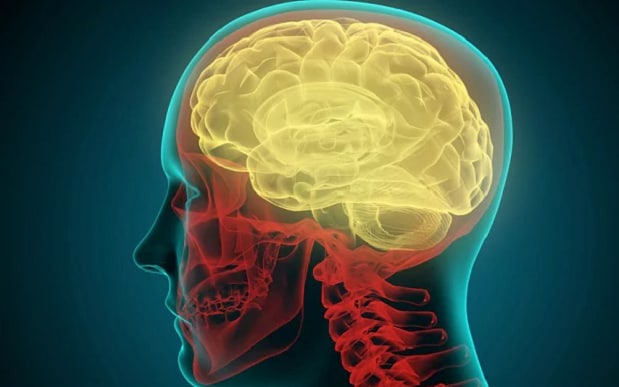
Researchers said that the phenomenon could be caused by the parts of the brain that store autobiographical memories like the prefrontal, medial temporal, and parietal cortices.Those parts of the brain are not susceptible to oxygen and blood loss during serious injuries, meaning they are one of the last brain functions to suffer. The study, published in the journal Consciousness and Cognition, concludes: “Re-experiencing one’s own life-events, so-called LRE, is a phenomenon with well-defined characteristics, and its sub-components may be also evident in healthy people.”This suggests that a representation of life-events as a continuum exists in the cognitive system, and may be further expressed in extreme conditions of psychological and physiological stress“.Previous studies have suggested that the phenomenon is more common among those with a high concentration of carbon dioxide in the breath and arteries following a cardiac arrest.

SOURCE…www.telegraph.co.uk

nintchdbpict0002970072461

Anxiety and depression may raise risk of dying from cancer, research suggests

Adults struggling with anxiety or low moods see their risk of being killed by a tumor rose by 32 per cent, a study found. And for some cancers the chances of death soar by 286 per cent.Those who are most distressed are at greater risk of cancer of the bowel, prostate, pancreas and esophagus and of leukemia. Experts from University College London followed more than 160,000 men and women who were initially free from cancer.By the end of the decade-long study, published in the British Medical Journal, 4,353 went on to die from the disease.After examining levels of psychological distress – such as anxiety or depression – they found it had a significant impact.

Those with the greatest levels of unhappiness were more likely to be killed by cancer. Dr David Batty, of UCL, said: “The results show that compared with people in the least distressed group, death rates in the most distressed group were consistently higher for cancer of the bowel, prostate, pancreas and esophagus and for leukemia.”The data shows the most depressed saw their risk of bowel cancer rise 84 per cent, prostate 142 per cent, pancreas 176 per cent, throat by 159 per cent and leukemia by 286 per cent. Researchers said the study did not definitely prove distress increased the chances of cancer death.

Instead, the researchers said it may mean diagnosed cancers could cause the depression.But further analysis of the data, excluding those who died in the first five years of the study, found the link between distress and cancer death remained. Dr Batty added: “Our findings contribute to the evidence that poor mental health might have some predictive capacity for certain physical diseases but we are a long way off from knowing if these relationships are truly causal.”

More than 330,000 Brits are diagnosed with cancer each year, with around 160,000 dying. Professor Peter Johnson, from Cancer Research UK, said: “This interesting study suggests a link between a person’s mental health and their risk of dying from cancer.“But we need more research to see if this is really the case, or if anxiety and depression are linked to known cancer risks such as smoking, overweight and high alcohol intake.“Better mental health may be another way in which we can reduce our risk of developing cancer, and this deserves serious attention.”

SOURCE…www.thesun.co.uk

2017 01 26T160446Z 3 LYNXMPED0P13A RTROPTP 2 HEALTH BIRDFLU RISKS1

Bird Flu Pandemic Could Cost Pandemic

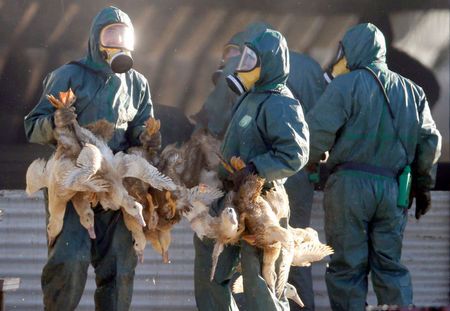
 The global spread of bird flu and the number of viral strains currently circulating and causing infections have reached unprecedented levels, raising the risk of a potential human outbreak, according to disease experts.Multiple outbreaks have been reported in poultry farms and wild flocks across Europe, Africa and Asia in the past three months. While most involve strains that are currently low risk for human health. The sheer number of different types, their presence in so many parts of the world at the same time, increases the risk of viruses mixing and mutating . Thus possibly jumping to people.

“This is a fundamental change in the natural history of influenza viruses,” Michael Osterholm, an infectious disease specialist at University of Minnesota, said .The proliferation of bird flu in terms of geography and strains –  is a situation he described as “unprecedented”.Global health officials are worried another strain could make a jump into humans, like H5N1 did in the late 1990s. It has since caused hundreds of human infections and deaths, but has not acquired the ability to transmit easily from person to person.

The greatest fear is that a deadly strain of avian flu could then mutate into a pandemic form that can be passed easily between people… Something that has not yet been seen. While avian flu has been a prominent public health issue since the 1990s, ongoing outbreaks have never been so widely spread around the world. Infectious disease experts put down to greater resilience of strains currently circulating, rather than improved detection or reporting.While there would normally be around two or three bird flu strains recorded in birds at any one time, now there are at least half a dozen. Including H5N1, H5N2, H5N8 and H7N8.”

The Organization for Animal Health (OIE) says the concurrent outbreaks in birds in recent months are “a global public health concern”.  the World Health Organization’s director-general warned this week the world “cannot afford to miss the early signals” of a possible human flu pandemic. The precise reasons for the unusually large number and sustained nature of bird outbreaks in recent months, and the proliferation of strains, is unclear . Although such developments compound the global spreading process.

Bird flu is usually spread through flocks through direct contact with an infected bird. But Osterholm said wild birds could be “shedding” more of the virus in droppings and other secretions, increasing infection risks. He added that there now appears to be “aerosol transmission from one infected barn to others, in some cases many miles away”.Ian MacKay, a virologist at Australia’s University of Queensland, said the current proliferation of strains means that “by definition, there is an increased risk” to humans.”You’ve got more exposures, to more farmers, more often, and in greater numbers, in more parts of the world”. “There has to be an increased risk of spillover human cases,” he told Reuters.

BRITAIN TO BANGLADESH

 Nearly 40 countries have reported new outbreaks of highly pathogenic avian influenza in poultry or wild birds since November . In China, H7N9 strains of bird flu have been infecting both birds and people, with the of human cases rising in recent weeks due to the peak of the flu season there. According to the WHO, more than 900 people have been infected with H7N9 bird flu since it emerged in early 2013.

In birds, latest data from the OIE should that outbreaks of highly pathogenic avian flu have been detected in Britain, Italy, Kuwait and Bangladesh in the last few days alone.Russia’s agriculture watchdog issued a statement describing the situation as “extremely tense” as it reported H5N8 flu outbreaks in another four regions. Hungarian farmers have had to cull 3 million birds, mostly geese and ducks.These come on top of epidemics across Europe and Asia which have been ongoing since late last year, leading to mass culling of poultry in many countries.Strains currently documented as circulating in birds include H5N8 in many parts of Europe as well as in Kuwait, Egypt and elsewhere, and H5N1 in Bangladesh and India.

In Africa – which experts say is especially vulnerable to missing flu outbreak warning signs due to limited local government capacities and weak animal and human health services – H5N1 outbreaks have been reported in birds in Burkina Faso, Cameroon, Ghana, Niger, Nigeria and Togo. H5N8 has been detected in Tunisia and Egypt, and H7N1 in Algeria.The United States has, so far this year, largely escaped bird flu, but is on high alert after outbreaks of H5N2, a highly pathogenic bird flu, hit farms in 15 states in 2015 and led to the culling of more than 43 million poultry.

David Nabarro, a former senior WHO official who has also served as U.N. system senior coordinator for avian and human influenza, says the situation is worrying. “For me the threat from avian influenza is the most serious (to public health), because you never know when,” he told Reuters in Geneva.

HIGHLY PATHOGENIC H5N1

H5N1 is under close surveillance by health authorities around the world. It has long been seen as one to watch, feared by infectious disease experts because of its pandemic potential if it were to mutate an acquire human-to-human transmission capability.

A highly pathogenic virus, it jumped into humans in Hong Kong in 1997 and then re-emerged in 2003/2004, spreading from Asia to Europe and Africa. It has caused hundreds of infections and deaths in people and prompted the culling of hundreds of millions of poultry. Some currently circulating H5 strains – including distant relatives of H5N1 – are showing significant capabilities for sustaining their spread between wild flocks and poultry, from region to region and farm to farm.

“What we’re learning about H5 is, that whether its H5N6, H5N8, H5N2 or H5N5, this is a very dangerous bird virus.”Against that background, global health authorities and infectious disease experts want awareness, surveillance and vigilance stepped up. Wherever wild birds are found to be infected,  wherever there are farms or smallholdings with affected poultry or aquatic bird flocks, regular, repeated and consistent testing of everyone and anyone who comes into contact is vital.

“Influenza is a very tough beast because it changes all the time.  The ones we’re tracking may not include one that suddenly emerges and takes hold,” said MacKay.”Right now, it’s hard to say whether we’re doing enough (to keep on top of the threat). I guess that while it isn’t taking off, we seem to be doing enough.”

SOURCE..www.yahoo.com/news/proliferation-bird-flu