Life20Sciences20Database Brain stem1

CELLS DRIPPED INTO THE BRAIN HELP MAN FIGHT A DEADLY CANCER


A man with deadly brain cancer that had spread to his spine saw his tumors shrink and, for a time, completely vanish after a novel treatment to help his immune system attack his disease – another first in this promising field.The type of immunotherapy that 50-year-old Richard Grady received already has helped some people with blood cancers such as leukemia. But the way he was given it is new, and may allow its use not just for brain tumors but also other cancers that can spread, such as breast and lung.

Grady was the first person to get the treatment dripped through a tube into a space in the brain where spinal fluid is made, sending it down the path the cancer traveled to his spine.He had “a remarkable response” that opens the door to wider testing, said Dr. Behnam Badie, neurosurgery chief at City of Hope, a cancer center in Duarte, California, where Grady was treated.The case is reported in this week’s New England Journal of Medicine.Each year in the United States, about 20,000 people are diagnosed with a type of brain tumor called glioblastoma. Grady, who lives in Seattle, had the usual surgery, radiation and chemotherapy, but the cancer came back.He enrolled in a clinical trial at City of Hope and had some of his own blood cells, called T cells, removed and genetically modified in the lab to turn them into specialized soldiers to seek and destroy cancer.

The treatment, called CAR-T cell therapy, has been used for blood cancers, but its value for solid tumors is unknown. City of Hope has been testing injecting the cells directly into the brain.First, Grady had more surgery to remove three of his largest tumors. Then he got six weekly infusions of the cells through a tube into his brain, where the biggest one had been. No cancer recurred there, but the remaining tumors continued to grow, new ones appeared, and cancer spread to his spine.

Doctors decided on a bold step: placing a second tube in his brain, into a cavity where spinal fluid is made, and putting the cells there.”The idea was to have the flow of the spinal fluid carry the T cells to different locations,” along the route the cancer had taken, Badie said.After three treatments, all tumors had shrunk dramatically. After the 10th treatment, “we saw all the tumors disappear,” and Grady was able to cut back on other medicines and return to work, Badie said.

New tumors, though, have now emerged in different spots in his brain and spine, and he is getting radiation treatment. But his response to immunotherapy lasted more than seven months, and “for him to live more than a year and half” after starting it is amazing for a situation where survival often is measured in weeks, Badie said.Side effects of the treatment were manageable, including headaches, fatigue and muscle aches, and some may have been due to other medicines Grady needed, doctors reported.

It’s early research, but it’s an advance for the field “that they showed this is safe, at least in this patient,” said Dr. Donald O’Rourke, a neurosurgeon heading a similar study at the University of Pennsylvania.O’Rourke treated 10 brain tumor patients with CAR-T cells but used a single IV dose. A paper detailing results is in the works, but “it’s pretty striking what we’ve found,” he said.At City of Hope, nine patients have been treated so far, but only three with infusions into the spinal fluid brain cavity. Two of the nine have not responded to treatment, Badie said.

His study is supported by the nonprofit Gateway for Cancer Research, the Food and Drug Administration, the California Institute for Regenerative Medicine and the National Institutes of Health. Some authors get royalties from pending patents or money from Mustang Bio, Inc., which has licensed some of the technology.


SOURCE…www.hosted.ap.org

Breathalyser can detect 17 diseases

As far back as 400 BC, Hippocrates advised his students to smell their patients’ breath to detect if they were ill.Now, researchers in America have invented a system which does just that, only rather more scientifically.  A new analyzer uses nano-rays to determine the precise chemical composition of a person’s breath.From that it is able to detect the “signature” of any of 17 serious diseases, from kidney cancer to Parkinson’s disease.Exhaled breath contains nitrogen, carbon dioxide and oxygen, as well as small amounts of more than 100 other chemicals, but the relative amount of each substance varies depending on a person’s state of health.Writing in the journal ACS Nano, scientists describe how they analysed the results with artificial intelligence techniques to classify and diagnose the conditions.They found that each disease produces a unique volatile chemical breath print, based on differing amounts of 13 components.They also showed that the presence of one disease would not prevent the detection of others.The technology allows for an inexpensive and portable breathalyzer-style device, which costs as little as £24 and is able to screen for various diseases in a non-invasive way.Lead author Professor Hossam Haick, said: “We found that just as we each have a unique fingerprint, each of the diseases we studied has an unique breath print, a ‘signature’ of chemical components.”We have a device which can discriminate between them, which is elegant and affordable.”In recent years, scientists have developed experimental breath analyzers, but most of these instruments focus on a single type of disease, such as cancer.

SOURCE..www.telegraph.co.uk

 
3B9014D700000578 4055222 image m 4 14823378711751

Jackfruit And Plant Water Are The Foods To Help You Lose Weight


This year we couldn’t get enough of coconut water and baobab thanks to their slimming properties – but if experts are to be believed, these super foods will be old news by January.Leading nutritionists have revealed the top food and drink to help you lose weight in 2017, including plant water and jack fruit. The products they predict will be flying off the shelves next year may sound somewhat unappetizing – but not only do they have slimming properties, they can also help boost digestion, lower cholesterol and even banish hangovers.

JACK FRUIT

‘You might have heard people referring to jack fruit as “pulled pork for vegetarians”,’ says Carly Tierney, personal trainer and expert nutritionist at UK gym chain DW Fitness Clubs. ‘If not, you almost certainly will have done by the end of 2017; as a popular substitute for meat, it’s going to be everywhere!

‘Studies have shown that Jack fruit has anti-inflammatory properties, which can be an important aspect of preventing obesity. ‘The seeds are particularly good for you. A strong source of Vitamin C and antioxidants, they can help to prevent cell damage, which is great news for your immune system. ‘Additionally, the seeds are thought to be beneficial for your blood circulation. This can be vital for hair growth, among other things.’

PLANT WATER 

Following on from the coconut water boom, Frida Harju, the in-house nutritionist at health app Life sum, reckons we’ll be seeing more plant waters being added to our diets than ever.Cactus plant water is set to be huge next year; it has health benefits that include helping fight high cholesterol levels and curing hangovers.Being high in fiber and low in calories means it can also help you stay fuller for longer – making it an excellent weight loss aid.  Expect birch sap water will be a hit thanks to its high levels of antioxidants, natural minerals and xylitol (a natural sugar).

SEAWEED

After being a mainstay in Asian cuisine for many years, seaweed is increasingly catching on in the West – with TV chef Jamie Oliver attesting to its weight loss properties.Its growing popularity, says Carly, is down to it being vegan-friendly. ‘Naturally low in calories, seaweed can add an extra dimension to a wide range of dishes.’Whether you include it in a stew or soup, or you add some to your stir fry, it’s an extremely versatile ingredient.

‘In terms of nutritional benefits, seaweed is said to be a rich source of iron and calcium. Also, a piece of research cited by the European Food Information Council suggested that an 8g portion of dried seaweed provides a similar amount of fiber to a banana. ‘This makes it a great alternative for those who are wary about the high natural sugar content in certain fruits.’Perhaps unsurprisingly, some types of seaweed have a high salt content, which you need to take into consideration when adding it to your meals.’ There is also a natural fiber in sea kelp called alginate, which inhibits the enzymes that digest fat so that less is absorbed by the body. 

POKE BOWLS

Hawaiian  poke bowls – low-calorie, raw fish salads – are tipped to go take the foodie scene by storm after migrating from Hawaii to the ultra-trendy restaurants of Los Angeles.’Combining raw fish with fresh greens is never a bad idea, and these convenient, super-nutritious meals could revolutionize your lunchtime routine,’ says Carly.’The health benefits of raw fish are well documented. Tuna is full of ‘good fats’, which help to prevent blood clotting and boost cognitive functionality. ‘You should be eating at least one portion of Omega-3-rich fish each week, and poke bowls are a great way to go about this. ‘Be prepared for Poke Bowls to dominate your Instagram feed in 2017!’

SOURCE...www.dailymail.co.uk/


LEAF e1482426851495

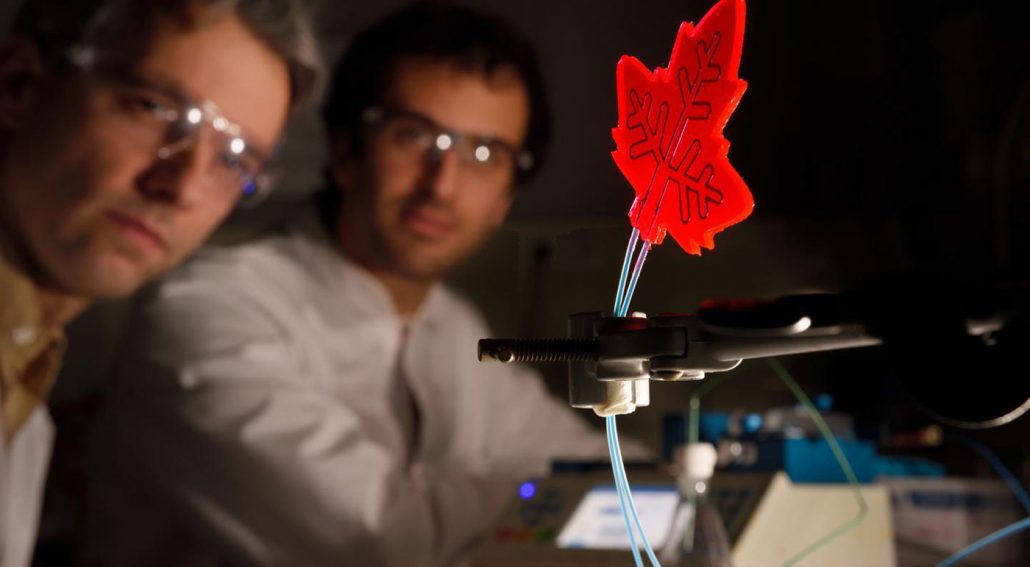
Dutch scientists Develop Artificial Leaf To Manufacture Medicine

Dutch scientists have developed an artificial leaf that can act as a mini-factory for producing drugs, an advance that could allow medicines to be produced anywhere there is sunlight.The work taps into the ability of plants to use sunlight to feed themselves through photosynthesis, something industrial chemists have struggled to replicate because sunshine usually generates too little energy to fuel chemical reactions.

The leaf-inspired micro factory mimics nature’s efficiency at harvesting solar radiation by using new materials called luminescent solar concentrators with very thin channels through which liquid is pumped, exposing molecules to sunlight.

 “Theoretically, you could use this device to make drug compounds with solar energy anywhere you want,” said lead researcher Timothy Noel at Eindhoven University of Technology.By doing away with the need for a power grid, it may be possible one day to make malaria drugs in the jungle or even medicines on Mars in some future space colony, he believes.The device, made from silicone rubber, can operate even when there is diffuse light, which means it will work under cloudy skies. However, there is still a way to go to scale up the process to make it commercially viable.

Noel and his colleagues, who published their research in the science journal Angewandte Chemie on Wednesday, are now trying to improve energy efficiency further and increase output.Because the artificial leaf relies on micro-channels to bring chemicals into direct contact with sunlight, each unit needs to be small — but they could be easily linked together to increase production.

“You can make a whole tree with many, many different leaves placed in parallel,” Noel told Reuters. “These are very cheap things to make, so there is a lot of potential.”He thinks the process could start to become broadly available to chemical engineers within five to 10 years.It is not the first time that scientists have drawn inspiration from plants when considering novel ways to manufacture pharmaceuticals.

In 2012, the U.S. Food and Drug Administration approved a drug called Elelyso from Pfizer and Protalix Biotherapeutics for Gaucher disease, a rare genetic condition, made with genetically modified carrot cells.Other researchers are also cultivating crops that have been specially bred to produce useful medicines and vaccines in their leaves.

SOURCE…www.stltoday.com

nutrition intelligence aging public neurosciencenews1

Nutrition Linked to Intelligence and Brain Health in Older People

 
A study of older adults links consumption of a pigment found in leafy greens to the preservation of “crystallized intelligence,” the ability to use the skills and knowledge one has acquired over a lifetime.
 

Lutein (LOO-teen) is one of several plant pigments that humans acquire through the diet, primarily by eating leafy green vegetables, cruciferous vegetables such as broccoli, or egg yolks, said University of Illinois graduate student Marta Zamroziewicz, who led the study with Illinois psychology professor Aron Barbey. Lutein accumulates in the brain, embedding in cell membranes, where it likely plays “a neuroprotective role,” she said.

“Previous studies have found that a person’s lutein status is linked to cognitive performance across the lifespan,” Zamroziewicz said. “Research also shows that lutein accumulates in the gray matter of brain regions known to underlie the preservation of cognitive function in healthy brain aging.”

The study enrolled 122 healthy participants aged 65 to 75 who solved problems and answered questions on a standard test of crystallized intelligence. Researchers also collected blood samples to determine blood serum levels of lutein and imaged participants’ brains using MRI to measure the volume of different brain structures.The team focused on parts of the temporal cortex, a brain region that other studies suggest plays a role in the preservation of crystallized intelligence.

The researchers found that participants with higher blood serum levels of lutein tended to do better on tests of crystallized intelligence. Serum lutein levels reflect only recent dietary intakes, Zamroziewicz said, but are associated with brain concentrations of lutein in older adults, which reflect long-term dietary intake.Those with higher serum lutein levels also tended to have thicker gray matter in the parahippocampal cortex, a brain region that, like crystallized intelligence, is preserved in healthy aging, the researchers report.

“Our analyses revealed that gray-matter volume of the parahippocampal cortex on the right side of the brain accounts for the relationship between lutein and crystallized intelligence,” Barbey said. “This offers the first clue as to which brain regions specifically play a role in the preservation of crystallized intelligence, and how factors such as diet may contribute to that relationship.”“Our findings do not demonstrate causality,” Zamroziewicz said. “We did find that lutein is linked to crystallized intelligence through the parahippocampal cortex.”

“We can only hypothesize at this point how lutein in the diet affects brain structure,” Barbey said. “It may be that it plays an anti-inflammatory role or aids in cell-to-cell signaling. But our finding adds to the evidence suggesting that particular nutrients slow age-related declines in cognition by influencing specific features of brain aging.”

gettyimages 883778961 e1482255690695

Kids Turn Violent As Parents Battle ‘Digital Heroin’ Addiction

On August 28, The Post published a piece by Dr. Nicholas Kardaras, “The Frightening Effects of Digital Heroin,” that was based on his book “Glow Kids.” In it, he argued that young children exposed to too much screen time are at risk of developing an addiction “harder to kick than drugs.” The response was overwhelming, generating more than 3.3 million views on The Post’s website and hundreds of letters from anxious parents. Now Dr. Kardaras writes about this parental revolt against digital heroin and reminds readers of the worst effects of the obsession.

Experienced sailors, Barbara McVeigh and her husband exposed their children to the natural beauty near their home in Marin County, Calif. — boating, camping and adventuring in the great outdoors. None of this stopped her 9-year-old son from falling down the digital rabbit hole.

His first exposure to screens occurred in first grade at a highly regarded public school — named one of California’s “Distinguished Schools” — when he was encouraged to play edu-games after class. His contact with screens only increased during play dates where the majority of his friends played violent games on huge monitors in their suburban homes.

The results for Barbara’s son were horrific: Her sweet boy, who had a “big spirit” and loved animals, now only wanted to play inside on a device.“He would refuse to do anything unless I would let him play his game,” she said. Barbara, who had discarded her TV 25 years ago, made the mistake of using the game as a bargaining tool.

Her son became increasingly explosive if she didn’t acquiesce. And then he got physical. It started with a push here, then a punch there. Frightened, she tried to take the device away. And that’s when it happened: “He beat the s–t out of me,” she told me.

When she tried to take his computer away, he attacked her “with a dazed look on his face — his eyes were not his.” She called the police. Shocked, they asked if the 9-year-old was on drugs.He was — only his drugs weren’t pharmaceutical, they were digital.

In August, I wrote a piece about “digital heroin” for the New York Post, and the response was explosive. More than 3 million readers devoured and shared the piece — though not everyone agreed on its message. Some readers felt that the notion of comparing screens and video games to heroin was a huge exaggeration.

I understand that initial response, but the research says otherwise. Over 200 peer-reviewed studies correlate excessive screen usage with a whole host of clinical disorders, including addiction. Recent brain-imaging research confirms that glowing screens affect the brain’s frontal cortex — which controls executive functioning, including impulse control — in exactly the same way that drugs like cocaine and heroin do. Thanks to research from the US military, we also know that screens and video games can literally affect the brain like digital morphine.

In a series of clinical experiments, a video game called “Snow World” served as an effective pain killer for burned military combat victims, who would normally be given large doses of morphine during their painful daily wound care. While the burn patient played the seemingly innocuous virtual reality game “Snow World” — where the player attempts to throw snowballs at cartoon penguins as they bounce around to Paul Simon music — they felt no pain.

I interviewed Lt. Sam Brown, one of the pilot participants in this research who had been injured by an IED in Afghanistan and who had sustained life-threatening third-degree burns over 30 percent of his body. When I asked him about his experience using a video game for pain management, he said: “I was a little bit skeptical. But honestly, I was willing to try anything.” When asked what it felt like compared to his morphine treatments, he said, “I was for sure feeling less pain than I was with the morphine.”

Sure enough, brain imaging research confirmed that burn patients who played “Snow World” experienced less pain in the parts of their brain associated with processing pain than those treated with actual morphine. The Navy’s head of addiction research, Cmdr. Dr. Andrew Doan, calls screens “digital pharmakeia” (Greek for pharmaceuticals), a term he coined to explain the neurobiological effects produced by video technologies.

While this is a wonderful advance in pain-management medicine, it begs the question: Just what effect is this digital drug — a narcotic more powerful than morphine — having on the brains and nervous systems of 7-year-olds addicted to their glowing screens?

If screens are indeed digital drugs, then schools have become drug dealers. Under misguided notions that they are “educational,” the entire classroom landscape has been transformed over the past 10 years into a digital playground that includes Chromebooks, iPads, Smart Boards, tablets, smartphones, learning apps and a never-ending variety of “edu-games.”

These so-called “edu-games” are digital Trojan horses — chock-full of the potential for clinical disorders. We’ve already seen ADHD rates explode by over 50 percent the past 10 years as a whole generation of screen-raised kids succumb to the malaise-inducing glow. Using hyper-stimulating digital content to “engage” otherwise distracted students creates a vicious and addictive ADHD cycle: The more a child is stimulated, the more that child needs to keep getting stimulated in order to hold their attention.

Research also indicates that retention rates are lower on screens than on paper and that schools without electronics report higher test scores. And then there’s Finland. A standard bearer of international excellence in education, Finland rejected screens in the classroom. According to Krista Kiuru, their minister of education and science, Finnish students didn’t need laptops and iPads to get to the top of the international education rankings and aren’t interested in using them to stay there.

Yet in the US, there is a national effort to give kids screens at younger and younger ages as parents worry that their little ones may somehow be “left behind” in the education technology arms race — the data be damned.But not all parents are drinking the screens-are-wonderful Kool-Aid — some are fighting back.Cindy Eckard, a Maryland mother of two, is launching a grassroots campaign to create legislation to limit screen time in schools and is testifying in front of a state Senate subcommittee hearing this month.

“I was shocked to learn that the Maryland State Department of Education had no medically sound health guidelines in place before they put so many of our children in front of a computer every day . . . The schools keep encouraging more screen time in the classroom without any regard for our children’s well-being,” Eckard told me. “Our children are owed a safe classroom environment, and right now they’re not getting one.”

Some parents are opting out of public schools for less technology-dependent schools. Many Silicon Valley engineers and executives, for example, put their kids in non-tech Waldorf schools.Others, like longtime educator and consultant Debra Lambrecht, have decided to create new tech-free school models. Debra has created the Caulbridge School, a distinctly “Finnish-style” school that is intended to serve as a template for future schools throughout the country.

“The argument for technology in the earlier grades is often rooted in the fear of children falling behind. It is true that most children will use technology in their jobs and everyday life. It is also true that most children will learn to drive a car,” Lambrecht said. “Certainly we would not give a 7-year-old child the car keys to give them a jump-start to be a more skillful driver. In the same way, we want to ensure children can effectively use technology as a tool and will bring all of their best thinking, creativity and innovation to bear.”

A Long Island mother recently contacted me because her 5-year-old son in kindergarten was going to be forced by the school to use an iPad. When she complained and threatened to pull her son out of school, her school district threatened to call child protective services. I spoke to her school’s superintendent, and he agreed to let her son opt out of using an iPad. But all the other kindergartners still need to use iPads for standardized-testing purposes. That Long Island mother has already reached out to her local legislators.

That seems to be the key. Parents need to educate themselves, find their voices and speak up. If enough parents organize, push for legislation and put pressure on their schools to limit screen time in school — as well as to delay the grade levels that screens are introduced into the classroom — then we might have a chance to slow down this digital epidemic.

Indeed, even the respected AAP (American Academy of Pediatrics) has just this month modified their screen recommendations suggesting more tech-cautious guidelines: Children younger than 18 months, no digital media; ages 2 to 5, no more than one hour daily, to be “co-viewed” with parents.

But many, myself included, think these recommendations still don’t go far enough. Because of what we know about screens as “digital heroin,” I believe that kids below the age of 10 should have no interaction with interactive screens (iPads, smartphones, Xbox). There should be warning labels on such interactive screens that read: “Excessive Screen Usage by Children May Lead to Clinical Disorders.”

Meanwhile, back in Marin County, Barbara pulled her son out of his suburban tech-filled public school and enrolled him in a more rural, less tech-oriented school. So far, she’s seen huge improvements in his behavior.

She just found out last week that all fourth-graders in her son’s new school will begin learning the increasingly popular skill of “coding” to design video games. Even in this rural hamlet school, kids were allowed to play violent video games indoors rather than having to go outside to play during recess.

She is now hoping to get political about this issue and to reach out to legislators to end the digital madness in elementary schools. “I am prepared to go to war with our public education over technology use. This is wrong,” Barbara said with the determined voice of a mother fighting for her child’s life.

“I feel like there is a war going on against our children,” Barbara said. “And it’s come so fast that we’re not even questioning it.”


SOURCE… nypost.com