21404732251

Technion Invents Spinach-powered Electricity Cell


‘My dream is to get up in morning, cut the grass, put it into the machine, come back in evening and have enough power to run the home,”

Oil is clearly the devil and hydrogen is evidently the fuel of the future. Now Israeli researchers have developed a “really green” power cell that produces electricity and hydrogen, using nothing but spinach, water and sunlight.We used spinach, but you can use any leaf,” says Prof. Noam Adir of the interdisciplinary Technion team that designed the breakthrough bio-photo-electro-chemical cell.

Why then use a popular salad ingredient rather than hydrangea or pine needles or some other non-crop plant? Convenience, Adir explains. Historically, botanists researched photosynthesis using spinach because while all plants generate sugar from water and sunlight, spinach does so especially well. You can drop by the supermarket and pick some up. Also, spinach keeps well after purchase, meaning that its active components remain active.

The spinach cell may not save Las Vegas’ lights from going out but it could be perfect for remote villages here on earth with modest power needs – or colonies in Mars, Prof. Noam Adir tells Haaretz. This clean, green power machine  emits no contaminants, only spinach membrane slurry, which the brave could eat, the squeamish could use to fertilize gardens in Martian craters or wherever they please, and the indifferent could pour down the sink .

Since spinach is not patentable, for now the cell remains academic. “We are at the stage of investigating its feasibility, whether it would be of applicative interest to anybody,” says the professor. “Patents are only good if you can protect them,” he adds, noting that anybody can drop by the grocer and buy spinach, and the other cell components are nothing special. Essentially the scientists pursued the work, funded chiefly by the Israeli government but also using grants from the American and German federal authorities, because it matters. Rather than operating in stealth mode, as one does with patentable ideas, they published. “We did it because we thought it important,” Adir sums up: “We’re not hiding it. We’re telling the world.”
So they are: the latest findings are reported in “Hybrid bio-photo-electro-chemical cells for solar water splitting,” published this month in the prestigious journal Nature. The study was conducted by doctoral students Roy I. Pinhassi, Dan Kallmann and Gadiel Saper, under the guidance of Adir of the Schulich Faculty of Chemistry, Prof. Gadi Schuster of the Faculty of Biology and Prof. Avner Rothschild of the Faculty of Material Science and Engineering.

“We proved that energy can be made really green using material at negligible cost, with no contaminating synthetics, no expensive or rare or toxic elements,” Adir says.
In order to harness photosynthesis by the spinach membranes to make electricity, the researchers added a non-toxic iron-based compound to the solution in the cell. This iron juice transfers electrons from the membranes to the electrical circuit, known in English as creating a current. The electrical current can be utilized to form hydrogen gas by adding electric power from a small photovoltaic cell that absorbs the excess light. This enables solar energy to be converted into chemical energy that is stored as hydrogen gas formed inside the BPEC cell. This energy can be converted when necessary into heat and electricity by burning the hydrogen, in the same way hydrocarbon fuels are used.

Unlike oil-based fuels, which emit greenhouse gases when burned, the product of hydrogen combustion is clean water. The Technion cell is a closed cycle: it begins with water and ends with water and can be used to produce and store hydrogen gas.Powering the house with the lawn Centralized mass energy production is more efficient, but it creates two key problems. Vast distribution involves vast energy waste in distribution and two, not everybody lives near the grid.This is where the cell could come in: remote places that don’t need a lot of power. “Not like our society which is very energy-intensive. Sometimes all one needs is enough for light and to charge the cellphone. My dream is to get up in morning, cut the grass, put it into the machine, come back in evening and have enough power to run the home,” says Adir.


One issue that may need resolving is shelf life. The membranes in the spinach slush die in 20 minutes, Adir says. “We remove the old membranes, put in new and the machine keeps working. We’re talking about nearly nothing.”Another team working on nearly nothing that could save the planet is at Tel Aviv University, where Assistant Prof. Iftach Yacoby is leading research on engineering microscopic algae to cleanly produce hydrogen.But back to our spinach cell. How much of this nearly nothing will it take to power a house? “A hundred micrograms of spinach membrane shake gives me half a milliamp per centimeter squared of electricity,” he says, and elaborates: “The Israel Electric Corporation might not be impressed but on Mars, where you have to grow food and need oxygen and need hydrogen, this does it all and you can eat the membrane mush too. Or use it to fertilize the Martian soil.”

SOURCE…www.haaretz.com/israel-news/science/1.743679?v=08FB9A1487F457E2D91BA33C787710A9

 

JS100857328 boris eats icecream2 xlarge transHhrn6m5UEUheQLt3yR6E3ZJLA6ExRBZ3bB1AiuVCz3w1

Can Ice cream For Breakfast Make You Smarter?

In a discovery that will give nutritionists the shivers, a Japanese scientist has discovered that consuming ice cream for breakfast improves a person’s alertness and mental performance. Yoshihiko Koga, a professor at Tokyo’s Kyorin University, has carried out a series of clinical trials in which test subjects were required to eat ice cream immediately after waking up. They were then put through a series of mental exercises on a computer.

Compared to a group that had not eaten ice cream, Prof Koga’s subjects exhibited faster reaction times and better information-processing capabilities, the Excite News web site reported. Monitoring of the subjects’ brain activity revealed an increase in high-frequency alpha waves, which are linked to elevated levels of alertness and reduced mental irritation.To examine the possibility that the test subjects’ reactions were simply the result of the brain being shocked into higher levels of alertness by the low temperature of the ice cream, Prof Koga repeated the experiment with cold water instead of ice cream. Test subjects who drank cold water did display a degree of increased alertness and mental capacity, although the levels were markedly lower than among subjects who started the day with ice cream.

Prof Koga is a specialist in psychophysiology, with his studies including looking into links between certain types of food and reduced stress. Another area of study is the connection between different foods and their impact on the ageing process.Prof Koga is continuing his research and has yet to determine a firm connection between the mental boost delivered by ice cream and a specific ingredient, while another explanation may lie in the sense that ice cream is a treat that triggers positive emotions and added energy.

British nutritionists have reacted with some skepticism to Dr Koga’s findings.”A possible explanation [for increased alertness[… is the simple presence of consuming breakfast vs. not consuming breakfast,” said Katie Barfoot, a Nutritional Psychology Doctoral Researcher at Reading University.

“Our brain needs glucose to function, and a high glucose meal will aid mental capacity considerably compared to a fasted brain.”This, however, does not condone eating dessert for breakfast. A study which explores the interaction between consumption of low and high GI foods, whilst including a fasted group, would establish a better understanding of this increased mental capacity.”There has already been some scientific research into why ice cream may have a positive mental effect on those who eat it.

In 2005, neuroscientists at the Institute of Psychiatry in London scanned the brains of test subjects as they ate vanilla ice cream and saw immediate results. The study found that eating ice cream activated the same “pleasure spots” of the brain that are lit up by winning money, or listening to a favorite piece of music.”This is the first time that we’ve been able to show that ice cream makes you happy,” Unilever spokesman Don Darling said at the time.

“Just one spoonful lights up the happy zones of the brain in clinical trials.”It’s not the first time a study has suggested a high-calorie “dessert” could be better eaten in the morning, either – a 2012 study found that eating chocolate cake for breakfast could help you lose weight.

SOURCE…www.telegraph.co.uk

rex1 e1480351906438

More Young People Contracting ‘Old-Age’ Conditions Due To Sedentary Lifestyles

People in their 20s and 30s are being treated for varicose veins, knee joint problems and other conditions usually associated with old age.Bad postures and sedentary lifestyles have led to a rise in the number of younger people experiencing complaints such as back pain and haemorrhoids, according to analysis by Bupa Data from more than 60,000 medical procedures in 2015 was compiled by the private healthcare group. It found treatment traditionally offered to older generations was increasingly being sought by younger people, aged mainly between 25 and 45 – a shift it attributed to time spent sitting at desks, watching box sets and using smartphones and tablets.

Removal of Bad posture and sedentary lifestyles have been blamed for a rise in the number of young people seeking treatment for conditions traditionally associated with old age. Two of the most common procedures in the heart and circulatory diseases category for both 26 to 35-year-olds and 36 to 45-year-olds.“Haemorrhoid removal and treatment for varicose veins are procedures that people in this age group should not be encountering,” said Dr Steve Iley, Bupa’s medical director in a statement.“However, when you consider the amount of time young people now spend sat using their mobiles and tablets, streaming box sets or playing with the latest games console, you can see why these conditions are rising in this age group.”Among the five most common procedures for 36 to 45-year-olds were arthroscopic knee operations, a surgical technique by which a tiny camera is used to look inside the knee.

Epidural injections at the base of the spine, used to treat back pain, was also in the top five for this age group – a 10 per cent rise from 2014, a Bupa spokesperson told The Independent.And arthroscopic knee operations were even one of the five most common procedures among 16 to 25-year-olds. Searches for stress-related conditions on Bupa’s website had also increased, it said, suggesting this could be due to longer working hours, busy schedules and a lack of ability to “switch off”.

Experts have warned that repeatedly looking down at mobile phones and other devices has led to a rise in the number of young people experiencing back and neck pain.Among 16 to 24-year-olds, 45 per cent said they were currently living with neck or back paincompared to 28 per cent of 18 to 24-year-olds asked the previous year, according to a survey by the British Chiropractic Association (BCA).Tim Hutchful, a BCA chiropractor, said he was “concerned that the number of patients under the age of 30 coming through our doors is increasing”.

“When people use laptops or mobile phones in bed they tend to forget their posture, hunch over the screen and leave their spine unsupported, which can damage posture and cause back or neck pain,” he said.Bupa said searches for “piles”, “IBS [Irritable bowel syndrome]” and stomach ulcers on its website had increased by up to 240 times in one year since 2014.

SOURCE… www.independent.co.uk

v2 0 bionic leaf 6051

Bionic leaf turns sunlight into liquid fuel | Harvard Gazette


The days of drilling into the ground in the search for fuel may be numbered, because if Daniel Nocera has his way, it’ll just be a matter of looking for sunny skies.Nocera, the Patterson Rockwood Professor of Energy at Harvard University, and Pamela Silver, the Elliott T. and Onie H. Adams Professor of Biochemistry and Systems Biology at Harvard Medical School, have co-created a system that uses solar energy to split water molecules and hydrogen-eating bacteria to produce liquid fuels.

The paper, whose lead authors include postdoctoral fellow Chong Liu and graduate student Brendan Colón, is described in a June 3 paper published in Science.“This is a true artificial photosynthesis system,” Nocera said. “Before, people were using artificial photosynthesis for water-splitting, but this is a true A-to-Z system, and we’ve gone well over the efficiency of photosynthesis in nature.”

While the study shows the system can be used to generate usable fuels, its potential doesn’t end there, said Silver, who is also a founding core member of the Wyss Institute at Harvard University.The beauty of biology is it’s the world’s greatest chemist — biology can do chemistry we can’t do easily,” she said. “In principle, we have a platform that can make any downstream carbon-based molecule. So this has the potential to be incredibly versatile.”

Dubbed “bionic leaf 2.0,” the new system builds on previous work by Nocera, Silver, and others, which — though it was capable of using solar energy to make isopropanol — faced a number of challenges. Chief among those, Nocera said, was the fact that the catalyst used to produce hydrogen — a nickel-molybdenum-zinc alloy — also created reactive oxygen species, molecules that attacked and destroyed the bacteria’s DNA. To avoid that, researchers were forced to run the system at abnormally high voltages, resulting in reduced efficiency.

“For this paper, we designed a new cobalt-phosphorous alloy catalyst, which we showed does not make reactive oxygen species,” Nocera said. “That allowed us to lower the voltage, and that led to a dramatic increase in efficiency.”The system can now convert solar energy to biomass with 10 percent efficiency, Nocera said, far above the 1 percent seen in the fastest-growing plants.

In addition to increasing the efficiency, Nocera and colleagues were able to expand the portfolio of the system to include isobutanol and isopentanol. Researchers also used the system to create PHB, a bio-plastic precursor, a process first demonstrated by Professor Anthony Sinskey of MIT.

The new catalyst also came with another advantage — its chemical design allows it to “self-heal,” meaning it wouldn’t leach material into solution.“This is the genius of Dan,” Silver said. “These catalysts are totally biologically compatible.”Though there may yet be room for additional increases in efficiency, Nocera said the system is already effective enough to consider possible commercial applications, but within a different model for technology translation.

“It’s an important discovery — it says we can do better than photosynthesis,” Nocera said. “But I also want to bring this technology to the developing world as well.”Working in conjunction with the First 100 Watts program at Harvard, which helped fund the research, Nocera hopes to continue developing the technology and its applications in nations like India with the help of their scientists.In many ways, Nocera said, the new system marks the fulfillment of the promise of his “artificial leaf,” which used solar power to split water and make hydrogen fuel.

“If you think about it, photosynthesis is amazing,” he said. “It takes sunlight, water, and air — and then look at a tree. That’s exactly what we did, but we do it significantly better, because we turn all that energy into a fuel.”

SOURCE…news.harvard.edu/

shutterstock 5191961921

Eat Cheese, Live Longer

A recent study published in the journal Nature Medicine reported that eating cheese — specifically the aged kind containing the compound spermidine, as found in blue cheese — was linked to a longer life in mammals when tested on mice.

“The mice do not only live longer when we supplement spermidine to the drinking water, but they are also healthier in terms of cardiac function,” Frank Madeo, co-author of the study and a professor at the University of Graz in Austria, told Medical Daily.

The study observed 800 Italians and found that those who ate more cheese had lower blood pressure, a reduced risk of cardiovascular disease and 40 percent lower risk of heart failure.

SOURCE…www.nypost.com

LMDHome 1

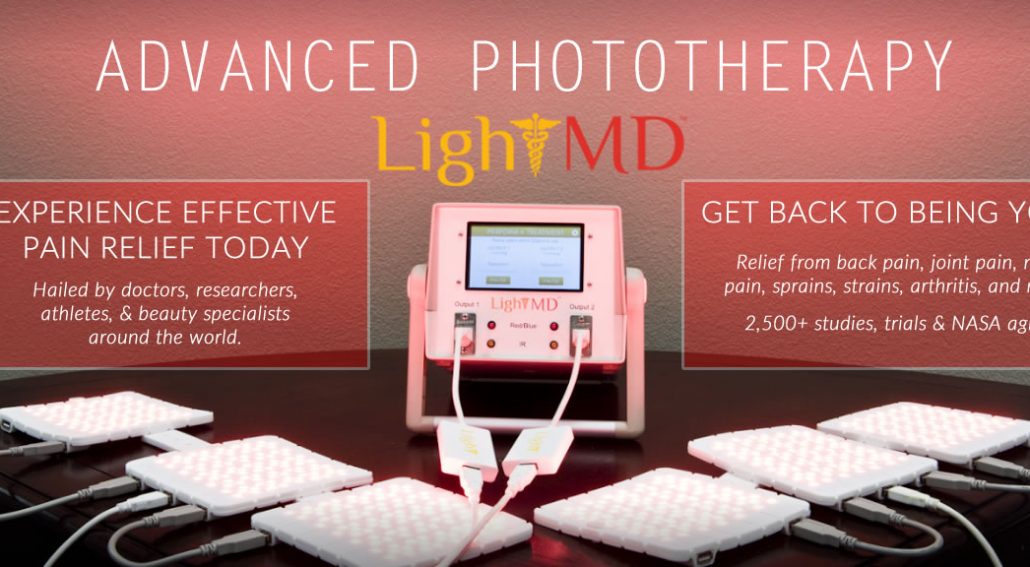
You Can Make Your Skin Look Younger With No Nipping, Stitching Or Downtime

SHOULD YOU LASER THE YEARS AWAY?

The second part of our series has everything you need to know about cutting-edge, anti-ageing therapies for your skin. Gone are the days when the surgeon’s knife was the only option. So whether you’re looking to reduce wrinkles, zap sun damage or simply tone skin, now you can look younger with no nipping, stitching or downtime. Here, our writers test the latest treatments on offer… 

LASERS

Perhaps the biggest advancement in skin treatment lies in the field of laser technology. Once harsh and invasive, modern lasers are now able to treat skin complaints ranging from wrinkles and fine lines through to thread veins and hyperpigmentation, or reduced skin colour, with minimal pain inflicted or recovery period required.


SOURCE …www.dailymail.co.uk