
What’s Behind Road Rage?

Have you ever wondered what makes some people snap when they drive?  According to an article written by Eric Niiler for Discovery Phycology, “Being inside a car can lend a sense of anonymity, which can lead some to act out rage.”

What drives people to take shots at other motorists from behind the wheel of a car? Aggression, territoriality and a feeling of anonymous power are the psychological ingredients of road rage, experts say.

Police say the violence was preventable.  “We’re starting to see this throughout our nation,” said Albuquerque Police Chief Gordon Eden at a Wednesday news conference. “And this is something that should not be happening in Albuquerque, New Mexico, let alone anywhere else in the United States.”

Police said the girl was shot when…Read more

Image Source: ThinkStock

Woman Can ‘Smell’ Parkinson’s

Can women smell disease?  In an article by AFP written for Discovery Health, one woman could.  The widow of a man who suffered with Parkinson’s has triggered new research this week into the condition after she discovered she could “smell” the disease.

“I’ve always had a keen sense of smell and I detected very early on that there was a very subtle change in how Les smelled,” Milne, from Perth, Scotland, said on Thursday.  “It’s hard to describe but it was a…Read more

Image Source: ThinkStock

futuristic vehicles could vanish after deliveries 6701 e1448319090355

Futuristic Vehicles Could Vanish After Deliveries

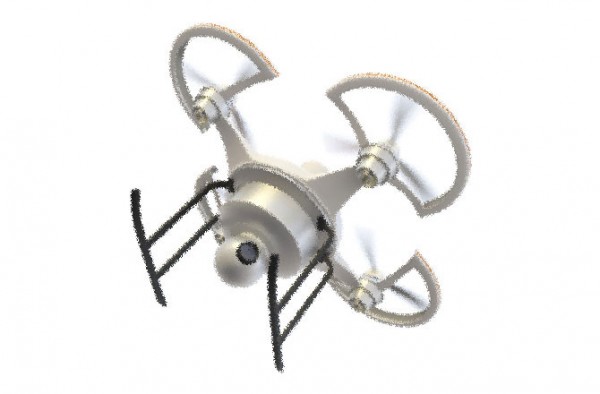
Elizabeth Palermo of Livescience posed the following situation in an article for Discovery News:  Picture this: A tiny, floating device delivers a package into your arms, and then, before you can say “thanks,” it disappears into thin air. Such a magical device may sound like something out of a Harry Potter movie, but it’s real technology that could benefit people in remote areas.

The development of this far-out delivery system is being led by the Defense Advanced Research Projects Agency (DARPA), the branch of the U.S. Department of Defense charged with developing new technologies for the U.S. military. Several years ago…Read more

dnews files 2014 06 coral 140616 jpg1 e1448317962724 1

Common Sunscreen Chemical Kills Coral

In a recent article written by Danny Clemens for Discovery.com: A chemical commonly found in sunscreen is detrimental to coral health, a new report finds. An international team of researchers linked oxybenzone, an organic compound used in more than 3,000 sunscreens, to “gross morphological deformities,” DNA damage and endocrine disruption in already-vulnerable baby corals.

Oxybenzone can adversely impact coral health in concentrations as small as 62 parts per trillion — the equivalent of one drop of water in more than six Olympic-sized swimming pools.

30 Days of the Ocean: Photos 

In Hawaii and the U.S. Virgin Islands, however, oxybenzone has been measured in concentrations as high as 1.4 parts per million — an unsurprising statistic considering that an estimated 14,000 tons of sunscreen enter coral reefs each year.  Around the world, at least 10 percent of reefs are at a high risk of exposure to oxybenzone, study authors estimate.  According to the National Park Service, no sunscreen…Read more

Image Source: ThinkStock

Doctor dubbed ‘the father of cyborgs’ tested implants in his own brain

As asked by James Trew on Engadget:  How far would you go to create a brain-controlled speech decoder? Doctor Philip Kennedy already helped blaze a trail in brain-computer interfaces back in the 80s. Now, a report in MIT Technology Review explains how the neurosurgeon decided to crank his research up a notch. Well, several notches, really, by having implants put into his ownbrain to better learn how neurons function with speech. What’s more, Kennedy paid $25,000 and underwent highly invasive surgery — including the removal of the top of his skull — for the privilege.

Kennedy is often dubbed the “father of cyborgs” for his early work with connecting brains to computers. Work that has given people with severely debilitating conditions new ways to communicate by…Read More

Image Source: ThinkStock

nov15 12 490159038 1200x6751 e1448316663983

For Better Presentations, Start with a Villain

As was originally written by Greg Stone on HBR.org: Many executives start presentations about products or initiatives with a vague theme statement, often expressed with as much pith as a puff of smoke: “We have a new focus on customer satisfaction,” or “Our current strategic goals are execution and innovation.” But this approach is not only lacking but lackluster. Did Shakespeare begin Hamlet by saying “This is a play about indecision”? Of course not.

Instead of starting with theme, you can make your story more compelling by focusing on its three main actors: the villain, the victim, and the hero.  Read More

Image Source: ThinkStock