
Category Archives for "Good Science"

0057fe3fb29d00371623media e1476462422417

Scientists Find Molecular Link between Anxiety and Metabolic Disorders

Metabolic syndrome holds a growing stance in the population world-wide, with a prevalence reaching 35% in the United States. It is characterized by abdominal obesity, dyslipidemia, hypertension, and diabetes, conditions often accompanied by proinflammatory and pro-thrombotic states.

This syndrome is a global epidemic, not an entity limited by geography or ethnicity, as shown by studies in India, South Korea and China. Other countries such as Australia, Denmark, and Ireland also suffer from a high disease burden, affecting 20–25% of the population.

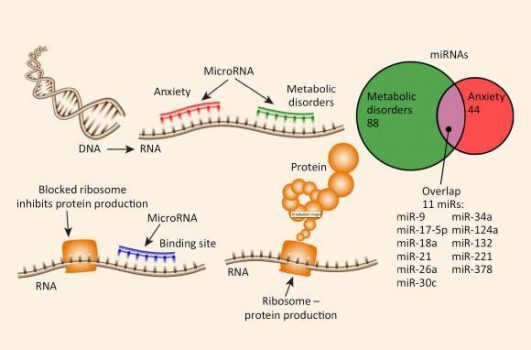
The family of microRNA genes is part of the human genome, which was considered until not too long ago as ‘junk-DNA.’However, microRNAs are now known to fulfill an important role in regulating the production process of proteins by other genes. These small, highly conserved molecules act as suppressors of inflammation and are able to halt the production of proteins.A new research paper, by Prof. Hermona Soreq, a researcher at the Hebrew University of Jerusalem, and her colleagues from Tel Aviv University and Tel Aviv Sourasky Medical Center, details the evidence linking microRNA pathways, which share regulatory networks in metabolic and anxiety-related conditions.

In particular, microRNAs involved in these disorders include regulators of acetylcholine signaling in the nervous system and their accompanying molecular machinery.

“We already know that there is a connection between body and mind, between the physical and the emotional, and studies show that psychological trauma affects the activity of many genes,” said Prof. Soreq, whose new study was published in the journal Trends in Molecular Medicine.“Our previous research found a link between microRNA and stressful situations — stress and anxiety generate an inflammatory response and dramatically increase the expression levels of microRNA regulators of inflammation in both the brain and the gut, for example the situation of patients with Crohn’s disease may get worse under psychological stress.”


“In the present study, we added obesity to the equation,” Prof. Soreq explained.“We revealed that some anxiety-induced microRNA are not only capable of suppressing inflammation but can also potentiate metabolic syndrome-related processes.”“We also found that their expression level is different in diverse tissues and cells, depending on heredity and exposure to stressful situations.”

Metabolic syndrome holds a growing stance in the population world-wide, with a prevalence reaching 35% in the United States. It is characterized by abdominal obesity, dyslipidemia, hypertension, and diabetes, conditions often accompanied by proinflammatory and pro-thrombotic states.

This syndrome is a global epidemic, not an entity limited by geography or ethnicity, as shown by studies in India, South Korea and China. Other countries such as Australia, Denmark, and Ireland also suffer from a high disease burden, affecting 20–25% of the population.

Anxiety disorders are harder to quantify than metabolic ones. They encompass the severe but uncommon obsessive-compulsive disorder (OCD) and post-traumatic stress disorders (PTSD), as well as milder common phenomena such as phobias.

The newly-discovered link offers novel opportunities for innovative diagnoses and treatment of both metabolic and anxiety-related phenomena.“The discovery has a diagnostic value and practical implications, because the activity of microRNAs can be manipulated by DNA-based drugs,” Prof. Soreq said.“It also offers an opportunity to reclassify ‘healthy’ and ‘unhealthy’ anxiety and metabolic-prone states, and inform putative strategies to treat these disorders.”

SOURCE…www.newsmasterapp.com
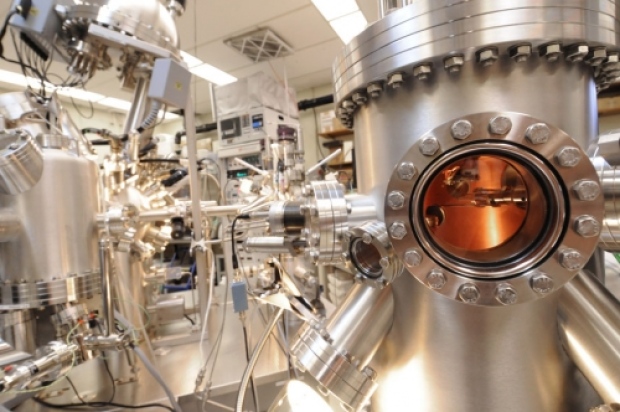
waterloo advanced technology laboratory at waterloo institute for nanotechnology1

The World’s Tiniest Machines

The Nobel Prize in Chemistry awarded this week for developments in nanotechnology heralds a new era in science, akin to the discovery of electromagnetic induction 185 years ago. And like electricity, nanotechnology could influence the world in dramatic ways, not even imaginable today.

The world’s tiniest machines

The Nobel Laureates developed molecular machines, which are incredibly tiny devices assembled one molecule at a time, including a working motor, a lifting machine, a micro-muscle, and even a four wheel drive vehicle, all of which can only be seen with the most powerful electron microscopes. While these lab experiments are novel curiosities, the implications are huge, and Canada is on the forefront of pushing this research forward.

Many universities offer degree programs on the subject while organizations such as the National Institute for Nanotechnology at the University of Alberta, and the Waterloo Institute for Nanotechnology at the University of Waterloo in Ontario, are conducting fundamental research on these new novel materials.

Amazing potential to change our world

The potential applications for nanotechnology are huge, and could enter almost all aspects of our lives. Nano-machines could enter the bloodstream to deliver cancer drugs to precise targets, reducing the dosage needed, or carry out DNA repair. Artificial muscles would have a soft, natural grip, and biochips could be made to restore function to lost nerves.

Molecular computer chips would be smaller than current silicon-based chips, and the computers themselves could be made of flexible material that would roll up into your pocket instead of a hard body stuffed into a carrying case. There will be miracle products that are super thin, super strong, super smooth, super slippery, the list is endless.  In fact, most researchers would admit that they really don’t know how far nanotechnology will go, which is why it is worth pursuing.

This time of great potential for new technology is similar to the experiments of Michael Faraday who worked with magnets and electric currents to develop the electric motor in 1821 and went on to discover magnetic induction, the principle behind generators and transformers. While recognizing these basic principles were important, and held great potential, Faraday could not have imagined the global electrical grid, countless household electrical appliances, the internet, and smartphones. Yet they all came out of his simple experiments in a laboratory more than a century and a half ago.

And like electricity, which runs invisibly through wires and circuits, we won’t see most of nanotechnology. We will simply enjoy the benefits of batteries that last much longer, improved solar panels, materials that repair themselves, no more needles at the doctor, and a whole myriad of conveniences yet to be imagined.

There have been revolutions in technology since people discovered that metals made better tools than stone, or that computer chips could calculate better than mechanical machines. These are exciting times to be alive at the beginning of what could be another powerful game changer in human achievement.

Source…http://news360.com/article/372973231

waterloo advanced technology laboratory at waterloo institute for nanotechnology1

The World's Tiniest Machines

The Nobel Prize in Chemistry awarded this week for developments in nanotechnology heralds a new era in science, akin to the discovery of electromagnetic induction 185 years ago. And like electricity, nanotechnology could influence the world in dramatic ways, not even imaginable today.

The world’s tiniest machines

The Nobel Laureates developed molecular machines, which are incredibly tiny devices assembled one molecule at a time, including a working motor, a lifting machine, a micro-muscle, and even a four wheel drive vehicle, all of which can only be seen with the most powerful electron microscopes. While these lab experiments are novel curiosities, the implications are huge, and Canada is on the forefront of pushing this research forward.

Many universities offer degree programs on the subject while organizations such as the National Institute for Nanotechnology at the University of Alberta, and the Waterloo Institute for Nanotechnology at the University of Waterloo in Ontario, are conducting fundamental research on these new novel materials.

Amazing potential to change our world

The potential applications for nanotechnology are huge, and could enter almost all aspects of our lives. Nano-machines could enter the bloodstream to deliver cancer drugs to precise targets, reducing the dosage needed, or carry out DNA repair. Artificial muscles would have a soft, natural grip, and biochips could be made to restore function to lost nerves.

Molecular computer chips would be smaller than current silicon-based chips, and the computers themselves could be made of flexible material that would roll up into your pocket instead of a hard body stuffed into a carrying case. There will be miracle products that are super thin, super strong, super smooth, super slippery, the list is endless.  In fact, most researchers would admit that they really don’t know how far nanotechnology will go, which is why it is worth pursuing.

This time of great potential for new technology is similar to the experiments of Michael Faraday who worked with magnets and electric currents to develop the electric motor in 1821 and went on to discover magnetic induction, the principle behind generators and transformers. While recognizing these basic principles were important, and held great potential, Faraday could not have imagined the global electrical grid, countless household electrical appliances, the internet, and smartphones. Yet they all came out of his simple experiments in a laboratory more than a century and a half ago.

And like electricity, which runs invisibly through wires and circuits, we won’t see most of nanotechnology. We will simply enjoy the benefits of batteries that last much longer, improved solar panels, materials that repair themselves, no more needles at the doctor, and a whole myriad of conveniences yet to be imagined.

There have been revolutions in technology since people discovered that metals made better tools than stone, or that computer chips could calculate better than mechanical machines. These are exciting times to be alive at the beginning of what could be another powerful game changer in human achievement.

Source…http://news360.com/article/372973231