Category Archives for "Good 2Know"

108995923 brain news large trans NvBQzQNjv4BqpJliwavx4coWFCaEkEsb3kvxIt lGGWCWqwLa RXJU81

Your Life Does Flash Before Your Eyes Before You Die

Your life really does flash before your eyes when you die,


A study suggests – with the parts of the brain that store memories last to be affected as other functions fail. Research on those who have had “near death” experiences suggests that the phenomenon rarely involves flashbacks in chronological order, as happens in Hollywood films. Participants said that there was rarely any order to their life memories and that they seemed to come at random, and sometimes simultaneously. 

Participants said that there was rarely any order to their life memories and that they seemed to come at random, and sometimes simultaneously. Often, the mind played tricks – with people reliving their own experiences from the point of view of others who had been involved. The study found that many of the flashbacks involved intensely emotional moments. Researchers from Hadassah University in Jerusalem analyzed seven accounts of such experiences, obtained from in-depth interviews. 

These were to devise a questionnaire which was sent out to 264 other people who gave detailed responses of their experiences. The idea that life flashes in front of a person has  featured in countless works of literature and film. But there  has been limited research to explain what the phenomenon involves. Researchers said  the new  study shines a light on “a most intriguing mental phenomenon that fascinated humans from time immemorial” – which they coined “life review  experience” (LRE). Those involved in  the study said they lost all sense  of time, with memories flying  back at them from all periods of their life.  One wrote:  “There is not a linear progression, there is lack of time limits… It was like being there for centuries. I was not in time/space so this question also feels impossible to answer.

“A moment, and a thousand years… both and neither. It all happened at once, or some experiences within my near-death experience were going on at the same time as others, though my human mind separates them into different events”.  Individually go into each person and I could feel the pain that they had in their life… “I was allowed to see that part of them and feel for myself what they felt”.Another said: ‘I was seeing, feeling these things about him (my father), and he was sharing with me the things of his early childhood and how things were difficult for him’. Every person in the study said they were left with a new perspective  on their  life  events and on significant people in their lives.  

Researchers said that the phenomenon could be caused by the parts of the brain that store autobiographical memories like the prefrontal, medial temporal, and parietal cortices.Those parts of the brain are not susceptible to oxygen and blood loss during serious injuries, meaning they are one of the last brain functions to suffer. The study, published in the journal Consciousness and Cognition, concludes: “Re-experiencing one’s own life-events, so-called LRE, is a phenomenon with well-defined characteristics, and its sub-components may be also evident in healthy people.”This suggests that a representation of life-events as a continuum exists in the cognitive system, and may be further expressed in extreme conditions of psychological and physiological stress“.Previous studies have suggested that the phenomenon is more common among those with a high concentration of carbon dioxide in the breath and arteries following a cardiac arrest.

SOURCE…www.telegraph.co.uk

2017 01 26T160446Z 3 LYNXMPED0P13A RTROPTP 2 HEALTH BIRDFLU RISKS1

Bird Flu Pandemic Could Cost Pandemic

 The global spread of bird flu and the number of viral strains currently circulating and causing infections have reached unprecedented levels, raising the risk of a potential human outbreak, according to disease experts.Multiple outbreaks have been reported in poultry farms and wild flocks across Europe, Africa and Asia in the past three months. While most involve strains that are currently low risk for human health. The sheer number of different types, their presence in so many parts of the world at the same time, increases the risk of viruses mixing and mutating . Thus possibly jumping to people.

“This is a fundamental change in the natural history of influenza viruses,” Michael Osterholm, an infectious disease specialist at University of Minnesota, said .The proliferation of bird flu in terms of geography and strains –  is a situation he described as “unprecedented”.Global health officials are worried another strain could make a jump into humans, like H5N1 did in the late 1990s. It has since caused hundreds of human infections and deaths, but has not acquired the ability to transmit easily from person to person.

The greatest fear is that a deadly strain of avian flu could then mutate into a pandemic form that can be passed easily between people… Something that has not yet been seen. While avian flu has been a prominent public health issue since the 1990s, ongoing outbreaks have never been so widely spread around the world. Infectious disease experts put down to greater resilience of strains currently circulating, rather than improved detection or reporting.While there would normally be around two or three bird flu strains recorded in birds at any one time, now there are at least half a dozen. Including H5N1, H5N2, H5N8 and H7N8.”

The Organization for Animal Health (OIE) says the concurrent outbreaks in birds in recent months are “a global public health concern”.  the World Health Organization’s director-general warned this week the world “cannot afford to miss the early signals” of a possible human flu pandemic. The precise reasons for the unusually large number and sustained nature of bird outbreaks in recent months, and the proliferation of strains, is unclear . Although such developments compound the global spreading process.

Bird flu is usually spread through flocks through direct contact with an infected bird. But Osterholm said wild birds could be “shedding” more of the virus in droppings and other secretions, increasing infection risks. He added that there now appears to be “aerosol transmission from one infected barn to others, in some cases many miles away”.Ian MacKay, a virologist at Australia’s University of Queensland, said the current proliferation of strains means that “by definition, there is an increased risk” to humans.”You’ve got more exposures, to more farmers, more often, and in greater numbers, in more parts of the world”. “There has to be an increased risk of spillover human cases,” he told Reuters.

BRITAIN TO BANGLADESH

 Nearly 40 countries have reported new outbreaks of highly pathogenic avian influenza in poultry or wild birds since November . In China, H7N9 strains of bird flu have been infecting both birds and people, with the of human cases rising in recent weeks due to the peak of the flu season there. According to the WHO, more than 900 people have been infected with H7N9 bird flu since it emerged in early 2013.

In birds, latest data from the OIE should that outbreaks of highly pathogenic avian flu have been detected in Britain, Italy, Kuwait and Bangladesh in the last few days alone.Russia’s agriculture watchdog issued a statement describing the situation as “extremely tense” as it reported H5N8 flu outbreaks in another four regions. Hungarian farmers have had to cull 3 million birds, mostly geese and ducks.These come on top of epidemics across Europe and Asia which have been ongoing since late last year, leading to mass culling of poultry in many countries.Strains currently documented as circulating in birds include H5N8 in many parts of Europe as well as in Kuwait, Egypt and elsewhere, and H5N1 in Bangladesh and India.

In Africa – which experts say is especially vulnerable to missing flu outbreak warning signs due to limited local government capacities and weak animal and human health services – H5N1 outbreaks have been reported in birds in Burkina Faso, Cameroon, Ghana, Niger, Nigeria and Togo. H5N8 has been detected in Tunisia and Egypt, and H7N1 in Algeria.The United States has, so far this year, largely escaped bird flu, but is on high alert after outbreaks of H5N2, a highly pathogenic bird flu, hit farms in 15 states in 2015 and led to the culling of more than 43 million poultry.

David Nabarro, a former senior WHO official who has also served as U.N. system senior coordinator for avian and human influenza, says the situation is worrying. “For me the threat from avian influenza is the most serious (to public health), because you never know when,” he told Reuters in Geneva.

HIGHLY PATHOGENIC H5N1

H5N1 is under close surveillance by health authorities around the world. It has long been seen as one to watch, feared by infectious disease experts because of its pandemic potential if it were to mutate an acquire human-to-human transmission capability.

A highly pathogenic virus, it jumped into humans in Hong Kong in 1997 and then re-emerged in 2003/2004, spreading from Asia to Europe and Africa. It has caused hundreds of infections and deaths in people and prompted the culling of hundreds of millions of poultry. Some currently circulating H5 strains – including distant relatives of H5N1 – are showing significant capabilities for sustaining their spread between wild flocks and poultry, from region to region and farm to farm.

“What we’re learning about H5 is, that whether its H5N6, H5N8, H5N2 or H5N5, this is a very dangerous bird virus.”Against that background, global health authorities and infectious disease experts want awareness, surveillance and vigilance stepped up. Wherever wild birds are found to be infected,  wherever there are farms or smallholdings with affected poultry or aquatic bird flocks, regular, repeated and consistent testing of everyone and anyone who comes into contact is vital.

“Influenza is a very tough beast because it changes all the time.  The ones we’re tracking may not include one that suddenly emerges and takes hold,” said MacKay.”Right now, it’s hard to say whether we’re doing enough (to keep on top of the threat). I guess that while it isn’t taking off, we seem to be doing enough.”

SOURCE..www.yahoo.com/news/proliferation-bird-flu

mounteverest1

Doubt Over Everest’s True Height Spurs Fresh Expedition

If I were to ask you what the worlds tallest mountain peak was what would you guess? ” What is Mt. Everest for 500″ (Jeopardy adage ). Well you’d be correct with that statement. But what if I told you that the exact height of this mammoth mount was in ques ion following the mega quake that recently took place in Nepal ?India’s top surveyor Nepal scientist  to measure Everest’s  true height . This team of scientists would be sent to neighboring Nepal to measure Everest in the hope of putting to rest a debate about the true height of the towering mountain.A deadly 7.8-magnitude earthquake struck Nepal in 2015, killing thousands and altering the landscape across the Himalayan nation.

Satellite data at the time suggested the impact of the quake reduced Everest’s peak—which officially stands at 8,848 meters (29,029 feet) above sea level—by anywhere between a few millimeters and an inch.But lingering doubt among the has prompted a fresh expedition to size up the peak, said India’s surveyor general Swarna Subba Rao.”We will remeasure it,” Rao was quoted as saying by the Press Trust of India (PTI) news agency, adding the team would set off in two months.”Two years have passed since the major Nepal earthquake and there’s doubt in the scientific community that it did in fact shrink.”

The exercise will require a month for observation and roughly another fortnight for the data to be officially declared.Another official told AFP that a five-member team would depart for the expedition at winter’s end, and would take measurements using instruments on the ground to gauge the peak’s real height. The , Nepal’s deadliest disaster in more than 80 years, is also believed to have shifted the earth beneath the capital Kathmandu several meters to the south. With the scientific expedition set to take  place at the very top of the world, perhaps one day they  


SOURCE…m.phys.org

god 7568701

Shock!!! Scientists Claim To Have Proof Of God

 The debate of whether  science trumps intelligent design or God exist,  has been the subject of heated debate. After all There is a deep meaning of life …right?? Or maybe   we were a cosmic accident created from the primordial ooze all by a lucky long shot ? Well finally science has added fuel to the fire as  s cientists Claim To Have Proof Of God.

The Science 

Two computer scientists say they proved that there is a holy supreme force after confirming the equations. In 1978, mathematician Kurt Gödel died and left behind a long and complex theory based on modal logic. Dr Gödel’s model uses  extremely complicated mathematical equations  .  In  essence it states  is that no greater power than God can be conceived. If God  is believed as a concept then he or she can exist in reality.

 Dr Gödel  equations:

“Ax. 1. {P(φ)∧◻∀x[φ(x)→ψ(x)]} →P(ψ)Ax. 2.P(¬φ)↔¬P(φ)Th. 1.P(φ)→◊∃x[φ(x)]Df. 1.G(x)⟺∀φ[P(φ)→φ(x)]Ax. 3.P(G)Th.  

2.◊∃xG(x)Df. 2.φ ess x⟺φ(x)∧∀ψ{ψ(x)→◻∀y[φ(y)→ψ(y)]}Ax. 4.P(φ)→◻P(φ)Th.

3.G(x)→G ess xDf. 3.E(x)⟺∀φ[φ ess x→◻∃yφ(y)]Ax. 5.P(E)Th.

4.◻∃xG(x)”.

You get it, right? Two computer scientists have used computers to run such complicated equations  which they say confirms that the equation does indeed add up. The point of the researchers’ argument was that they were not directly trying to prove the existence of God.  The experiment was done  to showcase the power of computers.

 Christoph Benzmüller of Berlin’s Free University, told Spiegel Online: “It’s  amazing that from this argument led by Gödel, all these things can be proven automatically in a few seconds or even less on a standard notebook. “I didn’t know it would create such a huge public interest but [Gödel’s ontological proof] was definitely a better example than something inaccessible in mathematics or artificial intelligence… “It’s a very small, crisp thing, we are just dealing with six axioms in a little theorem.“There might be other things that use similar logic.”

  SOURCE…www.express.co.uk

scientists warn likely impacts solar flares sun storm1

Limitless Clean Energy For The World

 
In a world struggling to kick its addiction to fossil fuels and feed its growing appetite for energy, there’s one technology which is a true energy revolution  in development that almost sounds too good to be true: nuclear fusion

If it works, fusion power offers vast amounts of clean energy with a near limitless fuel source and virtually zero carbon emissions. That’s if it works. In February last year a new chapter of fusion energy research commenced with the formal opening of Wendelstein 7-X. This is an experimental €1 billion (A$1.4bn) fusion reactor built in Greifswald, Germany, to test a reactor design called a stellarator.It is planned that by around 2021 it will be able to operate for up to 30 minutes duration. Which would be a record for a fusion reactor. This is an important step en-route to demonstrating an essential feature of a future fusion power plant: continuous operation.

But the W-7X isn’t the only fusion game in town. In southern France  a $US20 billion (A$26.7bn) experimental fusion reactor ITER is being built. This machine  uses a different design called a tokamak. However, even though the W-7X and ITER employ different designs. The two projects complement each other, and innovations in one are likely to translate to an eventual working nuclear fusion power plant.

Twists and turns

Fusion energy seeks to replicate the reaction that powers our Sun. The resulting fused atom ends up slightly lighter than the original two atoms. The difference in mass is then  converted to energy according to Einstein’s formula E=mc².  The difficulty comes in encouraging the two atoms to fuse,  requiring them to be heated to millions of degrees Celsius. What makes the W-7X particularly interesting is its stellarator design. It comprises a vacuum chamber embedded in a magnetic bottle created by a system of 70 superconducting magnet coils. In these experiments a strong toroidal (or ring) magnetic field creates a magnetic bottle to confine the plasma.

However, in order for the plasma to have good confinement in the doughnut-shaped chamber, the magnetic field needs to have a twist. In a tokamak, such as in the ITER reactor, a large current flows in the plasma to generate the required twisted path. However, the large current can drive “kink” instabilities. In a stellarator, the twist in the magnetic field is obtained by twisting the entire machine itself. This removes the large toroidal current, and makes the plasma intrinsically more stable. The cost comes in the engineering complexity of the field coils and reduced confinement thus  the plasma is less easily contained within the magnetic bubble.

Come together

While the W7-X and ITER use different approaches, most of the underlying technology is identical. They are both toroidal superconducting machines, and both use external heating systems such as radio frequency and neutral beam injection to heat the plasma, and much of the plasma diagnostic technology is in common. In a power plant, heavy isotopes of hydrogen (deuterium and tritium) fuse to form helium along with an energetic neutron. The neutron is has a neutral electric charge, and shoots off into the “blanket” surrounding the plasma. The helium  generates electricity.

A common feature across fusion power is the need to develop materials that can withstand y the fusion reaction. The first wall of a fusion reactor has to withstand a massive bombardment from high energy particles throughout its lifetime. At this stage, it’s too early to tell whether the tokamak design used by ITER or the stellarator used by W-7X will be better suited for a commercial fusion power plant. But the commencement of research operation of W-7X will not only help decide which technology might be best to pursue. Without a  doubt will contribute valuable knowledge to any future fusion experiments, and perhaps one day a true energy revolution.


SOURCE…http://www.ibtimes.co.uk

 
6455882 ramsay news large trans NvBQzQNjv4BqcM9aBJczjGu2JtrWg8AaNRxo7k3IcFzOpcVpLpEd fY1

Study … People With Potty Mouths The Most Honest

Temperate language has traditionally been considered a social virtue, but new research suggests that people who refrain from swearing are often the most devious and dishonest.Those fond of effing and blinding, by contrast, are likely to be the most honest in any given group, according to academics at the University of Cambridge.The study describes how 276 participants were asked to list their favorite swear words in order to gauge how fond they were of turning the air blue. They were then given a survey asking them to agree or disagree with statements such as “I never lie” and “all my habits are good” to assess their propensity for dishonesty.The researchers found that the most honest in the group were also the biggest swearers. 

Dr David Still well, one of the study’s authors, said the correlation may stem from the constraints imposed by social convention.“If you’re trying to follow the social norms rather than saying what you think, you are saying what people want to hear,” he said.“In that respect you are not being very honest.“We did not look at extreme dishonesty such as fraud, so from that experiment it’s an open question as to whether there would be a link.”However, he said the findings corroborate research in the US which links states with a high level of swearing to low levels of honesty-related crime.States such as New Jersey, where a lot of people use bad language, were found to rank highly on the State Integrity Index, whereas Utah and other places where bad language is a relative rarity saw higher levels of fraud or similar offences.

“At least people who swear are telling you what they really think,” said Dr Stillwell.“Although if people said what they think all the time, would that really be a good thing?”The researchers also examined the Facebook postings of 75,000 people, where a similar correlation was observed.People who regularly posted short, simple messages were the least likely to swear.Dr Sillwell said simple statements are already known to be associated with dishonesty, because liars find it hard to make up complicated sentences.However, more nuanced language, evidenced by words such as “but” and “however”, as well as use of pronouns which associate the speaker with his or her statement, are commonly agreed to indicate honesty.In the Facebook analysis, people who spoke in this style were also more likely to swear.


SOURCE…www.telegraph.co.uk

8d05eb80a41c15e200f76c81b6acafb719bd75291

China to develop prototype super, super computer in 2017 – Yahoo Singapore Finance

China plans to develop a prototype exascale computer by the end of the year, state media said Tuesday, as it seeks to win a global race to be the first to build a machine capable of a billion, billion calculations per second. If successful, the achievement would cement its place as a leading power in the world of super computing. The Asian giant built the world’s fastest supercomputer, the Sunway Taihu Light machine, in June last year, which was twice as fast as the previous number one.It used only locally made microchips, making it the first time a country has taken the top spot without using US technology.

Exascale computers are even more powerful, and can execute at least one Quintilian (a billion billion) calculations per second.Though a prototype was in the pipeline, a complete version of such a machine would take a few more years to complete, Xinhua news agency cited Zhang Ting, application engineer at the National Supercomputer Center in the port city of Tianjin, as saying.

“A complete computing system of the exascale supercomputer and its applications can only be expected in 2020, and will be 200 times more powerful than the country’s first petaflop computer Tianhe-1, recognised as the world’s fastest in 2010,” said Zhang.The exascale computer could have applications in big data and cloud computing work, he added, noting that its prototype would lead the world in data transmission efficiency as well as calculation speed.

As of last June, China for the first time had more top-ranked supercomputers than the US, with 167 compared to 165, according to a survey by supercomputer tracking website Top500.org. Of the top 10 fastest computers, two are in China and five in the US as of November, the ranking said. Others are in Japan and Switzerland.China has poured money into big-ticket science and technology projects as it seeks to become a high-tech leader.But despite some gains the country’s scientific output still lags behind, and its universities generally fare poorly in global rankings.


SOURCE…sg.finance.yahoo.com

multi131

Why Smart People Don’t Multitask

You may have heard that multitasking is bad for you, but studies show that it kills your performance and may even damage your brain. Every time you multitask you aren’t just harming your performance in the moment; you may very well be damaging an area of your brain that’s critical to your future success at work. Research conducted at Stanford University found that multitasking is less productive than doing a single thing at a time. The researchers found that people who are regularly bombarded with several streams of electronic information cannot pay attention, recall information, or switch from one job to another as well as those who complete one task at a time.


A Special Skill?

But what if some people have a special gift for multitasking? The Stanford researchers compared groups of people based on their tendency to multitask and their belief that it helps their performance. They found that heavy multitaskERS — those who multitask a lot and feel that it boosts their performance — were actually worse at multitasking than those who like to do a single thing at a time. The frequent multitaskers performed worse because they had more trouble organizing their thoughts and filtering out irrelevant information, and they were slower at switching from one task to another.

Ouch!!!

Multitasking reduces your efficiency and performance because your brain can only focus on one thing at a time. When you try to do two things at once, your brain lacks the capacity to perform both tasks successfully.

Multitasking Lowers IQ

Research also shows that, in addition to slowing you down, multitasking lowers your IQ. A study at the University of London found that participants who multi tasked during cognitive tasks experienced IQ score declines that were similar to what they’d expect if they had smoked marijuana or stayed up all night. IQ drops of 15 points for multitasking men lowered their scores to the average range of an 8-year-old child.

So the next time you’re writing your boss an email during a meeting, remember that your cognitive capacity is being diminished to the point that you might as well let an 8-year-old write it for you.

Brain Damage From Multitasking?

It was long believed that cognitive impairment from multitasking was temporary, but new research suggests otherwise. Researchers at the University of Sussex in the UK compared the amount of time people spend on multiple devices (such as texting while watching TV) to MRI scans of their brains. They found that high multitaskers had less brain density in the anterior cingulate cortex, a region responsible for empathy as well as cognitive and emotional control.While more research is needed to determine if multitasking is physically damaging the brain (versus existing brain damage that predisposes people to multitask), it’s clear that multitasking has negative effects.

Neuroscientist Kep Kee Loh, the study’s lead author, explained the implications:“I feel that it is important to create an awareness that the way we are interacting with the devices might be changing the way we think and these changes might be occurring at the level of brain structure.”

The EQ Connection

Nothing turns people off quite like fiddling with your phone or tablet during a conversation. Multitasking in meetings and other social settings indicates low Self- and Social Awareness, two emotional intelligence (EQ) skills that are critical to success at work. TalentSmart has tested more than a million people and found that 90% of top performers have high EQs. If multitasking does indeed damage the anterior cingulate cortex (a key brain region for EQ) as current research suggests, doing so will lower your EQ while it alienates your coworkers.

Bringing It All Together

If you’re prone to multitasking, this is not a habit you’ll want to indulge—it clearly slows you down and decreases the quality of your work. Even if it doesn’t cause brain damage, allowing yourself to multitask will fuel any existing difficulties you have with concentration, organization, and attention to detail.

SOURCE…www.cnbc.com

multi131

Why Smart People Don’t Multitask

You may have heard that multitasking is bad for you, but studies show that it kills your performance and may even damage your brain. Every time you multitask you aren’t just harming your performance in the moment; you may very well be damaging an area of your brain that’s critical to your future success at work. Research conducted at Stanford University found that multitasking is less productive than doing a single thing at a time. The researchers found that people who are regularly bombarded with several streams of electronic information cannot pay attention, recall information, or switch from one job to another as well as those who complete one task at a time.


A Special Skill?

But what if some people have a special gift for multitasking? The Stanford researchers compared groups of people based on their tendency to multitask and their belief that it helps their performance. They found that heavy multitaskERS — those who multitask a lot and feel that it boosts their performance — were actually worse at multitasking than those who like to do a single thing at a time. The frequent multitaskers performed worse because they had more trouble organizing their thoughts and filtering out irrelevant information, and they were slower at switching from one task to another.

Ouch!!!

Multitasking reduces your efficiency and performance because your brain can only focus on one thing at a time. When you try to do two things at once, your brain lacks the capacity to perform both tasks successfully.

Multitasking Lowers IQ

Research also shows that, in addition to slowing you down, multitasking lowers your IQ. A study at the University of London found that participants who multi tasked during cognitive tasks experienced IQ score declines that were similar to what they’d expect if they had smoked marijuana or stayed up all night. IQ drops of 15 points for multitasking men lowered their scores to the average range of an 8-year-old child.

So the next time you’re writing your boss an email during a meeting, remember that your cognitive capacity is being diminished to the point that you might as well let an 8-year-old write it for you.

Brain Damage From Multitasking?

It was long believed that cognitive impairment from multitasking was temporary, but new research suggests otherwise. Researchers at the University of Sussex in the UK compared the amount of time people spend on multiple devices (such as texting while watching TV) to MRI scans of their brains. They found that high multitaskers had less brain density in the anterior cingulate cortex, a region responsible for empathy as well as cognitive and emotional control.While more research is needed to determine if multitasking is physically damaging the brain (versus existing brain damage that predisposes people to multitask), it’s clear that multitasking has negative effects.

Neuroscientist Kep Kee Loh, the study’s lead author, explained the implications:“I feel that it is important to create an awareness that the way we are interacting with the devices might be changing the way we think and these changes might be occurring at the level of brain structure.”

The EQ Connection

Nothing turns people off quite like fiddling with your phone or tablet during a conversation. Multitasking in meetings and other social settings indicates low Self- and Social Awareness, two emotional intelligence (EQ) skills that are critical to success at work. TalentSmart has tested more than a million people and found that 90% of top performers have high EQs. If multitasking does indeed damage the anterior cingulate cortex (a key brain region for EQ) as current research suggests, doing so will lower your EQ while it alienates your coworkers.

Bringing It All Together

If you’re prone to multitasking, this is not a habit you’ll want to indulge—it clearly slows you down and decreases the quality of your work. Even if it doesn’t cause brain damage, allowing yourself to multitask will fuel any existing difficulties you have with concentration, organization, and attention to detail.

SOURCE…www.cnbc.com

energypods metronaps1

Be smart …Take a nap

Dozing off at your desk is probably the most efficient way to get yourself sacked, but experts are beginning to believe it’s ironically the key to being more productive. New research from Pennsylvania University found that taking a nap after lunch improves older people’s ability to memorize information, think critically and perform more complex mental tasks. Such is the profound effect of taking an afternoon siesta that the researchers believe it could help your brain function as though it were five years younger.
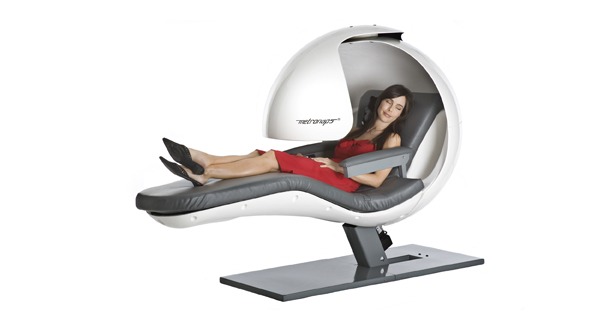
 The only problem? Most workplaces simply aren’t equipped to handle recreational napping, unless you’ve built yourself an under-desk bed a la George Costanza, or are lucky enough to work for a savvy tech company like Google who provides employees with custom-built nap pods to use in between meetings.

There’s also the time required, with the researchers establishing that the amount of time you spend sleeping is critical to the amount of mind-hacking productivity you’ll reap.As it turns out, it’s a balancing act: sleep too little and you’ll likely only feel worse than you did before – sleep too much and you’ll emerge from your nap with crusty eyes in a dreaded zombie-like state.

The most productive length for a nap seemed to be between 30 and 90 minutes, with an hour-long snooze being the sweet spot for refreshing your brain.To discover this, the researchers examined the nap habits of almost 3000 elderly Chinese people, and then immediately gave them a series of mental tasks to assess how fresh – or how drowsy – the nap left them feeling.

One of the tasks asked the participants to memorize a series of words before the nap, and then recall them straight after, and another was to copy drawings of simple geometric figures.(Which more or less sounds like the worst thing in the world – imagine awaking from a nap to find people in lab coats are pressuring you to draw a rhombus or a heptagram.)The results revealed a win for the nappers: those who took a moderate hour-long nap actually performed better on all mental tasks than those who slept longer, and those who didn’t nap at all.

“Older adults who did not nap or napped longer than 90 minutes (extended nappers) were significantly more likely than those who napped for 30 to 90 minutes after lunch (moderate nappers) to have lower overall cognition scores,” wrote the researchers.”This study suggests that absence of napping and too much napping are associated with poorer cognition, but naps of a moderate duration are associated with better cognition and may be an important part of optimizing cognition.”

At this point, the researchers are unsure why napping is so good for boosting your productivity, but most experts agree it’s a way for your brain to get a mini-recharge in, not unlike a massage for your body.”When we go to sleep as adults, we go into light sleep for about 20 to 25 minutes then we go into deep sleep,” sleep expert Dr Carmel Harrington told Coach in November.

“You want to make sure you stay in light sleep because if you go into deep sleep you wake up disoriented and end up with sleep inertia, and it can take hours to go away.”Plus it can affect your night-time sleep.”
SOURCE…coach.nine.com