Category Archives for "Good 2Know"

636191281598025490 BWI ROAM FITNESS1

Fitness on the Fly , Airport Gyms on the rise

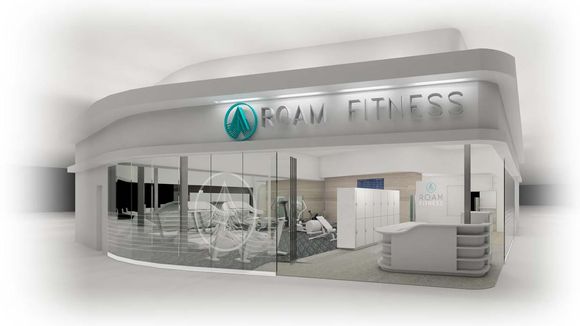
Passengers flying out of Baltimore/Washington International Airport will soon be able to get a real workout — and a shower — before their flights.A post-security fitness facility, called ROAM Fitness, is scheduled to open at BWI on Monday, in the new connector between Concourses D and E.The workout space will be open daily from 5 a.m. to 10 p.m. and is large enough to accommodate 21 people, who will have access to cardio equipment, stretching space, free weights, kettle bells, medicine balls, stability balls, a TRX system, yoga mats and a pull-up bar.Travelers who don’t have their own workout gear can borrow activewear or purchase footwear and have their own workout outfits vacuum-sealed after a visit to keep odors from mingling.
 

There’s also a shower reservation system to make sure everyone can freshen up before their flight.“To ensure travelers can dedicate the appropriate time and energy for their workout and enjoy a refreshing escape from the stresses of air travel, we made sure our facility was located after security, since going through security is a time variable that can never be predicted,” said ROAM co-founder Cynthia Sandall.Access to ROAM Fitness at BWI is currently $40 for a day pass, $175 for a monthly pass and $600 for a yearly pass. Passes can be purchased online, on a smartphone or at the door. (Check the website for deals on discounted passes.) The next ROAM Fitness center scheduled to open in 2017 is slated for Charlotte Douglas International Airport.

ROAM Fitness claims to be the first public-use post-security airport fitness center with both a gym and shower facilities, but it is not the only airport fitness center.In North America, travelers can purchase a day pass for $15 to use the fitness and showering facilities (and heated indoor pool) at the Westin Detroit Metropolitan Airport, which is attached to the Detroit Metropolitan Airport McNamara Terminal. For $20 ($22.40 with tax), travelers can get a day pass to use the pool and extensive fitness facilities at the Hilton Chicago O’Hare Airport, which is accessible from O’Hare via underground walkways. And there’s also a branch of GoodLife Fitness on the arrivals level of Terminal 1 at Toronto Pearson International Airport ($14 CAD/about $11 US for a 14-day trial membership.)

SOURCE…www.usatoday.com


gettyimages 883778961 e1482255690695

Kids Turn Violent As Parents Battle ‘Digital Heroin’ Addiction

On August 28, The Post published a piece by Dr. Nicholas Kardaras, “The Frightening Effects of Digital Heroin,” that was based on his book “Glow Kids.” In it, he argued that young children exposed to too much screen time are at risk of developing an addiction “harder to kick than drugs.” The response was overwhelming, generating more than 3.3 million views on The Post’s website and hundreds of letters from anxious parents. Now Dr. Kardaras writes about this parental revolt against digital heroin and reminds readers of the worst effects of the obsession.

Experienced sailors, Barbara McVeigh and her husband exposed their children to the natural beauty near their home in Marin County, Calif. — boating, camping and adventuring in the great outdoors. None of this stopped her 9-year-old son from falling down the digital rabbit hole.

His first exposure to screens occurred in first grade at a highly regarded public school — named one of California’s “Distinguished Schools” — when he was encouraged to play edu-games after class. His contact with screens only increased during play dates where the majority of his friends played violent games on huge monitors in their suburban homes.

The results for Barbara’s son were horrific: Her sweet boy, who had a “big spirit” and loved animals, now only wanted to play inside on a device.“He would refuse to do anything unless I would let him play his game,” she said. Barbara, who had discarded her TV 25 years ago, made the mistake of using the game as a bargaining tool.

Her son became increasingly explosive if she didn’t acquiesce. And then he got physical. It started with a push here, then a punch there. Frightened, she tried to take the device away. And that’s when it happened: “He beat the s–t out of me,” she told me.

When she tried to take his computer away, he attacked her “with a dazed look on his face — his eyes were not his.” She called the police. Shocked, they asked if the 9-year-old was on drugs.He was — only his drugs weren’t pharmaceutical, they were digital.

In August, I wrote a piece about “digital heroin” for the New York Post, and the response was explosive. More than 3 million readers devoured and shared the piece — though not everyone agreed on its message. Some readers felt that the notion of comparing screens and video games to heroin was a huge exaggeration.

I understand that initial response, but the research says otherwise. Over 200 peer-reviewed studies correlate excessive screen usage with a whole host of clinical disorders, including addiction. Recent brain-imaging research confirms that glowing screens affect the brain’s frontal cortex — which controls executive functioning, including impulse control — in exactly the same way that drugs like cocaine and heroin do. Thanks to research from the US military, we also know that screens and video games can literally affect the brain like digital morphine.

In a series of clinical experiments, a video game called “Snow World” served as an effective pain killer for burned military combat victims, who would normally be given large doses of morphine during their painful daily wound care. While the burn patient played the seemingly innocuous virtual reality game “Snow World” — where the player attempts to throw snowballs at cartoon penguins as they bounce around to Paul Simon music — they felt no pain.

I interviewed Lt. Sam Brown, one of the pilot participants in this research who had been injured by an IED in Afghanistan and who had sustained life-threatening third-degree burns over 30 percent of his body. When I asked him about his experience using a video game for pain management, he said: “I was a little bit skeptical. But honestly, I was willing to try anything.” When asked what it felt like compared to his morphine treatments, he said, “I was for sure feeling less pain than I was with the morphine.”

Sure enough, brain imaging research confirmed that burn patients who played “Snow World” experienced less pain in the parts of their brain associated with processing pain than those treated with actual morphine. The Navy’s head of addiction research, Cmdr. Dr. Andrew Doan, calls screens “digital pharmakeia” (Greek for pharmaceuticals), a term he coined to explain the neurobiological effects produced by video technologies.

While this is a wonderful advance in pain-management medicine, it begs the question: Just what effect is this digital drug — a narcotic more powerful than morphine — having on the brains and nervous systems of 7-year-olds addicted to their glowing screens?

If screens are indeed digital drugs, then schools have become drug dealers. Under misguided notions that they are “educational,” the entire classroom landscape has been transformed over the past 10 years into a digital playground that includes Chromebooks, iPads, Smart Boards, tablets, smartphones, learning apps and a never-ending variety of “edu-games.”

These so-called “edu-games” are digital Trojan horses — chock-full of the potential for clinical disorders. We’ve already seen ADHD rates explode by over 50 percent the past 10 years as a whole generation of screen-raised kids succumb to the malaise-inducing glow. Using hyper-stimulating digital content to “engage” otherwise distracted students creates a vicious and addictive ADHD cycle: The more a child is stimulated, the more that child needs to keep getting stimulated in order to hold their attention.

Research also indicates that retention rates are lower on screens than on paper and that schools without electronics report higher test scores. And then there’s Finland. A standard bearer of international excellence in education, Finland rejected screens in the classroom. According to Krista Kiuru, their minister of education and science, Finnish students didn’t need laptops and iPads to get to the top of the international education rankings and aren’t interested in using them to stay there.

Yet in the US, there is a national effort to give kids screens at younger and younger ages as parents worry that their little ones may somehow be “left behind” in the education technology arms race — the data be damned.But not all parents are drinking the screens-are-wonderful Kool-Aid — some are fighting back.Cindy Eckard, a Maryland mother of two, is launching a grassroots campaign to create legislation to limit screen time in schools and is testifying in front of a state Senate subcommittee hearing this month.

“I was shocked to learn that the Maryland State Department of Education had no medically sound health guidelines in place before they put so many of our children in front of a computer every day . . . The schools keep encouraging more screen time in the classroom without any regard for our children’s well-being,” Eckard told me. “Our children are owed a safe classroom environment, and right now they’re not getting one.”

Some parents are opting out of public schools for less technology-dependent schools. Many Silicon Valley engineers and executives, for example, put their kids in non-tech Waldorf schools.Others, like longtime educator and consultant Debra Lambrecht, have decided to create new tech-free school models. Debra has created the Caulbridge School, a distinctly “Finnish-style” school that is intended to serve as a template for future schools throughout the country.

“The argument for technology in the earlier grades is often rooted in the fear of children falling behind. It is true that most children will use technology in their jobs and everyday life. It is also true that most children will learn to drive a car,” Lambrecht said. “Certainly we would not give a 7-year-old child the car keys to give them a jump-start to be a more skillful driver. In the same way, we want to ensure children can effectively use technology as a tool and will bring all of their best thinking, creativity and innovation to bear.”

A Long Island mother recently contacted me because her 5-year-old son in kindergarten was going to be forced by the school to use an iPad. When she complained and threatened to pull her son out of school, her school district threatened to call child protective services. I spoke to her school’s superintendent, and he agreed to let her son opt out of using an iPad. But all the other kindergartners still need to use iPads for standardized-testing purposes. That Long Island mother has already reached out to her local legislators.

That seems to be the key. Parents need to educate themselves, find their voices and speak up. If enough parents organize, push for legislation and put pressure on their schools to limit screen time in school — as well as to delay the grade levels that screens are introduced into the classroom — then we might have a chance to slow down this digital epidemic.

Indeed, even the respected AAP (American Academy of Pediatrics) has just this month modified their screen recommendations suggesting more tech-cautious guidelines: Children younger than 18 months, no digital media; ages 2 to 5, no more than one hour daily, to be “co-viewed” with parents.

But many, myself included, think these recommendations still don’t go far enough. Because of what we know about screens as “digital heroin,” I believe that kids below the age of 10 should have no interaction with interactive screens (iPads, smartphones, Xbox). There should be warning labels on such interactive screens that read: “Excessive Screen Usage by Children May Lead to Clinical Disorders.”

Meanwhile, back in Marin County, Barbara pulled her son out of his suburban tech-filled public school and enrolled him in a more rural, less tech-oriented school. So far, she’s seen huge improvements in his behavior.

She just found out last week that all fourth-graders in her son’s new school will begin learning the increasingly popular skill of “coding” to design video games. Even in this rural hamlet school, kids were allowed to play violent video games indoors rather than having to go outside to play during recess.

She is now hoping to get political about this issue and to reach out to legislators to end the digital madness in elementary schools. “I am prepared to go to war with our public education over technology use. This is wrong,” Barbara said with the determined voice of a mother fighting for her child’s life.

“I feel like there is a war going on against our children,” Barbara said. “And it’s come so fast that we’re not even questioning it.”


SOURCE… nypost.com

Study Shows Aging Process Increases DNA Mutations

Study shows aging process increases DNA mutations in important type of stem cellAs it is in much of life, the aging process isn’t kind molecular and cellular neuroscience to an important type of stem cell that has great therapeutic promiseResearchers at the Scripps Translational Science Institute (STSI) and The Scripps Research Institute (TSRI) who looked at the effect of aging on induced (iPSCs) found that genetic increased with the age of the donor who provided the source cells, according to study results published today by the journal Nature Biotechnology.The findings reinforce the importance of screening iPSCs for potentially harmful DNA mutations before using them for therapeutic purposes, said lead investigators Ali Torkamani, Ph.D., director of genome informatics at STSI, and Kristin Baldwin Ph.D., the study’s co-lead investigators and associate professor of molecular and cellular neuroscience at the Dorris Neuroscience Center at TSRI.

“Any time a cell divides, there is a risk of a mutation occurring. Over time, those risks multiply,” Torkamani said. “Our study highlights that increased risk of mutations in iPSCs made from older donors of source cells.”Researchers found that iPSCs made from donors in their late 80s had twice as many mutations among protein-encoding genes as stem cells made from donors in their early 20s.

That trend followed a predictable linear track paired with age with one exception. Unexpectedly, iPSCs made from blood cells donated by people over 90 years old actually contained fewer mutations than what researchers had expected. In fact, stem cells from those extremely elderly participants had mutation numbers more comparable to iPSCs made from donors one-half to two-thirds younger.Researchers said the reason for this could be tied to the fact that remaining in have been protected from mutations over their lifetime by dividing less frequently.

“Using iPSCs for treatment has already been initiated in Japan in a woman with age-related macular degeneration,” said paper co-author and STSI Director Eric Topol, M.D. “Accordingly, it’s vital that we fully understand the effects of aging on these cells being cultivated to treat patients in the future.”STSI is a National Institutes of Health-sponsored site led by Scripps Health in collaboration with TSRI. This innovative research partnership is leading the effort to translate wireless and genetic medical technologies into high-quality, cost-effective treatments and diagnostics for patients.

Of the 336 different mutations that were identified in the iPSCs generated for the study, 24 were in genes that could impair cell function or trigger tumor growth if they malfunctioned.How troublesome these mutations could be depends on how well the stem cells are screened to filter out the defects and how they are used therapeutically, Torkamani said. For example, cells made from iPSCs for a bone marrow transplant would be potentially dangerous if they contained a TET2 gene mutation linked to blood cancer, which surfaced during the study.

“We didn’t find any overt evidence that these mutations automatically would be harmful or pathogenic,” he said.For the study, researchers tapped three sources for 16 participant blood samples: The Wellderly Study, an ongoing STSI research project that is searching for the genetic secrets behind lifelong health by looking at the genes of healthy elderly people ages 80 to 105; the STSI GeneHeart Study, which involves people with coronary artery disease; and TSRI’s research blood donor program.

The iPSCs were generated by study co-authors Valentina Lo Sardo, Ph.D., and Will Ferguson, M.S., researchers in the TSRI group led by Baldwin.”When we proposed this study, we weren’t sure whether it would even be possible to grow iPSCs from the blood of the participants in the Wellderly Study, since others have reported difficulty in making these from aged patients,” Baldwin said. “But through the hard work and careful experiments designed by Valentina and Will, our laboratories became the first to produce iPSCs from the blood of extremely elderly people.”

Source…http://news360.com/article/382262662

nm1108 1176 I11

UC Davis Doctors Perform Surgery On Baby Still In The Womb

UC DAVIS (CBS13) — A first-of-its-kind surgery at UC Davis Children’s Hospital had a happy ending just in time for the holidays.Doctors are celebrating a successful fetal surgery on a baby boy while he was still growing inside the womb.Bobby Angeles and Khae Saetern named their little boy Matthew, which means “a gift from God.” It’s a fitting name when you consider the loss they’ve experienced and the loss they almost faced. In the last three years, they’ve dealt with infertility, miscarriages, a baby girl who was stillborn. Then their unborn son had a serious condition that threatened his life.“Every moment, I am thinking when I’m driving, ‘Please God. Just take care of my son. Please God,’” Angeles said. Matthew Tobias Saetern-Angeles was not expected to make it. But now two months later, he’s sporting a hearty head of hair and sleeping like a champ.“We just wanted to scream down the hallways, we’re going home! we’re going home! In the car, we took a picture of each other with the baby. We’re on our way home, this is really happening,” Angeles said.While still developing in the womb, Matthew was diagnosed with hydrops, which creates excess fluid in the chest. The options for the soon-to-be-born baby boy seemed to be beyond the scope of modern medicine.That’s when doctors at UC Davis Children’s Hospital stepped in with a suggestion that was both high risk and high reward.“Everything happened so fast, so you really don’t have time to digest everything,” Saetern said. “We had our concerns and we had our questions, but ultimately, we left it to the doctor to decide what was in the best interest of the baby and my health.”At 32 weeks, doctors made a small incision in Saetern’s stomach and used a catheter to drain the fluid from Matthew’s chest, completing the hospital’s first successful fetal surgery.“Without that procedure, who knows where we’d be right now?” Angeles said.The couple says the best part of bringing Matthew home is being able to put him in his crib. They’ve had a nursery decorated and ready to go for quite a few years and now they can finally use it.


SOURCE…sacramento.cbslocal.com

161205143447 montclair state food pantry 780x4391

There's A Hunger Problem On America's College Campuses

Montclair State University’s food pantry is tucked away down a maze of hallways in the student center. Like the hunger problem on campus itself, the pantry is not quite out in the open.It opened on the New Jersey college’s campus in April, after administrators started hearing from students who said they were hungry and didn’t have enough money for food. They surveyed students, finding that more than half said they or someone they know experiences “food insecurity” — the lack of access to affordable, nutritious food.

 On one Thursday in December, 33 students visited the food pantry, taking what they need to help make ends meet. They left with bread, cereal, milk, spaghetti, canned vegetables, as well as personal items like shampoo and soap.”Even if you don’t hear about hunger being a problem, there’s probably a population on campus in need,” said Megan Breitenbach, a student who volunteers at Montclair State’s pantry. The number of food pantries on college campuses is exploding. While there’s no official count, membership in the College and University Food Bank Alliance has quadrupled in the past two years. It currently has 398 members.”Do I think there’s always been a need? I would say yes. But students are being more vocal about it,” said Fatima deCarvalho, the Associate Dean of Students at Montclair State.Enrollment at the public university is at a record high.
 
The majority of its 21,000 students don’t live on campus and don’t have a meal plan. In order to take advantage of the campus’s food pantry, the financial aid office must first verify their need, though eligibility is considered on a case-by-case basis. Many students need a leg up for the time being because of an extenuating circumstance, deCarvalho said.While the moneyhas rebounded, the cost of college continues to rise faster than income. The average total cost rose 10% over the past five years at public colleges and by 12% at private institutions. Median family income rose just 7% over the same time period.

A new report shows that the college campus hunger problem goes far beyond a few sad stories. It surveyed more than 3,000 students at a mix of 34 community and four-year colleges, finding that 48% experienced food insecurity in the past 30 days.The data suggests that hunger is more common among college students than the U.S. population as a whole, in which 14% of households experience food insecurity each year, according to the government. 

“A majority of students who are food insecure were also working and receiving financial aid,” said Clare Cady, an author of the report and co-founder of CUFBA. The study found that 56% of food insecure students were currently employed, more than half received a federal grant, and 18% had received a private scholarship.”We’re talking about students who are doing all the things we’d expect them to do and they’re still not able to support themselves while in school,” Cady said.

Across the country, most campus food pantries are funded through donations, but some receive stipends from a school group. They’re widespread, but are mostly at public universities. They serve students at big names like Michigan State University, the University of Missouri, Penn State and Syracuse, as well as smaller community colleges. At Montclair State, the food pantry operates solely on donations. The Alumni Relations and Annual Giving foundation raised $10,000 over the summer and New Jersey-based Inserra Supermarkets gave the pantry a refrigerator and makes regular food donations.As word has spread, more students are using the pantry.”But it’s still one of those things people don’t talk about,” said Chris Beckus, another student volunteer.The pantry itself, a windowless room with fluorescent lights, isn’t exactly easy to stumble upon. But those who need it are finding it.”It would be wonderful if one day we just don’t need it anymore,” deCarvalho said.


SOURCE…money.cnn.com

161205143447 montclair state food pantry 780x4391

There’s A Hunger Problem On America’s College Campuses

Montclair State University’s food pantry is tucked away down a maze of hallways in the student center. Like the hunger problem on campus itself, the pantry is not quite out in the open.It opened on the New Jersey college’s campus in April, after administrators started hearing from students who said they were hungry and didn’t have enough money for food. They surveyed students, finding that more than half said they or someone they know experiences “food insecurity” — the lack of access to affordable, nutritious food.

 On one Thursday in December, 33 students visited the food pantry, taking what they need to help make ends meet. They left with bread, cereal, milk, spaghetti, canned vegetables, as well as personal items like shampoo and soap.”Even if you don’t hear about hunger being a problem, there’s probably a population on campus in need,” said Megan Breitenbach, a student who volunteers at Montclair State’s pantry. The number of food pantries on college campuses is exploding. While there’s no official count, membership in the College and University Food Bank Alliance has quadrupled in the past two years. It currently has 398 members.”Do I think there’s always been a need? I would say yes. But students are being more vocal about it,” said Fatima deCarvalho, the Associate Dean of Students at Montclair State.Enrollment at the public university is at a record high.
 
The majority of its 21,000 students don’t live on campus and don’t have a meal plan. In order to take advantage of the campus’s food pantry, the financial aid office must first verify their need, though eligibility is considered on a case-by-case basis. Many students need a leg up for the time being because of an extenuating circumstance, deCarvalho said.While the moneyhas rebounded, the cost of college continues to rise faster than income. The average total cost rose 10% over the past five years at public colleges and by 12% at private institutions. Median family income rose just 7% over the same time period.

A new report shows that the college campus hunger problem goes far beyond a few sad stories. It surveyed more than 3,000 students at a mix of 34 community and four-year colleges, finding that 48% experienced food insecurity in the past 30 days.The data suggests that hunger is more common among college students than the U.S. population as a whole, in which 14% of households experience food insecurity each year, according to the government. 

“A majority of students who are food insecure were also working and receiving financial aid,” said Clare Cady, an author of the report and co-founder of CUFBA. The study found that 56% of food insecure students were currently employed, more than half received a federal grant, and 18% had received a private scholarship.”We’re talking about students who are doing all the things we’d expect them to do and they’re still not able to support themselves while in school,” Cady said.

Across the country, most campus food pantries are funded through donations, but some receive stipends from a school group. They’re widespread, but are mostly at public universities. They serve students at big names like Michigan State University, the University of Missouri, Penn State and Syracuse, as well as smaller community colleges. At Montclair State, the food pantry operates solely on donations. The Alumni Relations and Annual Giving foundation raised $10,000 over the summer and New Jersey-based Inserra Supermarkets gave the pantry a refrigerator and makes regular food donations.As word has spread, more students are using the pantry.”But it’s still one of those things people don’t talk about,” said Chris Beckus, another student volunteer.The pantry itself, a windowless room with fluorescent lights, isn’t exactly easy to stumble upon. But those who need it are finding it.”It would be wonderful if one day we just don’t need it anymore,” deCarvalho said.


SOURCE…money.cnn.com

electric 14801 e1481044134995

America’s Vast Infrastructure

President Elect Donald  Trump’s plan to invest about $550 billion in new infrastructure projects across the country was a central theme in his campaign. “We’re going to rebuild our infrastructure, which will become, by the way, second to none. And we will put millions of our people to work as we rebuild it,” Trump said. Details are still murky, but it appears that the plan will rely on tax credits to spur private investment.The maps you are about to see show the massive scope of America’s infrastructure using data from OpenStreetMap and various government sources. They provide a glimpse into where that half-trillion dollars may be invested.

JS100857328 boris eats icecream2 xlarge transHhrn6m5UEUheQLt3yR6E3ZJLA6ExRBZ3bB1AiuVCz3w1

Can Ice cream For Breakfast Make You Smarter?

In a discovery that will give nutritionists the shivers, a Japanese scientist has discovered that consuming ice cream for breakfast improves a person’s alertness and mental performance. Yoshihiko Koga, a professor at Tokyo’s Kyorin University, has carried out a series of clinical trials in which test subjects were required to eat ice cream immediately after waking up. They were then put through a series of mental exercises on a computer.

Compared to a group that had not eaten ice cream, Prof Koga’s subjects exhibited faster reaction times and better information-processing capabilities, the Excite News web site reported. Monitoring of the subjects’ brain activity revealed an increase in high-frequency alpha waves, which are linked to elevated levels of alertness and reduced mental irritation.To examine the possibility that the test subjects’ reactions were simply the result of the brain being shocked into higher levels of alertness by the low temperature of the ice cream, Prof Koga repeated the experiment with cold water instead of ice cream. Test subjects who drank cold water did display a degree of increased alertness and mental capacity, although the levels were markedly lower than among subjects who started the day with ice cream.

Prof Koga is a specialist in psychophysiology, with his studies including looking into links between certain types of food and reduced stress. Another area of study is the connection between different foods and their impact on the ageing process.Prof Koga is continuing his research and has yet to determine a firm connection between the mental boost delivered by ice cream and a specific ingredient, while another explanation may lie in the sense that ice cream is a treat that triggers positive emotions and added energy.

British nutritionists have reacted with some skepticism to Dr Koga’s findings.”A possible explanation [for increased alertness[… is the simple presence of consuming breakfast vs. not consuming breakfast,” said Katie Barfoot, a Nutritional Psychology Doctoral Researcher at Reading University.

“Our brain needs glucose to function, and a high glucose meal will aid mental capacity considerably compared to a fasted brain.”This, however, does not condone eating dessert for breakfast. A study which explores the interaction between consumption of low and high GI foods, whilst including a fasted group, would establish a better understanding of this increased mental capacity.”There has already been some scientific research into why ice cream may have a positive mental effect on those who eat it.

In 2005, neuroscientists at the Institute of Psychiatry in London scanned the brains of test subjects as they ate vanilla ice cream and saw immediate results. The study found that eating ice cream activated the same “pleasure spots” of the brain that are lit up by winning money, or listening to a favorite piece of music.”This is the first time that we’ve been able to show that ice cream makes you happy,” Unilever spokesman Don Darling said at the time.

“Just one spoonful lights up the happy zones of the brain in clinical trials.”It’s not the first time a study has suggested a high-calorie “dessert” could be better eaten in the morning, either – a 2012 study found that eating chocolate cake for breakfast could help you lose weight.

SOURCE…www.telegraph.co.uk

lightmd machine

Light at the End of the Tunnel

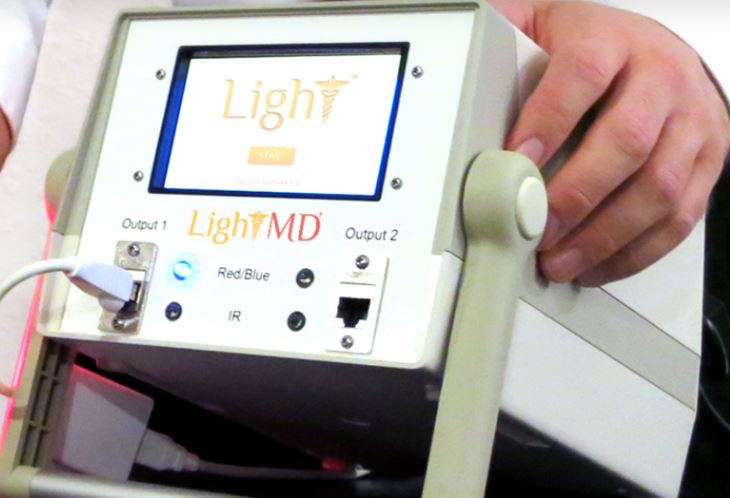
In an article by Noah Shachtman published in Wired Magazone,  On this much, scientists and doctors agree: Tiny flashes of infrared light can play a role in healing wounds, building muscle, turning back the worst effects of diabetes and repairing blinded eyes. But what they can’t decide on is why all these seemingly miraculous effects happen in the first place.

For more than a decade, researchers have been studying how light-emitting diodes, or LEDs — miniscule, ultra-efficient bulbs like the ones found in digital clocks and television remotes — might aid in the recuperative process. NASA, the Pentagon and dozens of hospitals have participated in clinical trials. Businesses have sold commercial LED zappers to nursing homes and doctors’ offices. Magazines and television crews have drooled on cue. Medicare has even approved some LED therapy.

Despite all that effort, “there’s not a clear idea of how this works. There are just working hypotheses,” said Marti Jett, chief of the molecular pathology department at the Walter Reed Army Institute of Research.

One possibility comes from Dr. Harry Whelan, a colleague of Jett’s and a neurology professor at the Medical College of Wisconsin. In a 2002 study backed by the National Institutes of Health and the Persistence in Combat program from the Pentagon’s research arm, Whelan used LEDs to restore the vision of blinded rats. Toxic doses of methanol damaged the rats’ retinas. But after exposure to the flashes of infrared light, up to 95 percent of the injuries were repaired.

Human trials have been less dramatic, but still shockingly effective. Using a Food and Drug Administration-approved, handheld LED — playfully called Warp 10 for its Star Trekstyle — wound-healing time was cut in half on board the USS Salt Lake City, a nuclear sub. Diode flashes improved healing of Navy SEALs’ training injuries by more than 40 percent. And a Warp 10 prototype was used by U.S. Special Forces units in Iraq, Whelan asserts.

These LEDs originally were developed by NASA to stimulate plant growth. Now, the agency wants to use the gadgets to build astronauts’ muscles during weightlessness. DNA synthesis in muscle cells quintupled after a single application of LEDs flashing at the 680-, 730- and 880-nanometer wavelengths, according to Whelan.

How exactly all this happened remains a mystery, Jett said. She’s identified more than 20 genes that typically are associated with retinal damage, for example, and “the LED alters all of them.”

“Some increased, some decreased,” she added. “But they were all brought back to normal.”

Why? Whelan thinks that the LED pulses give the retinal cells extra energy, allowing them to heal more quickly. Ordinarily, mitochondria — the engines of the cell — turn sugars into energy. They do so with the help of an enzyme, cytochrome oxidase, which carries electrons during the energy-transfer process. Whelan’s theory is that light particles from the LED give the cytochrome electrons it ordinarily would get from sugar. Light becomes a substitute for food, basically.

Dale Bertwell, the founder of Tampa, Florida-based Anodyne Therapy, a maker of LED medical devices, doesn’t buy the explanation.

“Mitochondria in no way explains the effects” of the LEDs, he said. If Whelan is right, wounds could be healed just by “eating another candy bar.”

What’s more, Bertwell added, the $1.2 million the Pentagon’s Defense Advanced Research Projects Agency just invested in Whelan’s work is a waste.

“They’re funding Harry’s work to build something that’s already in widespread use,” Bertwell said.

That something, Bertwell said, is Anodyne’s purse-sized, monochromatic, LED zapper. Life Care Centers of America, a nursing home chain, has bought nearly 200 of the devices, approved by Medicare last year. Gentiva Health Services, a home health-care provider, ordered another 25.

The devices are being marketed as an antidote — maybe the first antidote — to diabetic neuropathy, a deadening in the small nerve endings at the body’s extremities. The syndrome is blamed for the vast majority of diabetic amputations.

Because of all the sugar in a diabetic’s blood, the nerve endings can become brittle.

The diodes’ flashes combat this by momentarily breaking nitric oxide away from hemoglobin, the protein in red blood cells that carries oxygen, Bertwell asserts. Nitric oxide is a vasodilator — a substance that causes blood vessels to expand. That, in turn, stimulates blood flow, which can cause nerves to break their brittle nature, and grow again.

Dr. Joseph Prendergast, a Redwood City, California, endocrinologist, says he’s used LED therapy on more than 200 patients with diabetic neuropathy. After about 10 treatments of 40 minutes each, 95 percent of those people reported having some feeling restored to their feet. Nearly two-thirds are completely back to normal, Prendergast said.

But, when asked why he’s seen such startling results, Prendergast said, “It just goes up; that’s all I know.”

Dr. David Margolis, a pediatrics professor at the Medical College of Wisconsin, expressed similar sentiments. He and Whelan are part of a seven-hospital clinical test to see if LEDs can reduce one of the nastier side effects of chemotherapy, called mucositis. It’s basically an inflammation of the gastrointestinal tract, which results in canker sores in the mouth and throat.

In an earlier study, mucositis in bone-marrow transplant recipients dropped to 58 percent from an expected 70 percent to 90 percent after daily treatment using a 670-nanometer LED array.

The trial Margolis is involved with started only recently, so he won’t pronounce any definite conclusions.

“But it appears to those of us working in the ward — the doctors, the nurses — that patients getting the light treatment get significantly less sores,” Margolis noted.

That being said, he had “absolutely no idea” why this was happening. “It’s my first venture into the light,” he said.

Source

Sleeping Man1

Additional Sleep Has A High Monetary Value

We all know sleep matters for job performance. After a week of vacation, you may find your work better than ever. But rack up a week of sleepless nights — say, following a polarizing presidential election — and you may find yourself struggling.

It wouldn’t surprise anyone that sleep affects attention, memory and cognition — important factors in the workplace. But striking new research suggests the effect of additional sleep has a high monetary value. A paper — from Matthew Gibson of Williams College and Jeffrey Shrader of the University of California at San Diego, based on data from Jawbone, the fitness- and sleep-tracker company — says that additional time sleeping can translate into thousands of dollars in wages.

In fact, they calculate that a one-hour increase in weekly sleep raises wages by about half as much as an additional year of education. Now, the story is not so simple. Don’t think you can start to sleep more and you will instantly make more money. It’s more about the subtle interplay between how people schedule their lives, how much time they have available to sleep and how that affects worker performance and, ultimately, earnings.

To investigate how sleep affects worker wages, the researchers took advantage of a kind of natural experiment — sunset times across American time zones. Past research shows that people naturally end up sleeping longer when the sun sets earlier, for example in the winter, even if the person goes to bed well after dark. When the sun sets an hour later, it reduces nighttime sleep by roughly 20 minutes per week.

Within a single time zone, the time of sunset varies substantially, as the map below shows. For example, the sun sets about an hour and a half earlier in Mars Hill, Maine, than in Ontonagon, Mich., even though both are in the Eastern time zone. Because there shouldn’t be any significant differences in workers on the eastern or western edge of a time zone beyond the amount of time they sleep, researchers use this variation to calculate how much sleep influences wages.

They find that a one-hour increase in average weekly sleep in a location increases wages by 1.3 percent in the short run, which include changes of less than a year, and 5 percent in the long run. By moving to a location where a sunset is one hour earlier, a worker will make an additional $1,570 a year.

Those differences in wages end up being incorporated into the local economy. The researchers find that higher wages actually translate into higher home values as well. A county that experiences a sunset one hour earlier has on average a 6 percent higher median home value, about $7,900 to $8,800 dollars, they say. Not all of these wage differences are due directly to sleep, the researchers caution. Some could be due to the cumulative influence of other people. If the workers around you are made slightly more productive by sleeping better, that could make your work more productive, too.

The findings suggest that sleep is a crucial determinant of productivity and wages, “rivaling ability and human capital in importance,” the researchers write.Given the huge benefit that more sleep can bring, we should certainly pay more attention to ensuring that workers sleep more, they say.


SOURCE…www.washingtonpost.com

1 3 4 5 6 7 11