Category Archives for "Good Body"

http   prod.static9.net .au   media Network Images 2016 11 29 11 01 161129coachhadza1

Hunter-gatherers’ Active lifestyles make the rest of us look shamefully lazy

As you tick off another sedentary day spent sitting in your office chair then lounging on your couch, it might strike you: human beings are surely “designed” to move more than this, right? We’re actually designed to move a whole lot more, suggests ongoing research into the lifestyles of hunter-gatherers. For a while now, anthropologists have been studying the Hadza — a tribe of less than 1000 from East Africa whose lives provide a window into how our ancestors lived hundreds of thousands of years ago

 We’ve already learned a lot from the Hadza about how might have slept and how our bodies evolved to efficiently burn the calories we eat, and new research suggests the “natural” amount of physical activity we need for good health.  A team of anthropologists — the University of Arizona’s David Raichlen, Yale University’s Brian Wood and Hunter College’s Herman Pontzer — strapped heart-rate monitors and GPS trackers to the Hadza, then analysed how far and fast they travelled each day.

Most days, the men walked briskly on the hunt for game animals, while the women foraged for and prepared wild foods.On average, the Hadza achieved about 75 minutes of moderate to vigorous physical activity a day.

To put that number in context, Australian health authorities recommend we engage in at least 150 minutes of moderate physical activity a week, or 75 minutes of vigorous physical activity a week.Most of us living modern Western lifestyles don’t meet those targets. In Australia, 60 percent of adults do less than 30 minutes of moderate physical activity per day — way below the Hadza.That matters because the Hadza have a super low risk of cardiovascular disease, including low rates of high blood pressure and blood cholesterol, unlike us in the West stricken by the so-called diseases of civilisation.

Another noteworthy finding about the Hadza’s physical activity: it doesn’t decline with age. The older Hadza (it’s not uncommon for them to live into their 70s and even 80s) stayed as active as younger generations — unlike our society, where physical activity drops off sharply as we age.Raichlen acknowledges the Hadza’s heart health is likely influenced by other factors too (such as their diets — most continue to forage and rely on wild foods), but says studying their lifestyles bolsters the obvious-but-overlooked theory that aerobic activity is a must for health.

“The overarching hypothesis is that our bodies evolved within a highly active context, and that explains why physical activity seems to improve physiological health today,” he said in a statement.He believes studying the Hadza gives us an insight into the physical activity levels that drove the evolution of healthy human hearts, muscles and brains.“The answer is not likely 30 minutes a day of walking on a treadmill,” he said. “It’s more like 75-plus minutes a day.”
Read more …./coach.nine.com.au


rex1 e1480351906438

More Young People Contracting ‘Old-Age’ Conditions Due To Sedentary Lifestyles

People in their 20s and 30s are being treated for varicose veins, knee joint problems and other conditions usually associated with old age.Bad postures and sedentary lifestyles have led to a rise in the number of younger people experiencing complaints such as back pain and haemorrhoids, according to analysis by Bupa Data from more than 60,000 medical procedures in 2015 was compiled by the private healthcare group. It found treatment traditionally offered to older generations was increasingly being sought by younger people, aged mainly between 25 and 45 – a shift it attributed to time spent sitting at desks, watching box sets and using smartphones and tablets.

Removal of Bad posture and sedentary lifestyles have been blamed for a rise in the number of young people seeking treatment for conditions traditionally associated with old age. Two of the most common procedures in the heart and circulatory diseases category for both 26 to 35-year-olds and 36 to 45-year-olds.“Haemorrhoid removal and treatment for varicose veins are procedures that people in this age group should not be encountering,” said Dr Steve Iley, Bupa’s medical director in a statement.“However, when you consider the amount of time young people now spend sat using their mobiles and tablets, streaming box sets or playing with the latest games console, you can see why these conditions are rising in this age group.”Among the five most common procedures for 36 to 45-year-olds were arthroscopic knee operations, a surgical technique by which a tiny camera is used to look inside the knee.

Epidural injections at the base of the spine, used to treat back pain, was also in the top five for this age group – a 10 per cent rise from 2014, a Bupa spokesperson told The Independent.And arthroscopic knee operations were even one of the five most common procedures among 16 to 25-year-olds. Searches for stress-related conditions on Bupa’s website had also increased, it said, suggesting this could be due to longer working hours, busy schedules and a lack of ability to “switch off”.

Experts have warned that repeatedly looking down at mobile phones and other devices has led to a rise in the number of young people experiencing back and neck pain.Among 16 to 24-year-olds, 45 per cent said they were currently living with neck or back paincompared to 28 per cent of 18 to 24-year-olds asked the previous year, according to a survey by the British Chiropractic Association (BCA).Tim Hutchful, a BCA chiropractor, said he was “concerned that the number of patients under the age of 30 coming through our doors is increasing”.

“When people use laptops or mobile phones in bed they tend to forget their posture, hunch over the screen and leave their spine unsupported, which can damage posture and cause back or neck pain,” he said.Bupa said searches for “piles”, “IBS [Irritable bowel syndrome]” and stomach ulcers on its website had increased by up to 240 times in one year since 2014.

SOURCE… www.independent.co.uk

rex1 e1480351906438

More Young People Contracting 'Old-Age' Conditions Due To Sedentary Lifestyles

People in their 20s and 30s are being treated for varicose veins, knee joint problems and other conditions usually associated with old age.Bad postures and sedentary lifestyles have led to a rise in the number of younger people experiencing complaints such as back pain and haemorrhoids, according to analysis by Bupa Data from more than 60,000 medical procedures in 2015 was compiled by the private healthcare group. It found treatment traditionally offered to older generations was increasingly being sought by younger people, aged mainly between 25 and 45 – a shift it attributed to time spent sitting at desks, watching box sets and using smartphones and tablets.

Removal of Bad posture and sedentary lifestyles have been blamed for a rise in the number of young people seeking treatment for conditions traditionally associated with old age. Two of the most common procedures in the heart and circulatory diseases category for both 26 to 35-year-olds and 36 to 45-year-olds.“Haemorrhoid removal and treatment for varicose veins are procedures that people in this age group should not be encountering,” said Dr Steve Iley, Bupa’s medical director in a statement.“However, when you consider the amount of time young people now spend sat using their mobiles and tablets, streaming box sets or playing with the latest games console, you can see why these conditions are rising in this age group.”Among the five most common procedures for 36 to 45-year-olds were arthroscopic knee operations, a surgical technique by which a tiny camera is used to look inside the knee.

Epidural injections at the base of the spine, used to treat back pain, was also in the top five for this age group – a 10 per cent rise from 2014, a Bupa spokesperson told The Independent.And arthroscopic knee operations were even one of the five most common procedures among 16 to 25-year-olds. Searches for stress-related conditions on Bupa’s website had also increased, it said, suggesting this could be due to longer working hours, busy schedules and a lack of ability to “switch off”.

Experts have warned that repeatedly looking down at mobile phones and other devices has led to a rise in the number of young people experiencing back and neck pain.Among 16 to 24-year-olds, 45 per cent said they were currently living with neck or back paincompared to 28 per cent of 18 to 24-year-olds asked the previous year, according to a survey by the British Chiropractic Association (BCA).Tim Hutchful, a BCA chiropractor, said he was “concerned that the number of patients under the age of 30 coming through our doors is increasing”.

“When people use laptops or mobile phones in bed they tend to forget their posture, hunch over the screen and leave their spine unsupported, which can damage posture and cause back or neck pain,” he said.Bupa said searches for “piles”, “IBS [Irritable bowel syndrome]” and stomach ulcers on its website had increased by up to 240 times in one year since 2014.

SOURCE… www.independent.co.uk

shutterstock 5191961921

Eat Cheese, Live Longer

A recent study published in the journal Nature Medicine reported that eating cheese — specifically the aged kind containing the compound spermidine, as found in blue cheese — was linked to a longer life in mammals when tested on mice.

“The mice do not only live longer when we supplement spermidine to the drinking water, but they are also healthier in terms of cardiac function,” Frank Madeo, co-author of the study and a professor at the University of Graz in Austria, told Medical Daily.

The study observed 800 Italians and found that those who ate more cheese had lower blood pressure, a reduced risk of cardiovascular disease and 40 percent lower risk of heart failure.

SOURCE…www.nypost.com

LMDHome 1

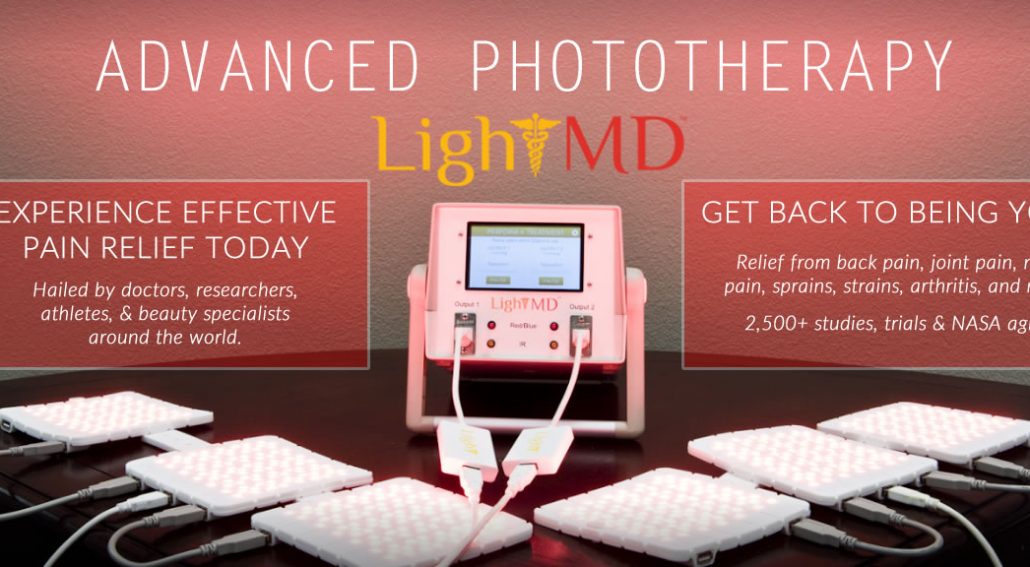
Light Therapy Works for Fibromyalgia


I’ve had severe fibromyalgia for 14 years, and I’ve been disabled as long. Without a doubt, the pain is certainly a central issue, along with the severe fatigue, flare ups, and crashes. It’s an absolutely miserable disease that’s intrusive and destructive. I broke commitments that really shouldn’t be broken, which put a strain on personal relationships. The pain is a level of suffering that can easily push one to insanity or worse.

I found light therapy last October Some areas are completely free of pain at times, which hasn’t happened in 14 years, but if I stop treatment the pain returns. It’s not a cure, my fibro is still terribly limiting, but it’s an amazing treatment for the pain. The decrease in my personal suffering has been outstanding.

It still astonishes me how well laser therapy works. I still suffer from fibro fog, low energy, and all of the other problems associated with fibromyalgia, but my pain levels have dropped from a constant 7-9 out of 10, to a much more tolerable 2-4. I use the laser between 20 minutes to an hour or more a day, and rather than become resistant, my body seems to respond better after getting used to treatment.Some areas are completely free of pain at times, which hasn’t happened in 14 years, but if I stop treatment the pain returns. It’s not a cure, my fibro is still terribly limiting, but it’s an amazing treatment for the pain. The decrease in my personal suffering has been outstanding.

The laser is like an alarm clock for under active mitochondria, only stimulating the cells in need. Properly functioning tissue (not in pain) have little to no response, while damaged or inflamed tissue “wake up” and begin healing. Some areas need daily treatment, like my calves and back, while other areas can go days between treatments.If you’re a fan of science fiction, this is the coolest thing since the smartphone made Captain Kirk’s communicator look silly.

bear crawl21

The Ultimate Exercise

It may sound bizarre, but Johnson crawls every day to strengthen her core muscle groups.
“You can crawl in many ways. You can crawl on your hands and knees. You can also prop up on your toes and just hover, one or two inches above the ground, which is really going to pull in those core muscles and work those muscles effectively,” said Johnson, a physical therapist at the Mayo Clinic Healthy Living Program.
“Then, as you start to move, you’re working on your shoulder girdle, you’re working on your hips,” she said. “If I could give one exercise to almost everybody, this would be it.”
Crawling has been used as a physical therapy tool, Johnson said, and now it has been adopted for strengthening and fitness.
The idea of turning crawling like a baby into exercise has been championed by the training system Original Strength, which repurposes fundamental movements into a fitness regimen.
According to Original Strength, when you crawl, you’re “pressing reset” on your central nervous system and revisiting the mobility patterns you learned as a baby.
Patterns such as crawling not only require motor skills, they involve the vestibular system, a sensory system associated with balance and spatial orientation, said Justin Klein, a chiropractor and CEO of Got Your Back Total Health in Washington, who has incorporated crawling into his practice.
“It’s like resetting the central loop in the nervous system to bring all of the parts involved in coordination, movement and reflexive stability into synchronization,” Klein said.
“You have to really work to be able to breathe, keep your head up and crawl at the same time, all while keeping your pattern,” he said. “That’s the kind of thing where, if you are being really mindful within your crawl, it is harder than it looks.”
Klein always recommends crawling as exercise to his patients, he said, from professional athletes to those injured in car accidents.
Denard Span, a center fielder for the San Francisco Giants, has included crawling in his strength and conditioning training, Klein said. When Span was with the Washington Nationals, he was Klein’s patient and learned how crawling translates directly with movements used in baseball, such as a certain cross-crawl pattern seen in throwing and batting.
To spread the word, Klein hosted a Crawl on the Mallevent this month in which participants crawled the National Mall.
But as Klein, Johnson and other enthusiasts insist that the crawling movement will help your body regain the strength, mobility and stability you had in your youth, other experts remain skeptical.
“To me, the benefit is that it’s an efficient exercise,” Simpson said of crawling, adding that he hadn’t heard of the exercise before now.
“Based on the position you are in when you’re crawling, you have to contract your abdominal muscles, and you also have to use your back muscles and your other core muscles to maintain that position and propel yourself,” he said. “My one word of caution would be for anyone with knee pain. Crawling on your hands and knees is rough on the knees, but there are some types of crawling exercises where you are up on your feet rather than your knees, which would be safer for the knees.”
Crawling also should be avoided if you have wrist, shoulder or neck issues, said Jacque Crockford, an exercise physiologist at the American Council on Exercise.
She added that crawling on all fours, with the knees off the floor, further activates the core muscles and the body’s ability to balance.

Learning how to crawl

To crawl on all fours, with your knees off the floor, experts recommend to follow these three simple steps:
  1. When on your hands and knees, place your wrists under shoulders and knees under hips
  2. Next, keep your back flat and straight, as you lift your knees about 2 inches off of the ground
  3. Finally, start crawling by moving your opposite hand and foot just 2-3 inches forward all while keeping your knees off of the ground and your back level — repeat with your other hand and foot

Questioning the crawl

More research is needed to scientifically support the argument that crawling “resets” your central nervous system, at least within the physician community, said Dr. Scott Simpson, a faculty member at the Stony Brook University School of Medicine, who specializes in sports medicine at Stony Brook Orthopaedic Associates.
“Crawling, we’ve all done it, but just like when babies and toddlers squat with perfect form, over time, our adult bodies begin to resist these primal and very effective movement patterns,” Crockford said.
“As the fitness industry evolves, we are seeing more and more trainers, coaches and teams go back to these primal roots by implementing movement patterns like crawling, bending, lunging, rotating into their programming,” she said. “Crawling can be helpful to those seeking to challenge their body in a way they may have not tried since before they could walk, literally.”
As Johnson, the physical therapist at the Mayo Clinic, put it, “Crawling and other natural movement patterns are not a fad or fitness craze but a return to the fundamentals of movement.”
Yet, will crawling catch on in popularity among gym-goers? Experts aren’t so sure — but if it does, don’t be surprised if its name changes.

What’s old becomes new again

Though crawling might seem new, Shape magazine fitness director Jaclyn Emerick said she has seen exercise enthusiasts crawling before — but it was called something else.
In 2012, Equinox fitness clubs offered a class called Animal Flow, in which participants crawled around the gym animal-style, she said.

edit

“Fitness can be like something in fashion where it was trendy or in style at one point, and then it goes away for a while, and then it comes back,” Emerick said.
“Crawling is super accessible; it’s body weight. To a lot of people, it feels new, so anything that feels new is exciting, and they’re more willing to try it, and it’s not something that requires you to do for a very long amount of time. You can maybe do some intervals with it,” she said. “Crawling doesn’t have to eliminate other good things that exist — you’re seeing people compare this, like ‘it’s the better plank’ — there’s room for lots of good things. It’s just another cool move, another cool exercise to add to your arsenal.”
Certain exercise movements that require you to focus on your balance can improve your working memory, according to a small study published last year in the journal Perceptual and Motor Skills.

Balance may help your brawn and brain

The study involved 65 adults between the ages of 18 and 59 who were separated into three groups. One group required the participants to complete various dynamic exercises — such as crawling and climbing trees — for two hours. The exercises also required participants to balance and be aware of their movements and the positioning of their bodies, which is called being proprioceptively aware.
“If you think of crawling or balancing, you have to plan where you’re putting your feet. You have to plan where you’re putting your hands so you don’t lose your balance. It’s this idea of us being aware, proprioceptively aware, but also being dynamic in that awareness. We have dynamic movement involved,” said Tracy Packiam Alloway, a psychologist at the University of North Florida who conducted the study with her husband, Ross Alloway.
Another group in the study participated in a yoga class, and the third group sat in a two-hour classroom-style lecture in which they learned new information. Before and after the groups participated in these tasks, they completed a working memory test.
After comparing the test scores, the researchers discovered that the adults in the exercise group had improved working memory scores compared with those in the classroom and yoga groups
lightmd machine

Light at the End of the Tunnel

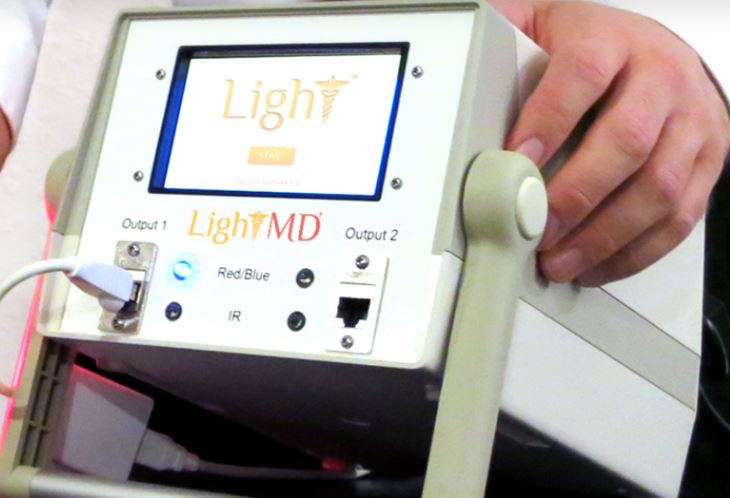
In an article by Noah Shachtman published in Wired Magazone,  On this much, scientists and doctors agree: Tiny flashes of infrared light can play a role in healing wounds, building muscle, turning back the worst effects of diabetes and repairing blinded eyes. But what they can’t decide on is why all these seemingly miraculous effects happen in the first place.

For more than a decade, researchers have been studying how light-emitting diodes, or LEDs — miniscule, ultra-efficient bulbs like the ones found in digital clocks and television remotes — might aid in the recuperative process. NASA, the Pentagon and dozens of hospitals have participated in clinical trials. Businesses have sold commercial LED zappers to nursing homes and doctors’ offices. Magazines and television crews have drooled on cue. Medicare has even approved some LED therapy.

Despite all that effort, “there’s not a clear idea of how this works. There are just working hypotheses,” said Marti Jett, chief of the molecular pathology department at the Walter Reed Army Institute of Research.

One possibility comes from Dr. Harry Whelan, a colleague of Jett’s and a neurology professor at the Medical College of Wisconsin. In a 2002 study backed by the National Institutes of Health and the Persistence in Combat program from the Pentagon’s research arm, Whelan used LEDs to restore the vision of blinded rats. Toxic doses of methanol damaged the rats’ retinas. But after exposure to the flashes of infrared light, up to 95 percent of the injuries were repaired.

Human trials have been less dramatic, but still shockingly effective. Using a Food and Drug Administration-approved, handheld LED — playfully called Warp 10 for its Star Trekstyle — wound-healing time was cut in half on board the USS Salt Lake City, a nuclear sub. Diode flashes improved healing of Navy SEALs’ training injuries by more than 40 percent. And a Warp 10 prototype was used by U.S. Special Forces units in Iraq, Whelan asserts.

These LEDs originally were developed by NASA to stimulate plant growth. Now, the agency wants to use the gadgets to build astronauts’ muscles during weightlessness. DNA synthesis in muscle cells quintupled after a single application of LEDs flashing at the 680-, 730- and 880-nanometer wavelengths, according to Whelan.

How exactly all this happened remains a mystery, Jett said. She’s identified more than 20 genes that typically are associated with retinal damage, for example, and “the LED alters all of them.”

“Some increased, some decreased,” she added. “But they were all brought back to normal.”

Why? Whelan thinks that the LED pulses give the retinal cells extra energy, allowing them to heal more quickly. Ordinarily, mitochondria — the engines of the cell — turn sugars into energy. They do so with the help of an enzyme, cytochrome oxidase, which carries electrons during the energy-transfer process. Whelan’s theory is that light particles from the LED give the cytochrome electrons it ordinarily would get from sugar. Light becomes a substitute for food, basically.

Dale Bertwell, the founder of Tampa, Florida-based Anodyne Therapy, a maker of LED medical devices, doesn’t buy the explanation.

“Mitochondria in no way explains the effects” of the LEDs, he said. If Whelan is right, wounds could be healed just by “eating another candy bar.”

What’s more, Bertwell added, the $1.2 million the Pentagon’s Defense Advanced Research Projects Agency just invested in Whelan’s work is a waste.

“They’re funding Harry’s work to build something that’s already in widespread use,” Bertwell said.

That something, Bertwell said, is Anodyne’s purse-sized, monochromatic, LED zapper. Life Care Centers of America, a nursing home chain, has bought nearly 200 of the devices, approved by Medicare last year. Gentiva Health Services, a home health-care provider, ordered another 25.

The devices are being marketed as an antidote — maybe the first antidote — to diabetic neuropathy, a deadening in the small nerve endings at the body’s extremities. The syndrome is blamed for the vast majority of diabetic amputations.

Because of all the sugar in a diabetic’s blood, the nerve endings can become brittle.

The diodes’ flashes combat this by momentarily breaking nitric oxide away from hemoglobin, the protein in red blood cells that carries oxygen, Bertwell asserts. Nitric oxide is a vasodilator — a substance that causes blood vessels to expand. That, in turn, stimulates blood flow, which can cause nerves to break their brittle nature, and grow again.

Dr. Joseph Prendergast, a Redwood City, California, endocrinologist, says he’s used LED therapy on more than 200 patients with diabetic neuropathy. After about 10 treatments of 40 minutes each, 95 percent of those people reported having some feeling restored to their feet. Nearly two-thirds are completely back to normal, Prendergast said.

But, when asked why he’s seen such startling results, Prendergast said, “It just goes up; that’s all I know.”

Dr. David Margolis, a pediatrics professor at the Medical College of Wisconsin, expressed similar sentiments. He and Whelan are part of a seven-hospital clinical test to see if LEDs can reduce one of the nastier side effects of chemotherapy, called mucositis. It’s basically an inflammation of the gastrointestinal tract, which results in canker sores in the mouth and throat.

In an earlier study, mucositis in bone-marrow transplant recipients dropped to 58 percent from an expected 70 percent to 90 percent after daily treatment using a 670-nanometer LED array.

The trial Margolis is involved with started only recently, so he won’t pronounce any definite conclusions.

“But it appears to those of us working in the ward — the doctors, the nurses — that patients getting the light treatment get significantly less sores,” Margolis noted.

That being said, he had “absolutely no idea” why this was happening. “It’s my first venture into the light,” he said.

Source

1000 sleep junk food1

More Sleep Means Fewer Junk Food Cravings

If you’re trying to conquer your junk food cravings, a little extra time in the sack could make a tremendous difference. In fact, a University of Chicago study showed that not getting enough sleep could increase cravings for junk food, specifically foods like cookies and bread, by 45 percent.

Don’t take the importance of sleep for granted. You may think sleeping less will give you more time to get things done, but in reality, you’re only hurting yourself and making your habits worse. Check out these four reasons more sleep means fewer cravings.

It Helps Control Your Appetite
Sleep helps regulate our hormones. Just a few nights without sleep can increase the level of ghrelin—the hormone responsible for triggering our appetite. In fact, the Wisconsin Sleep Cohort Study showed that participants who slept 5 hours had 14.9 percent higher ghrelin than those individuals who slept 8 hours. A lack of sleep not only explains the differences in those hormone levels but also sheds light on the increase in Body Mass Index (BMI) and obesity for individuals that don’t get adequate sleep. (Try these smart alternatives to junk food)

It Helps Signal Satiety
Hormones affect our appetite–they help regulate when we feel full or satisfied. Just a few nights without sleep can drop the level of leptin—the hormone responsible for signaling satiety. Study participants who slept 5 hours had 15.5 percent lower leptin than those individuals who slept for 8 hours. Lack of sleep can make it more difficult for us to sense when we’re full—causing us to consume more calories than we need.

It Aids Your Judgment
It’s probably no surprise (and has been well documented) that a lack of sleep can decrease our memory, cause us to feel foggy, increase our potential for accidents, increase the risk for disease and even diminish our sex drive. It can also impair judgment when it comes to making healthy choices.  When we’re tired, we are more likely to grab whatever is convenient (think office vending machine, break room donuts or that caramel latte) rather than something that is good for us. (Don’t get stuck with a junk food hangover)

It Cuts Out Snacking
A recent study published in the journal Sleep showed that a lack of sleep caused people to overeat on sweet and salty high-fat junk food. The study, which took place at the University of Chicago’s Clinical Research Center had participants take part in two four-day sessions. The first had participants spend 8.5 hours in bed (with an average sleep time of 7.5 hours) each night. The second round had the same subjects spend just 4.5 hours in bed (an average sleep time of 4.2 hours) each night. Although the participants received the same meals at the same time during both stays, they consumed more than 300 additional calories when sleep deprived. The extra calories mainly came from snacking on high-fat junk foods. (See: 10 Whole Foods That Boost Your Energy and Help You Lose Weight)

Try these simple tips to help you get a better night’s sleep:

  • Go to bed 10 to 15 minutes earlier each night until you’re getting the recommended 7 to 8 hours of sleep. Not only will you have more energy throughout the day with fewer cravings, but you’ll also be more productive.
  • Stop eating two hours before you hit the hay. Going to bed on a full stomach is not only uncomfortable, but it can interfere with a good night’s sleep. For many of us, late night snacking can get out of control, and the calories can add up.
  • Have a bedtime ritual. Take a hot bath, drink a cup of herbal tea or practice 10 minutes of meditation. Do what works best for you. A normal regular bedtime ritual can help you nod off quicker and sleep more soundly.
  • We hear it all the time, but put that smartphone away when you’re about to sleep. The light emitted from electronic devices can disrupt your sleep.  In fact, the National Sleep Foundation says that nighttime, and the reduction of light that used to come along with it, used to cue our brains to “wind down” for sleep. Today’s constant use of electronics interferes with this natural process.


SOURCE…www.shape.com

Tai Chi2

Traditional Tai Chi Chuan for Strong Body & Still Mind

Yang Cheng Fu is the Tai Chi Master who put internal martial arts on the world map. His decision to teach the art on a broader basis than just to martial artists seeking advanced martial arts practices has withstood the test of time. One hundred years down the line the art is the most practiced of all tai chi styles and is rich in diversity, texture and expression, with many successful practitioners.One of Yang Cheng Fu’s most generous contributions was to allow the writing down of what he considered to be the 10 most important points to show in your Yang Style tai chi practice:
1. Emptying the thoughts and raising the head as if the crown of the head is pressed up against the heavens
2. Hollowing the chest to raise the back
3. Loosening up the waist
4. Distinguishing between substantial and insubstantial
5. Sinking the shoulder and weighting down the elbow
6. Using Yi (intention of the mind) and not physical strength
7. Co-ordination of both the upper and lower body
8. Internal and external in togetherness
9. Continuity without breakage
10. Seeking stillness within movement
There are many different books that give commentary and explanation of each of these points, but the ones that he himself gave are already very clear. A quick search on the internet will easily yield them. Although translations differ, if you are resolute about wanting to achieve a good level of competence in all of the above points, you will undoubtedly grow a strong foundation in the art in preparation for advanced Yang style concepts and principles to be added.
When I began Tai Chi, the importance’s of these points were made abundantly clear through repeated demonstration of the effect they have on internal energy development and application. As time went on it became clear that as a basis for advanced practice these points must be in place. Further that, with awareness, all items within the syllabus train all ten points as a minimum. My personal feeling is that it was invaluable for me to have access to intensive training that allowed deeper exploration into the points with a group of people willing to set aside their egos and cooperate in mutual growth in the art. I hope all of you can gain a similar experience because if even one of the points is not understood and manifested in what one is doing, development in the art begins to tail off. This most assuredly was not Yang Cheng Fu’s desire as, if properly understood, the points are very solid stepping stones that allow all practitioners to flourish and reach their goals within the art.

So as your interest in the art rises, make sure that the skills demonstrated in your Tai Chi community is alive with these points. If not – go and get them from another community, bring them back and nourish the practitioners around you. In this way Yang style will become stronger and stronger as time goes on.
SOURCE….Read the full story

Tai Chi2

Traditional Tai Chi Chuan for Strong Body & Still Mind

Yang Cheng Fu is the Tai Chi Master who put internal martial arts on the world map. His decision to teach the art on a broader basis than just to martial artists seeking advanced martial arts practices has withstood the test of time. One hundred years down the line the art is the most practiced of all tai chi styles and is rich in diversity, texture and expression, with many successful practitioners.One of Yang Cheng Fu’s most generous contributions was to allow the writing down of what he considered to be the 10 most important points to show in your Yang Style tai chi practice:
1. Emptying the thoughts and raising the head as if the crown of the head is pressed up against the heavens
2. Hollowing the chest to raise the back
3. Loosening up the waist
4. Distinguishing between substantial and insubstantial
5. Sinking the shoulder and weighting down the elbow
6. Using Yi (intention of the mind) and not physical strength
7. Co-ordination of both the upper and lower body
8. Internal and external in togetherness
9. Continuity without breakage
10. Seeking stillness within movement
There are many different books that give commentary and explanation of each of these points, but the ones that he himself gave are already very clear. A quick search on the internet will easily yield them. Although translations differ, if you are resolute about wanting to achieve a good level of competence in all of the above points, you will undoubtedly grow a strong foundation in the art in preparation for advanced Yang style concepts and principles to be added.
When I began Tai Chi, the importance’s of these points were made abundantly clear through repeated demonstration of the effect they have on internal energy development and application. As time went on it became clear that as a basis for advanced practice these points must be in place. Further that, with awareness, all items within the syllabus train all ten points as a minimum. My personal feeling is that it was invaluable for me to have access to intensive training that allowed deeper exploration into the points with a group of people willing to set aside their egos and cooperate in mutual growth in the art. I hope all of you can gain a similar experience because if even one of the points is not understood and manifested in what one is doing, development in the art begins to tail off. This most assuredly was not Yang Cheng Fu’s desire as, if properly understood, the points are very solid stepping stones that allow all practitioners to flourish and reach their goals within the art.

So as your interest in the art rises, make sure that the skills demonstrated in your Tai Chi community is alive with these points. If not – go and get them from another community, bring them back and nourish the practitioners around you. In this way Yang style will become stronger and stronger as time goes on.
SOURCE….Read the full story

1 6 7 8 9 10 13