Category Archives for "Weight-Loss"

cleaning

They REALLY did not want to do this…

They REALLY did not want to do this


We have an interested client story to share. Thought it may be useful for the rest of our clients to hear.

The other night a client just did NOT want to take any time to clean the kitchen, but it’s one of “their” chores (we all have our own chores) and they have a personal rule that before they go to bed, the kitchen has to be squared away.

Now, when we say they did NOT want to do it, we mean they really, really, really did NOT want to step even one foot into the kitchen.

They were tired counting down the minutes until they could get into bed. I’m sure you’ve been there.

But they knew the kitchen wasn’t going to magically clean itself. And they also knew something else, from past experience – and it’s actually why we’re writing you this today.

They knew that if they didn’t keep their commitment to themselves, it’d be easier to break that commitment again – and again, and again.

They also knew that it would have a ripple effect, making it easier to break other commitments to themselves, too.

So they grumbled a little bit, picked themselves off the couch, and actually cleaned the kitchen… even though they weren’t in the mood for it and was the last thing they wanted to do.

Now they didn’t do a stellar job; it was passable.  They didn’t have mystical epiphany while cleaning. They listened to some music and basically hustled their way through it.

In fact, turns out it wasn’t NEARLY as bad as they made it out to be in their head. 

When they finally DID go to bed, they felt pretty good about themselves for powering through.

The truth is, you have to show up, even if it’s just for yourself. ESPECIALLY if it’s for yourself, because that helps you show up even better for others.

It’s not any different than workouts you want to skip, or the little treats you are tempted to sneak in when no one is looking.

The more you let things slide, the easier it is to keep doing so. They don’t call it a “slippery slope” for nothing.

We’ve all said these things to ourselves before:

“Skipping my workout today won’t make a real difference, anyway.”

“I’ll get back at it tomorrow.”

“I’m really tired/hungry/stressed because work was crazy today, I just want to go home and relax … preferably with a glass or two of wine.”

Just one more cookie won’t matter.

“It’s so dark out this morning, I don’t want to get out of bed.”

Obviously, sometimes you HAVE to miss a workout or change up your nutrition – maybe you’re sick or it’s super busy at work, or you have an important family commitment. Life happens.

But here’s the question: Are you showing up for yourself the way you promised?

No one says every workout has to be a record setter – but we’d argue that the workouts you don’t want to do (or those diet temptations you find hard to overcome) are the MOST important.

They help strengthen another set of “muscles” … your motivation, your confidence in yourself, and your inner knowing that when the chips are down, you CAN count on YOURSELF to get the job done!

That’s pretty amazing... even if it’s something small like cleaning the kitchen. (which as you can see isn’t really that small, after all.

If you'd like a way to test your commitment to yourself, try out one of our 28-Day Kick-Start Program...available in-studio and online-only at www.gogoodguru.com/kickstart.

sitting new smoking

Remember “Sitting is the New Smoking”?

Remember “Sitting is the New Smoking”?


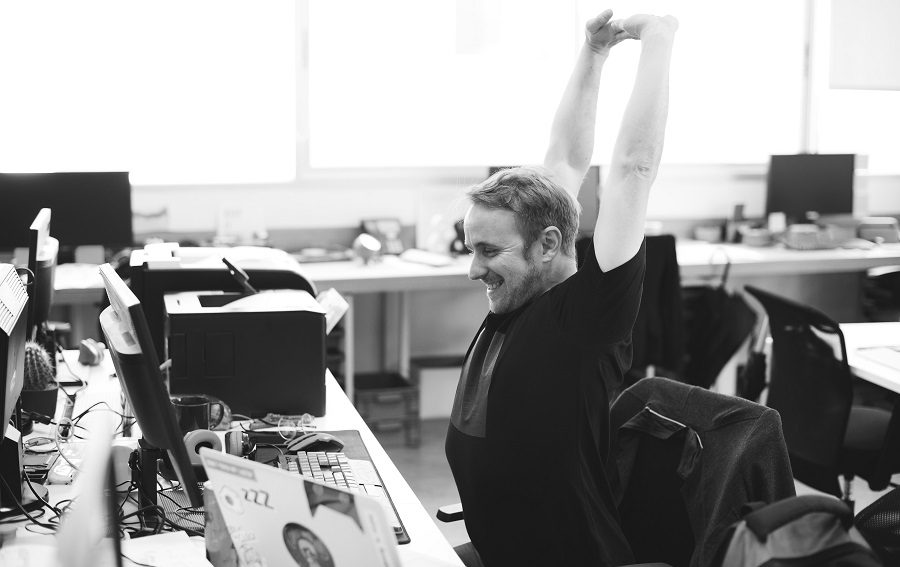
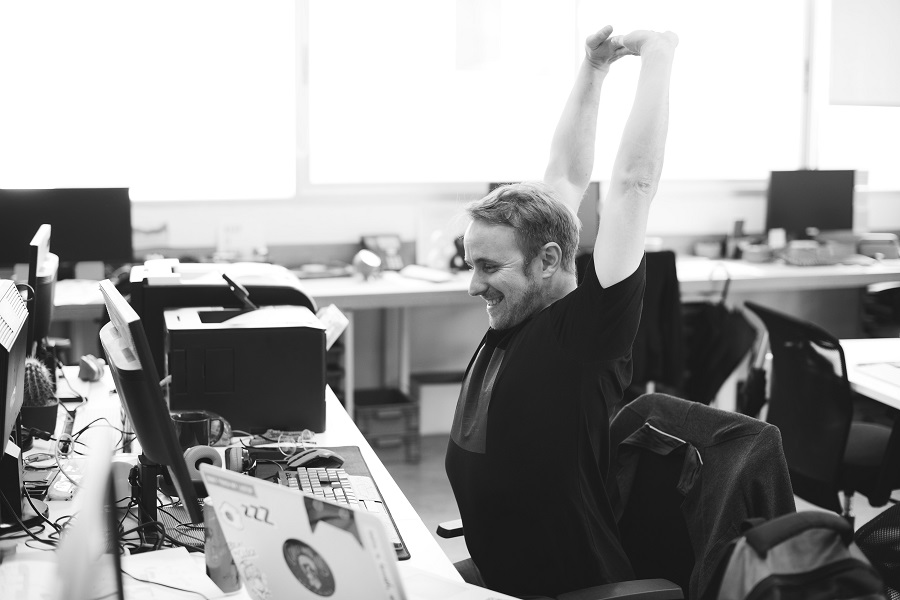
We’ve got some good news for you today – plus some even better news! This is especially important if you work behind a desk most of the time.

Do you remember a few years ago, when all the headlines blared that “Sitting is the New Smoking”?

Basically, researchers looked into the health risks of sitting for hours at a time, and the conclusion was that if you sit a lot, your risk of dying was the same as that of a smoker – even if you exercise!

The good news is that while those headlines might have started with a grain of truth, they weren’t 100% accurate.

New studies have shown that while sitting isn’t great for you, it’s definitely not as bad as smoking, according to researchers from Canada, Australia and the U.S. who published a study in the American Journal of Public Health.

Sitting more than 8 hours a day DOES increase your risk of premature death and developing some chronic diseases by 10% to 20% … but it’s nowhere in the same ballpark as smoking, which boosts the risk of early death by 180%!

Here’s the even better news. If you must sit a lot, there are some things you can do to offset the risk of developing diseases related to being sedentary.

Basically, it all boils down to being as active as possible when you’re NOT sitting.

At work, go for walks or move around during your breaks. And when you are NOT at work, get up and MOVE!

Researchers found the risks of “excess sitting” could be mostly offset by getting about an hour of moderate to vigorous exercise every day.

Now this might not be possible every single day, but attending a class or training session at least a 3-4 days a week will help rack up your weekly total.

Gardening, playing sports, or engaging in active hobbies will also help.

While you are at your desk, try these tips to make it the best you can:

Get up and walk around as frequently as possible. Set a timer so you get up to stretch at least once an hour.

Make sure you stay hydrated! Drink water. Bonus: you might have to get up to make more trips to the bathroom. 🙂

Double-check that your chair is set to the right height and supports you properly.

Be mindful of your posture while you’re sitting.

Take walking meetings, if that’s an option. If you’re discussing a project with a coworker, take the meeting outside for a quick walk. This also can encourage creativity!

Remember: your body needs and craves MOVEMENT! It will help keep you healthy, fit and feeling great!

We’re here to help you with strategies to stay active, strong and flexible.  Be sure to SCHEDULE A CALL, check out our ONLINE COACHING program or one of our FITNESS KICK-START programs.

sitting all day

How To Avoid Aches And Pains From Sitting All Day

How To Avoid Aches And Pains From Sitting All Day


In our post a few days ago, we let you know that sitting is likely NOT the new smoking!  But that doesn’t mean it can’t take its toll on your body.

If you don’t take a few precautions, it can have a long-term effect on your posture that even has its own scary-sounding name: kyphosis.

Kyphosis when you develop posture that leads to a forward head, rounded shoulders, back pain, muscle stiffness, and pain in your neck. It can even affect muscles around your hips and glutes.

We’ve got some strategies that can help you avoid all of that – because preventing kyphosis is so much easier than fixing it.

The most important thing is to do these exercises consistently – a couple times a day if possible. Set a timer and make it a non-negotiable. Your coworkers should join in, too! Set your alarm on your phone and call it a “posture party!” (joking but make it fun!)

Keyboard Stretch

If you spend a lot of time keyboarding, this is one you can’t miss. If this causes pain, back off and work to make small improvements. (Note, if you regularly train your chest and shoulders with heavy weights, it’s good for you, too!)

1. Stand tall at the edge of your desk. Place your fingers on the edge of your desk so that your fingers are facing away from you, your forearms are facing away. (Palms are NOT touching the desk yet.)

2. Being careful not to lock your elbows, with good posture slowly start to lean forward and drop your palms to the surface of the desk. You should feel a stretch along your forearms and wrist. If this causes pain, back off the stretch slightly.

3. Hold for 20-30 seconds. Do this 1-3 times.

Standing Stretch

1. Stand behind your desk, your right hand on your chair for balance.

2. Bend your left knee and grip your left ankle behind you with your left hand, slowly bringing your heel up toward your left glute muscle.


3. Tighten your glute muscles so you don’t arch your back – this also will intensify the stretch.

4. Try to bring your knees together while maintaining an upright posture and hold the stretch for 30 seconds. Repeat on the other side.

Seated Stretch

1. Sit tall in your chair, both feet flat on the floor.

2. Keeping your right foot on the floor, bend your left knee and place your left ankle on your right thigh, just above the knee, so that your legs form the top of the number 4.

3. Remain sitting tall as you keep your left foot flexed, and slowly press your left knee gently downward, feeling a stretch in the outer part of your left hip. You can lead forward gently for extra fun. Hold for 30 seconds and repeat on the other side.

Upper Body Stretch

This one will have your coworkers wondering what you’re doing, but it’ll feel so good you won’t care!

1. Standing tall, abs braced, perform a hip hinge (bending from the hips, not the waist) so that your upper body bends forward, toward your thighs. Let your arms hang in front of you as you relax to feel a stretch in your hamstring muscles.

2. Take a few deep breaths and re-engage your abs, standing tall as you reach your arms out to your sides until they are shoulder height. As you do this, rotate your thumbs backward so your palms face up.

3. As you feel the front part of your body stretch, tighten your glutes to protect your back and imagine your thumbs pointing at each other behind you. Stop if you feel pain, but you should feel the muscles of your upper back “pinch” together.

4. Hold for a few breaths and repeat this exercise 5 times.

Hope these stretches help! Consistency is the key. Over time, you will notice that it becomes easier to sit tall throughout the day and nagging pains may go away!

Resistance training also helps. Keeping a strong back, core and shoulders will help you avoid posture issues as you get older.

If you’d like some 1-1 guidance, we’re here to help with assessments, training and workout programs!  Click here to schedule a call so we can help!

get rid of boat

Get rid of bloat with this 10-second experiment

Get rid of bloat with this 10-second experiment


We have a fun experiment for you to try today. May be a huge “a-ha” moment for you.

It’ll only take a few seconds, and (bonus!) you get to do it while you’re sitting down.

All you have to do is hunch over like you’re looking down at your phone. Now, slowly breathe in a big “belly” breath, letting it expand.

Wait, what?! It didn’t work very well, did it?

That’s because your deep core muscles (including your diaphragm) are contracted by the weight of your body. There’s literally no room to expand.

Now, either stand or sit up tall, and take in a deep breath. So much easier, right?

We love this exercise because it literally lets you feel how much impact your posture has on your breathing. It gives some pretty big clues into how it affects other things that happen in your abdomen – including digestion!

Researchers have been busy investigating the link between posture/core muscles and gut health, and the results are incredibly interesting.

Now, obviously what you eat (both what kind of food and how much of it) plays a role … but it turns out the actual mechanics of digestion can be impacted by your posture.

First: When you’re slumped over, your breathing is shallow, and that can set up your body to feel anxious or stressed (aka “fight or flight” mode). When your body is under stress, it’s harder for your digestive system to do its job – leading to bloating and gas.

One study found that lying down after eating (relaxing and shutting off the stress response) led to less bloating and better nutrient absorption.

Second: You can feel how slumping can cause actual pressure on your stomach, which can  lead to heartburn and indigestion. Another study found that standing up with good posture can relieve bloating and discomfort after eating.

What’s the practical takeaway? If you find yourself slumped forward a lot in what’s called “forward head” posture – which is super common now because we’re always on our phones or computers – the muscles in your core can actually become weak/contracted. Your head alone can add 30 pounds of pressure!

This sets off a chain reaction of events, and it can cause neck, back, and shoulder pain.

The good news is you can strengthen your core muscles and restore proper functioning, so your body can relearn what normal “good” posture looks and feels like!

It all starts with being mindful of your posture, and also working your deep core muscles with exercises like planks, bird dogs, etc.

If you need any help with this, we’re here to provide guidance and support! Click here to SCHEDULE A CALL  for an assessment or other service you can provide].

slay stress

How to slay stress and feel more confident…

How to slay stress and feel more confident...


We have a semi-serious question for you today. You know the old riddle, “Which came first, the chicken or the egg?”

That’s not my question, but it’s similar. Ready? Here it is:

Do you slouch because you’re stressed … or are you stressed because you’re slouching?

Scientists are uncovering links between your mood and your posture, and it turns out the two are tied together in powerful ways.

For most of us, that stress-posture question probably works in both directions. But there’s a surprising amount of research that shows that how you stand or sit has a pretty big impact on your stress level, self-confidence, and your mood!

Not only does your posture impact how others see you (happy and confident vs. depressed and guarded), it can play a role in how YOU see the world!

For example, a study published in the journal Health Psychology found that sitting upright (vs. slumped) might help you build resilience to stress – i.e., stress is more apt to roll off you than get into your head.

Researchers also found that sitting tall can reduce feeling self-conscious, shore up your self-esteem, and improve your mood. Pretty awesome, right!?

What if you already are feeling a little down in the dumps?

No one is suggesting that improving your posture will cure clinical depression, but for people with symptoms of mild to moderate depression, researchers say study participants who sat up straight felt less anxiety and their mood improved.

Another chicken-egg question: Do weak core muscles cause bad posture or does bad posture cause weak core muscles? The two go hand-in-hand!

One major way to help improve your posture is to strengthen your muscles so standing/sitting tall becomes second nature. This can mean stretching your chest/shoulder/hip muscles, strengthening your back, and working your core muscles from the inside out.

We’ve outlined a complete program in our FREE Restore Your Core guide! If you haven’t gotten it yet, you can download it here.

Next time you’re in a stressful situation, try “faking it” by sitting or standing tall, with your shoulders back and chest open.

It certainly can’t hurt, and you might find yourself in a better mood… even feel less self-conscious!  Plus, your self-confidence will go up, which can help you battle that stress like a champ!

Obviously, if you’re feeling long-standing symptoms of depression, stress, or anxiety you should talk to your doctor about it. But if you’re battling everyday stress, it can help to stand up tall and slay it!

gogoodguru.com give yourself a hand facebook ads 05

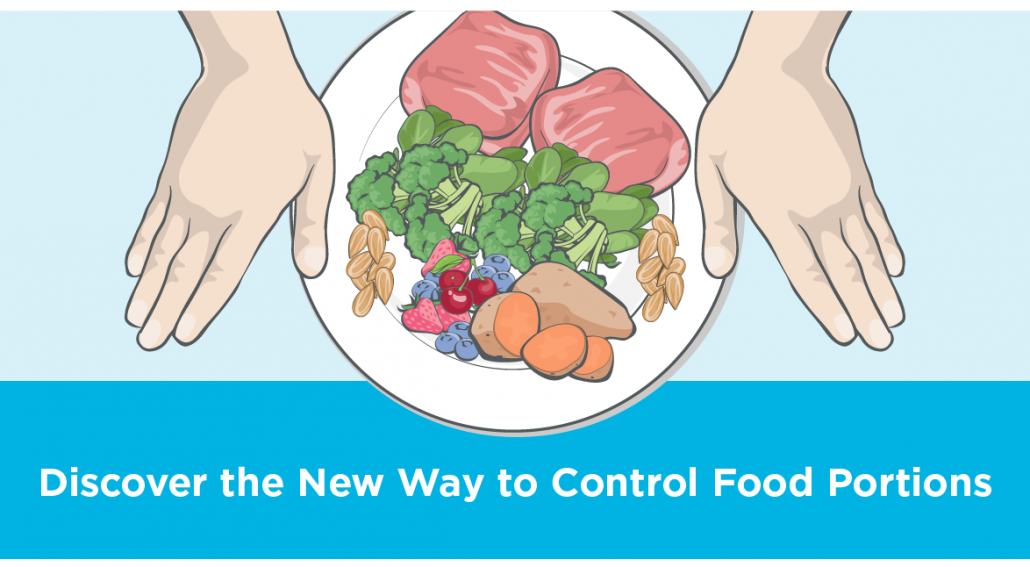
Give Yourself A Hand…Forget Counting Calories

Give Yourself A Hand...Forget Counting Calories

There’s a better way to figure out how much food to eat at
every meal so you can look and feel better.

Trying to gain muscle? Lose weight? Just eat healthy?

Then finding the right portions is probably on your mind.

But calorie counting is usually a recipe for failure: It’s annoying, impractical, and research shows it can be up to 25 percent inaccurate on both sides — calories in, and calories out.  

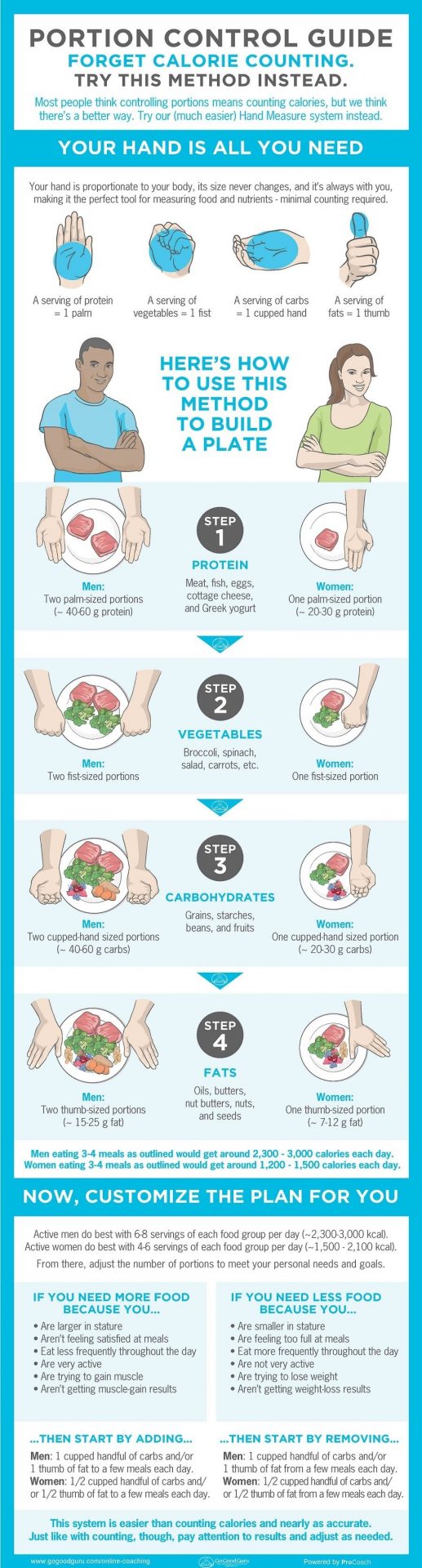
All you have to do is take a look at your hand.
Using your fist, palm, cupped hand, and thumb to practice calorie control, you can avoid the hassle of actually counting calories, all while ensuring you’re getting the whole food nutrients your body needs.

If you’ve heard it once, you’ve heard it a thousand times: The best way to lose weight is to count calories.

The only problem? It’s not true.

The problem with calorie counting
The first problem with counting calories is the sheer amount of math and hassle to figure out your “caloric needs”. That means handbooks, websites, and databases just to plan your lunch.

Groan.

​Next, you have to assume that the handbooks, websites, and databases’ calorie estimates are correct. (They’re often not.)

In fact, research has shown they can be off by about 25% because of incorrect labeling, laboratory measurement error, and food quality.


Then, of course, you have to estimate your “calorie expenditure” each day
— the amount of calories you burn. However, that often comes with another 25% measurement error because of the equipment you’re using, laboratory measurement errors, and individual differences.


That means there’s a possible 25% error on the “calories in” side, and another 25% error on the “calories out” side.


Is it even worth:

• pulling out measuring cups to a chorus of boos from family members
• dusting off the food scale while trying to ignore the taunts of friends
• whipping out your calculator to add everything up
• subscribing to apps and web services to track these less-than-accurate numbers?

Of course, we all should have an idea of how much food we’re eating each day. That way we can adjust how much we’re eating based on our goals.

But counting calories itself is a drag!


No wonder so many people give up and go back to eating the way they were before. No wonder so many women have a hard time sticking to a calorie-counting diet.


The Calorie Counting Antidote
Here’s the good news: counting calories is rarely necessary.

We gauge food portions differently. No carrying around weigh-scales and measuring cups. No calculators or smart phones.

All you need is the ability to count to two. And your own hand.

Here how it works: 

Go Good Guru - Portion Control Guide

Planning your meals flexibly

Based on the guidelines above, which assume you’ll be eating about 3-4 times a day, you now have a simple and flexible guide for meal planning.

Of course, just like any other form of nutrition planning — including calorie counting — this only serves as a starting point.


You can’t know exactly how your body will respond in advance. So stay flexible and adjust your portions based on your hunger, fullness, and other important goals.


For example, if you’re trying to lose weight but seem to have stalled out, you might eliminate a cupped palm of carbohydrates or a thumb of fats at particular meals.


Remember: This is a starting point. Adjust your portions at any time using outcome-based decision making.

We hope you found this information helpful.  Help us spread the GOOD word. Comment, Share and Follow Us @gogoodguru.

Don't miss any of our latest posts and news. JOIN OUR MAILING LIST


Want some help becoming your healthiest, fittest, strongest version of you?

Most people know that regular movement, eating well, sleep, and stress management are important for looking and feeling better. Yet they need help applying that knowledge in the context of their busy, sometimes stressful lives.

That’s why we work closely with our Nutrition & Lifestyle Coaching clients to help them lose fat, get stronger, and improve their health… no matter what challenges they’re dealing with.


Struggling to keep up with all the new information coming out? Interested in learning how to navigate the latest trends and fads in nutrition?

CLICK HERE for our 
FREE "Nutrition Made Simple Guide"

You'll learn...

  • How to make sense of the latest research.
  • Ways to eat better without resorting to fads.
  • How to understand controversial topics like grains, detoxes, GMOs.
  • Strategies to eat the right amount of calories at the right times.
  • How to prepare healthy meals when you need them.
  • And much more…


Looking for more ways to up your wellness game?
CHECK OUT our Online Coaching

Join Our Newsletter! 
Stay up with all the
GO GOOD News

Get great wellness content, FREE recipe ideas & workouts, access to special events, Flash Mob Workout notices and much more.
matcha drink

How To Save Money Making This Coffee Shop Fave At Home

How To Save Money Making This Coffee Shop Fave At Home


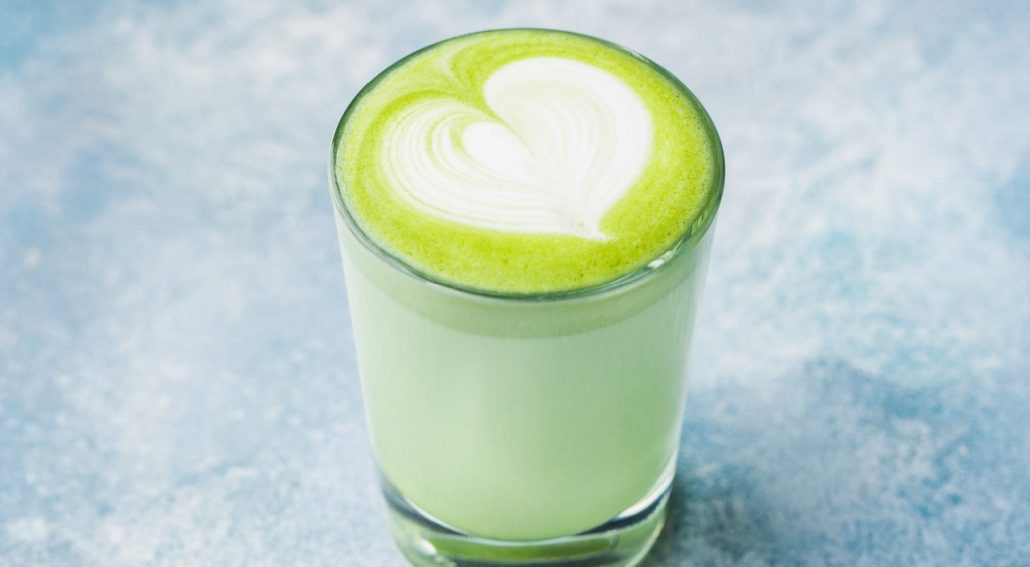
Have you ever tried matcha green tea? Whether you are new to it or a long-time fan, we have a recipe for you today that we can’t WAIT for you to try.

It’s packed with super-foods but tastes like a treat (really!). This recipe will help you stop dropping so much $$$ on Starbucks’ version, which isn’t as tasty or nearly as nutritious.

It’s perfect as a mid-afternoon pick-me-up and you also can drink it before your workout if you need a little oomph to get moving.

Here’s why: you’ll get a definite energy boost from the matcha, which some studies show also can increase mental focus AND the rate your body burns fat. Turmeric is known for its anti-inflammatory properties, and cinnamon has been proven to help balance blood sugar. Win-win-win!

Not only that, but this tastes amazing. Note: Starbucks version uses vanilla syrup, but we’ve switched that out for protein powder. If you have some vanilla stevia drops, those might work as well, or you can add a drop or two of pure vanilla extract!

Matcha Iced Protein Latte

1 tsp. Organic Matcha Powder

¼ tsp Turmeric

¼ tsp Cinnamon

1 cup Coconut Milk (I used the milk from a carton, not a can)

1 tbsp. Vanilla Protein Powder (or to taste)

Optional: Stevia or Honey, to taste

Ice cubes

Mix the matcha, turmeric and cinnamon together in a bowl until fully blended, and then slowly add the coconut milk, whisking as you go along to avoid clumps.

Pour the mixture into a blender and add protein powder. Blend until frothy! Taste, and add Stevia or honey if you want more sweetness. Pour over ice cubes and enjoy. 

Be sure to let us know what you think if you give this a try!

3B9014D700000578 4055222 image m 4 14823378711751

Jackfruit And Plant Water Are The Foods To Help You Lose Weight


This year we couldn’t get enough of coconut water and baobab thanks to their slimming properties – but if experts are to be believed, these super foods will be old news by January.Leading nutritionists have revealed the top food and drink to help you lose weight in 2017, including plant water and jack fruit. The products they predict will be flying off the shelves next year may sound somewhat unappetizing – but not only do they have slimming properties, they can also help boost digestion, lower cholesterol and even banish hangovers.

JACK FRUIT

‘You might have heard people referring to jack fruit as “pulled pork for vegetarians”,’ says Carly Tierney, personal trainer and expert nutritionist at UK gym chain DW Fitness Clubs. ‘If not, you almost certainly will have done by the end of 2017; as a popular substitute for meat, it’s going to be everywhere!

‘Studies have shown that Jack fruit has anti-inflammatory properties, which can be an important aspect of preventing obesity. ‘The seeds are particularly good for you. A strong source of Vitamin C and antioxidants, they can help to prevent cell damage, which is great news for your immune system. ‘Additionally, the seeds are thought to be beneficial for your blood circulation. This can be vital for hair growth, among other things.’

PLANT WATER 

Following on from the coconut water boom, Frida Harju, the in-house nutritionist at health app Life sum, reckons we’ll be seeing more plant waters being added to our diets than ever.Cactus plant water is set to be huge next year; it has health benefits that include helping fight high cholesterol levels and curing hangovers.Being high in fiber and low in calories means it can also help you stay fuller for longer – making it an excellent weight loss aid.  Expect birch sap water will be a hit thanks to its high levels of antioxidants, natural minerals and xylitol (a natural sugar).

SEAWEED

After being a mainstay in Asian cuisine for many years, seaweed is increasingly catching on in the West – with TV chef Jamie Oliver attesting to its weight loss properties.Its growing popularity, says Carly, is down to it being vegan-friendly. ‘Naturally low in calories, seaweed can add an extra dimension to a wide range of dishes.’Whether you include it in a stew or soup, or you add some to your stir fry, it’s an extremely versatile ingredient.

‘In terms of nutritional benefits, seaweed is said to be a rich source of iron and calcium. Also, a piece of research cited by the European Food Information Council suggested that an 8g portion of dried seaweed provides a similar amount of fiber to a banana. ‘This makes it a great alternative for those who are wary about the high natural sugar content in certain fruits.’Perhaps unsurprisingly, some types of seaweed have a high salt content, which you need to take into consideration when adding it to your meals.’ There is also a natural fiber in sea kelp called alginate, which inhibits the enzymes that digest fat so that less is absorbed by the body. 

POKE BOWLS

Hawaiian  poke bowls – low-calorie, raw fish salads – are tipped to go take the foodie scene by storm after migrating from Hawaii to the ultra-trendy restaurants of Los Angeles.’Combining raw fish with fresh greens is never a bad idea, and these convenient, super-nutritious meals could revolutionize your lunchtime routine,’ says Carly.’The health benefits of raw fish are well documented. Tuna is full of ‘good fats’, which help to prevent blood clotting and boost cognitive functionality. ‘You should be eating at least one portion of Omega-3-rich fish each week, and poke bowls are a great way to go about this. ‘Be prepared for Poke Bowls to dominate your Instagram feed in 2017!’

SOURCE...www.dailymail.co.uk/


1000 sleep junk food1

More Sleep Means Fewer Junk Food Cravings

If you’re trying to conquer your junk food cravings, a little extra time in the sack could make a tremendous difference. In fact, a University of Chicago study showed that not getting enough sleep could increase cravings for junk food, specifically foods like cookies and bread, by 45 percent.

Don’t take the importance of sleep for granted. You may think sleeping less will give you more time to get things done, but in reality, you’re only hurting yourself and making your habits worse. Check out these four reasons more sleep means fewer cravings.

It Helps Control Your Appetite
Sleep helps regulate our hormones. Just a few nights without sleep can increase the level of ghrelin—the hormone responsible for triggering our appetite. In fact, the Wisconsin Sleep Cohort Study showed that participants who slept 5 hours had 14.9 percent higher ghrelin than those individuals who slept 8 hours. A lack of sleep not only explains the differences in those hormone levels but also sheds light on the increase in Body Mass Index (BMI) and obesity for individuals that don’t get adequate sleep. (Try these smart alternatives to junk food)

It Helps Signal Satiety
Hormones affect our appetite–they help regulate when we feel full or satisfied. Just a few nights without sleep can drop the level of leptin—the hormone responsible for signaling satiety. Study participants who slept 5 hours had 15.5 percent lower leptin than those individuals who slept for 8 hours. Lack of sleep can make it more difficult for us to sense when we’re full—causing us to consume more calories than we need.

It Aids Your Judgment
It’s probably no surprise (and has been well documented) that a lack of sleep can decrease our memory, cause us to feel foggy, increase our potential for accidents, increase the risk for disease and even diminish our sex drive. It can also impair judgment when it comes to making healthy choices.  When we’re tired, we are more likely to grab whatever is convenient (think office vending machine, break room donuts or that caramel latte) rather than something that is good for us. (Don’t get stuck with a junk food hangover)

It Cuts Out Snacking
A recent study published in the journal Sleep showed that a lack of sleep caused people to overeat on sweet and salty high-fat junk food. The study, which took place at the University of Chicago’s Clinical Research Center had participants take part in two four-day sessions. The first had participants spend 8.5 hours in bed (with an average sleep time of 7.5 hours) each night. The second round had the same subjects spend just 4.5 hours in bed (an average sleep time of 4.2 hours) each night. Although the participants received the same meals at the same time during both stays, they consumed more than 300 additional calories when sleep deprived. The extra calories mainly came from snacking on high-fat junk foods. (See: 10 Whole Foods That Boost Your Energy and Help You Lose Weight)

Try these simple tips to help you get a better night’s sleep:

  • Go to bed 10 to 15 minutes earlier each night until you’re getting the recommended 7 to 8 hours of sleep. Not only will you have more energy throughout the day with fewer cravings, but you’ll also be more productive.
  • Stop eating two hours before you hit the hay. Going to bed on a full stomach is not only uncomfortable, but it can interfere with a good night’s sleep. For many of us, late night snacking can get out of control, and the calories can add up.
  • Have a bedtime ritual. Take a hot bath, drink a cup of herbal tea or practice 10 minutes of meditation. Do what works best for you. A normal regular bedtime ritual can help you nod off quicker and sleep more soundly.
  • We hear it all the time, but put that smartphone away when you’re about to sleep. The light emitted from electronic devices can disrupt your sleep.  In fact, the National Sleep Foundation says that nighttime, and the reduction of light that used to come along with it, used to cue our brains to “wind down” for sleep. Today’s constant use of electronics interferes with this natural process.


SOURCE…www.shape.com

When Food Replaces Feelings

Let’s face it: For most of us, food is much more than merely fuel for our bodies. From grandma’s apple pie to mac and cheese we enjoyed as a child to chocolate  mousse shared with a significant other, food can evoke memories and emotions, particularly feelings of comfort or love.

But there’s a big difference between nurturing yourself from time to time with comfort food and using food to insulate you from your feelings and emotions, which can undermine attempts to shed pounds and maintain a healthy body. When eating becomes a method of self-medicating – or numbing yourself to feelings – emotional eating  crosses over into the realm of concern. Emotional eating is reaching for food to quell feelings, rather than hunger. Over the years, I’ve learned that understanding and addressing the emotional aspects of over eating and weight management are just as important as nutrition and exercise.

While the eating plan I share with my clients is simple, following it can be a challenge if you’ve fallen out of touch with your body’s hunger cues and developed bad habits or an unhealthy routine. Emotional eating doesn’t help either.

Stress, anxiety , loneliness  and fatigue are common triggers for emotional eaters, particularly women. If one of your happiest moments growing up with your six siblings was sitting at the kitchen table eating mom’s spaghetti with tomato sauce, you may crave pasta when you’re feeling lonely or blue.

But differentiating physical hunger and emotional hunger can be difficult, especially if you’ve spent your life stuffing your emotions by reaching for food. So here are some key differences to keep in mind that will help in recognizing emotional eating:

  • Emotional hunger comes on suddenly. Physical hunger typically comes on gradually, and you may have physical signs like your stomach growling.
  • Emotional hunger craves specific – and in most cases, unhealthful – foods. When you’re physically hungry, almost anything will do, including healthful foods.
  • Emotional hunger results in mindless eating. Did you just down a pint of ice cream before bed without realizing or enjoying it? Polished off a sleeve of cookies in front of the television after work? Inhaled a drive-thru burger while crawling home in rush-hour traffic? These are most likely examples of emotional eating.
  • Emotional hunger is never satiated. You want more and more until you’re stuffed – or find yourself in a “carb coma,” slumping after eating too much.
  • Emotional hunger has repercussions. These include guilt, shame and regret, to name a few. Physical hunger never leaves you feeling badly about yourself.

While most of us at one time or another during our lives have eaten food for reasons other than being hungry, some grapple with emotional eating much more than others. If you feel that you might be an emotional eater, you’re not alone. Experts say as much as 75 percent of overeating may be in response to emotions, rather than to satiate physical hunger.

Many people, particularly those who’ve struggled on and off with dieting most of their lives, have disconnected from their bodies, learning to ignore signs of hunger and the cues that signal fullness. Without mindfullness  – awareness of what you’re feeling both physically and emotionally – emotional eating can become a knee-jerk reaction to the onset of uncomfortable feelings.

Get In Touch With Your Feelings

The first step in establishing a healthy relationship with food is to reconnect with your body and emotions. Understand, though, that it takes at least a month to create a new habit. And if emotional eating has been a longstanding habit, you won’t be able to change it overnight. Be kind and patient with yourself.

Start to notice how you feel when you reach for food. Are you using food to cope, going to the fridge when you’re angry or upset? Acknowledge your feelings and take a detour. Ask yourself: What’s going on? What is this emotion I’m feeling? Then find a different way of dealing with it.

One thing you can do if you are feeling bad – but can’t identify the exact emotion – is to merely be aware of the fact that you’re feeling bad. Say aloud, “I’m feeling really bad right now,” and try to quantify how bad you’re feeling on a scale of 1 to 10.

Also, determine your “feeling bad” thresholds. For example, if your “bad” rates a 5 or higher, you may need to call a friend. A lower level may warrant you working it out on your own by going for a walk walk  or meditating . Do something that will make you feel better, not worse.

Affirm Your Values

Researchers believe that reflecting on values can serve as a buffer to the stress and uncertainty that lead to emotional eating and help in maintaining self-control in difficult situations. One study found that when women who were unhappy with their weight completed a one-time, 15-minute writing exercise about an important personal issue, they went on to lose 3-plus pounds, on average, over approximately three months. By comparison, those who wrote about an unimportant topic gained an average of 3 pounds.

So pull out your food journal , set the timer and write freely about what’s important to you. Write as though no one else will read it. Come clean about what’s bugging you. Your words may surprise but enlighten you.

Follow these steps to take note of what you’re feeling and deal with emotional eating:

1. If you have the urge to eat, pay attention to your feelings.
2. Before you reach for food ask yourself: Have I missed a meal? Have I eaten my snack? Am I really hungry?
3. If you have eaten on schedule, and you determine this urge could be emotional eating, acknowledge that you may have gotten into a habit of trying to fix your troubles with food. Don’t panic. You’re not alone.
4. Try, for just 10 minutes, to deal with your urge with something other than food. Consider these alternatives instead:

  • Go for a walk.
  • Breathe deeply.
  • Pray or meditate.
  • Call a friend.
  • Measure your hunger cues
  • Write in your journal.
  • Do something to feel good about yourself. For example, take a bath, do your nails or make that household repair you’ve been putting off. Shoot some hoops or get a haircut.

Our emotional states can change minute by minute or hour to hour. If you still have a craving or urge after 10 or 15 minutes, go through the process again. Many times the urge or craving will pass. If you are still really hungry, eat something healthful that you will feel good – not guilty – about.

You can be diligent with your food intake and journaling , and perform like an athlete , at the gym. But if you do not acknowledge, assess and deal with any underlying emotional issues that contribute to overeating, any weight you lose will come back. I guarantee it.


ReadMORE…. Health.USnews