Category Archives for "Good Latest Research"

dnews files 2015 10 youth football 670 151025 jpg1 e1448344323288

Rewriting the Rules of Youth Football

The game of football has changed and so has the view of it.  In an article written by Talal Al-Khatib for Discovery Health, be describes how around 3 million Americans kids ages 7 through 14 participate in football leagues, and an additional 1.1 million high school students play the game as well. [This] according to USA Football, the national governing body for the sport on the amateur level.

Given the risks involved with playing a contact sport at a young age, the American Academy of Pediatrics (AAP) has issued a set of recommendations, released in the journal Pediatrics, to tackle potential safety issued faced by kids on the field.

For starters, the AAP advises that both referees and coaches enforce a zero-tolerance policy for illegal, head-first hits. These are the kinds of tackles that are most likely to result in head, neck or other injuries.

The organization also recommends that athletic trainers be made available on the sidelines during play as a means of reducing player injuries.  A study presented last week at the AAP’s national conference in Washington, D.C., found that… Read more

Image Source: ThinkStock

Musicians’ Brain Waves Dance to the Beat

Bianca Nogrady helped clarify why some people are just plain better at music than others.  In an article she wrote for  ABC Science Online, she pointed out that musicians get more out of music because their brain waves are better able to synchronize with musical rhythms.
Cortical oscillations — the rhythmic firing of neurons in the brain — are fundamental to our ability to hear and process sounds.  Aligning the frequency of these cortical oscillations with the frequency of the sounds we wish to focus on allows us to better tune into these sounds; for example, …Read more
dnews files 2015 10 brain music 670 jpg1 e1448906274835 1

Musicians' Brain Waves Dance to the Beat

Bianca Nogrady helped clarify why some people are just plain better at music than others.  In an article she wrote for  ABC Science Online, she pointed out that musicians get more out of music because their brain waves are better able to synchronize with musical rhythms.
Cortical oscillations — the rhythmic firing of neurons in the brain — are fundamental to our ability to hear and process sounds.  Aligning the frequency of these cortical oscillations with the frequency of the sounds we wish to focus on allows us to better tune into these sounds; for example, …Read more
svard e1448323957212

Fossilized Tropical Forests Found In Arctic

The ice lands we know have not always been that way.  Evidence of that was given by Mary Beth Griggs in an article she wrote for Popular Science.

Svalbard, Norway is known for it’s splendid Arctic scenery, frigid weather and polar bears. But it wasn’t always like this. In a study published recently inGeology, researchers announce the discovery of a fossilized tropical forest in Svalbard.

Chris Berry and other researchers from Cardiff University found tropical tree stumps–the remains of an ancient tropical forest–during field work in the frigid latitudes.

380 million years ago, the continents were in vastly different places. The solid part of the Earth that we live on..Read more

Image Source: Bernt Rostad/Flickr CC by 2.0

dnews files 2015 10 nose 670 jpg1 e1448319839194 1

Woman Can 'Smell' Parkinson's

Can women smell disease?  In an article by AFP written for Discovery Health, one woman could.  The widow of a man who suffered with Parkinson’s has triggered new research this week into the condition after she discovered she could “smell” the disease.

“I’ve always had a keen sense of smell and I detected very early on that there was a very subtle change in how Les smelled,” Milne, from Perth, Scotland, said on Thursday.  “It’s hard to describe but it was a…Read more

Image Source: ThinkStock

Woman Can ‘Smell’ Parkinson’s

Can women smell disease?  In an article by AFP written for Discovery Health, one woman could.  The widow of a man who suffered with Parkinson’s has triggered new research this week into the condition after she discovered she could “smell” the disease.

“I’ve always had a keen sense of smell and I detected very early on that there was a very subtle change in how Les smelled,” Milne, from Perth, Scotland, said on Thursday.  “It’s hard to describe but it was a…Read more

Image Source: ThinkStock

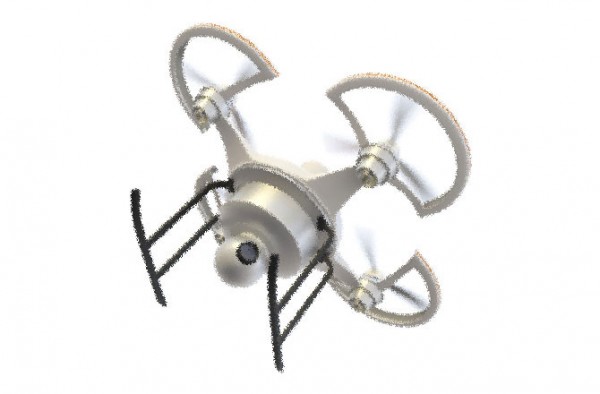
futuristic vehicles could vanish after deliveries 6701 e1448319090355

Futuristic Vehicles Could Vanish After Deliveries

Elizabeth Palermo of Livescience posed the following situation in an article for Discovery News:  Picture this: A tiny, floating device delivers a package into your arms, and then, before you can say “thanks,” it disappears into thin air. Such a magical device may sound like something out of a Harry Potter movie, but it’s real technology that could benefit people in remote areas.

The development of this far-out delivery system is being led by the Defense Advanced Research Projects Agency (DARPA), the branch of the U.S. Department of Defense charged with developing new technologies for the U.S. military. Several years ago…Read more

dnews files 2014 06 coral 140616 jpg1 e1448317962724 1

Common Sunscreen Chemical Kills Coral

In a recent article written by Danny Clemens for Discovery.com: A chemical commonly found in sunscreen is detrimental to coral health, a new report finds. An international team of researchers linked oxybenzone, an organic compound used in more than 3,000 sunscreens, to “gross morphological deformities,” DNA damage and endocrine disruption in already-vulnerable baby corals.

Oxybenzone can adversely impact coral health in concentrations as small as 62 parts per trillion — the equivalent of one drop of water in more than six Olympic-sized swimming pools.

30 Days of the Ocean: Photos 

In Hawaii and the U.S. Virgin Islands, however, oxybenzone has been measured in concentrations as high as 1.4 parts per million — an unsurprising statistic considering that an estimated 14,000 tons of sunscreen enter coral reefs each year.  Around the world, at least 10 percent of reefs are at a high risk of exposure to oxybenzone, study authors estimate.  According to the National Park Service, no sunscreen…Read more

Image Source: ThinkStock

Doctor dubbed ‘the father of cyborgs’ tested implants in his own brain

As asked by James Trew on Engadget:  How far would you go to create a brain-controlled speech decoder? Doctor Philip Kennedy already helped blaze a trail in brain-computer interfaces back in the 80s. Now, a report in MIT Technology Review explains how the neurosurgeon decided to crank his research up a notch. Well, several notches, really, by having implants put into his ownbrain to better learn how neurons function with speech. What’s more, Kennedy paid $25,000 and underwent highly invasive surgery — including the removal of the top of his skull — for the privilege.

Kennedy is often dubbed the “father of cyborgs” for his early work with connecting brains to computers. Work that has given people with severely debilitating conditions new ways to communicate by…Read More

Image Source: ThinkStock